Visitors often see X-ray screens daily on routine tasks. Few ever imagine a full satellite under such inspection. Yet Empa scientists have now done exactly that. Their team captured detailed X-ray images of the EURECA satellite. This effort came with support from Space Innovation at EPFL. The Swiss Museum of Transport also joined the project.
Why was EURECA X-rayed in Switzerland?
Researchers wanted to study a flown satellite in detail. EURECA returned safely from orbit in 1993. Swiss astronaut Claude Nicollier released it in 1992. The shuttle Atlantis carried the satellite to low orbit. It stayed there for nearly eleven months. The shuttle Endeavour later retrieved the satellite safely. ESA had first planned several future flights for EURECA. The satellite held 15 scientific instruments for varied research. Budget cuts eventually ended the wider programme entirely. EURECA later went to the Swiss Museum of Transport. The trip to Empa in Dübendorf was short.
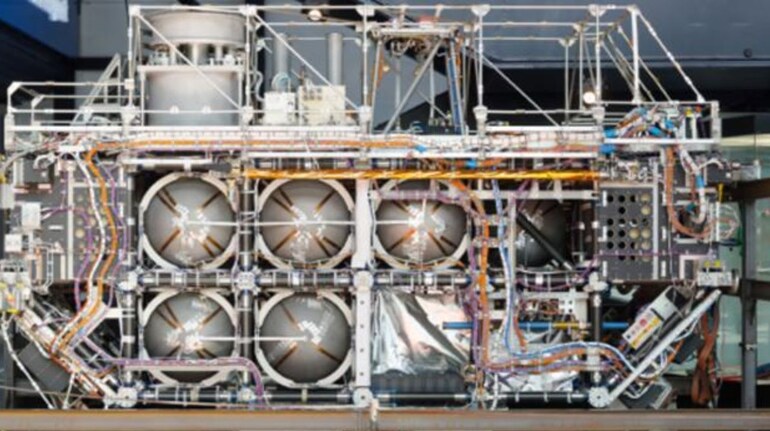
 X-ray scans of EURECA revealed its fuel and gas tanks, showing traces of cleaning solution and the satellite’s modular internal framework. (Image: Empa, CC BY 4.0)
How Did Researchers Complete This X-ray Study?
Scientists first imaged EURECA fully in 2016. Their full study appeared in 2025 in Acta Astronautica. The high-energy system could scan the full structure. The satellite measured five metres in length. It stood nearly three metres in height. Its width was around two and a half metres. Other X-ray tools supported closer checks of instruments. Two instruments remained fixed inside the satellite itself.
What Damage Did the X-rays Reveal?
X-rays allowed a safe internal view without harm. Researchers saw cracks across some composite struts. They also found fractures inside sensitive instruments. Some signs pointed to clear structural deformation. Lead author Robert Zboray explained the findings clearly. He noted the wide scale of their analysis. Spacecraft face strong radiation across extended missions. They also endure fierce temperature jumps in orbit. Tiny impacts from debris can also strike components. Launch stress or landing shocks may cause damage. Further tests could confirm the exact failure events. Zboray said checks before flight would help. He said checks after landing would also matter.
Could This Research Change Future Satellite Design?
EURECA now sits on display in Lucerne. Its panels open only for visitors today. Yet reusable crafts remain crucial in modern space work. Over 10,000 satellites now orbit Earth in 2025. Smaller fragments also crowd space around those satellites. This debris threatens missions and crewed flights daily. Reusable satellites may ease this rising burden. Zboray believes X-ray tools could help designers improve craft. High-energy scans may also support work on aircraft. They could also help checks across the automotive field. Forensic teams also use these tools for complex cases.
Discover the latest Business News, Sensex, and Nifty updates. Obtain Personal Finance insights, tax queries, and expert opinions on Moneycontrol or download the Moneycontrol App to stay updated!
Find the best of Al News in one place, specially curated for you every weekend.
Stay on top of the latest tech trends and biggest startup news.