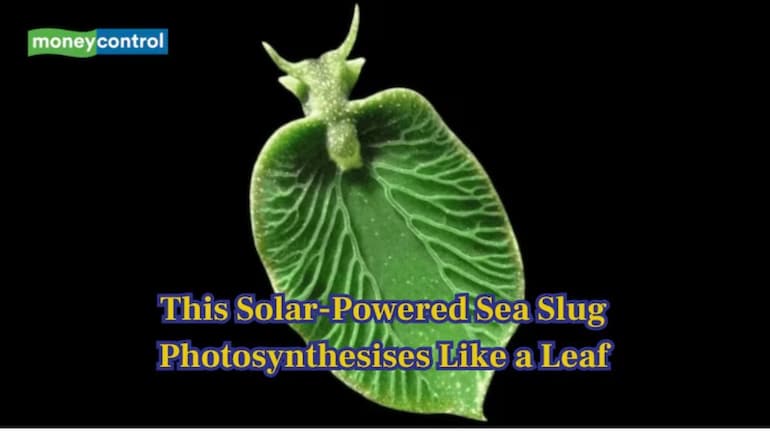

Marine scientists have highlighted an unusual coastal creature. The focus is a sea slug defying biology. Found along America’s eastern coastline, it challenges classifications. The animal survives using sunlight instead of food. Researchers say it rewrites assumptions about animal life. This report examines the sea slug’s strange survival. It also explains why scientists remain fascinated worldwide.
A sea slug that feeds on sunlight
Elysia chlorotica appears leaf-like while moving underwater slowly. Its bright green body mimics drifting coastal vegetation. Despite appearances, it behaves like a typical animal. It crawls, responds to stimuli, and senses surroundings. The slug eats algae during early life stages. However, digestion follows a highly unusual biological route. Instead of consuming everything, it preserves vital components.
These components are chloroplasts taken from algae cells. Chloroplasts normally power photosynthesis in plants. Inside the slug, they continue functioning independently. This process allows energy production using sunlight. Scientists call this process kleptoplasty within animal cells. No other animal sustains photosynthesis so efficiently.
Where the solar-powered sea slug lives
The species inhabits tidal pools along America’s east coast. It prefers salt marshes with shallow, sunlit waters. These environments provide abundant algae and sunlight. Both are essential for the slug’s survival strategy. The slug stays near surfaces for light exposure. Shallow waters help sustain chloroplast activity longer. Researchers often locate them during warmer seasonal months. Their presence signals healthy coastal ecosystems nearby.
How the slug survives without eating
Once chloroplasts are stored, feeding becomes unnecessary. Scientists observed slugs surviving months without food. Some survived nearly a full year unfed. Energy flows directly from sunlight into tissues. This survival method remains unmatched among known animals. Borrowed algal genes help maintain chloroplast function. These genes prevent rapid breakdown inside slug cells. The process continues until chloroplasts finally degrade.
Why scientists find this animal important
Researchers see Elysia chlorotica as evolutionary evidence. It blurs distinctions between plant and animal kingdoms. The slug forces questions about adaptation limits. Scientists study it for bioenergy inspiration. Others examine implications for evolutionary biology understanding. Future research may explore medical or energy applications. For now, the sea slug remains unique. It proves nature often ignores human-defined biological rules.
Discover the latest Business News, Sensex, and Nifty updates. Obtain Personal Finance insights, tax queries, and expert opinions on Moneycontrol or download the Moneycontrol App to stay updated!
Find the best of Al News in one place, specially curated for you every weekend.
Stay on top of the latest tech trends and biggest startup news.