







In India, protein often lives in the shadows of two far more celebrated nutrients — carbs and spices.
From dal-chawal at home to biryani at family gatherings, most of our plates tilt heavily towards rice, rotis, and comfort flavours. But as more people take their fitness, energy and long-term health seriously, protein has quietly become the star everyone suddenly wants to understand.
There’s just one problem: many Indians assume that protein automatically means chicken breasts, eggs or imported whey powder. And for vegetarians — which form a sizable portion of India’s population — the question can feel even more pressing.
Can everyday Indian food really deliver 50 grams of protein — in a day or even a single meal?
The short answer: absolutely yes.
The longer answer? It just needs some smart combinations and intentional eating.
While a single traditional dish rarely crosses the 50-gram mark by itself, pairing two or three protein-dense ingredients can get you there with surprising ease.
Paneer is already a go-to for vegetarians.
100g paneer → ~18g protein
1 large bowl of dal (200g) → ~15g
Increase paneer to 200g and you hit ~51g
A comforting paneer sabzi, dal and roti thali already checks the box.
Soya is one of the most underrated protein sources.
100g soya chunks (dry) → ~52g protein
A single generous portion of soya curry or pulao can deliver your entire meal target.
Rajma is delicious, filling — and rich in amino acids.
1 cup cooked rajma → ~15g
200g paneer salad → ~36g
Combined: 50g+, with zero compromise on flavour.
Not traditional, but perfect for modern kitchens.
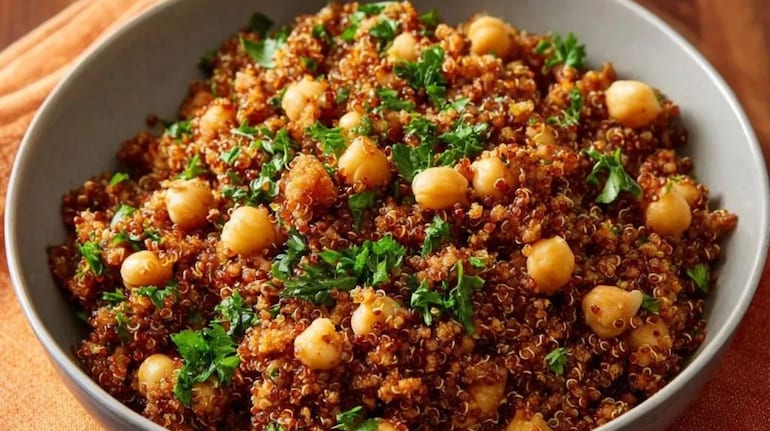
1 cup quinoa → ~8g
1 cup black chana → ~15g
500ml curd → ~17g
Together: 40–50g, depending on serving size.
Ideal for people who like to combine Indian recipes with eggs.
4 eggs → ~24g
2 moong dal chillas → ~16g
Buttermilk → ~4g
Total: 44–50g and easily digestible.
Protein isn’t just for gym-goers.
Also Read: Diet tips: Wholesome Indian meals that support women’s health, energy, balance
Adults generally need 0.8–1g per kg bodyweight — meaning a 60kg person requires 50–60g daily.
It supports:
Athletes, weight-lifters and people on fat-loss journeys may need even more.
1. Can traditional Indian meals provide adequate protein without supplements?
Absolutely. With smart combinations and intentional eating, traditional Indian meals can deliver sufficient protein.
2. What vegetarian options in Indian cuisine are rich in protein?
Paneer, dal, rajma, chana, quinoa, curd, and soya chunks are excellent vegetarian protein sources.
3. How can I hit my protein target with Indian food in one meal?
Combine protein-dense ingredients like paneer with dal, soya chunks curry, rajma-chawal with paneer salad, quinoa with chana and curd, or eggs with moong dal chilla and buttermilk.
4. How important is it to consume 50 grams of protein daily?
Protein supports muscle repair, immunity, hair and skin health, healthy ageing, appetite control, and fat loss. Adults generally need 0.8–1g per kg bodyweight, making it essential to meet the daily requirement for optimal health.
Disclaimer: This article, including health and fitness advice, only provides generic information. Don’t treat it as a substitute for qualified medical opinion. Always consult a specialist for specific health diagnosis.

Discover the latest Business News, Sensex, and Nifty updates. Obtain Personal Finance insights, tax queries, and expert opinions on Moneycontrol or download the Moneycontrol App to stay updated!
Find the best of Al News in one place, specially curated for you every weekend.
Stay on top of the latest tech trends and biggest startup news.





