






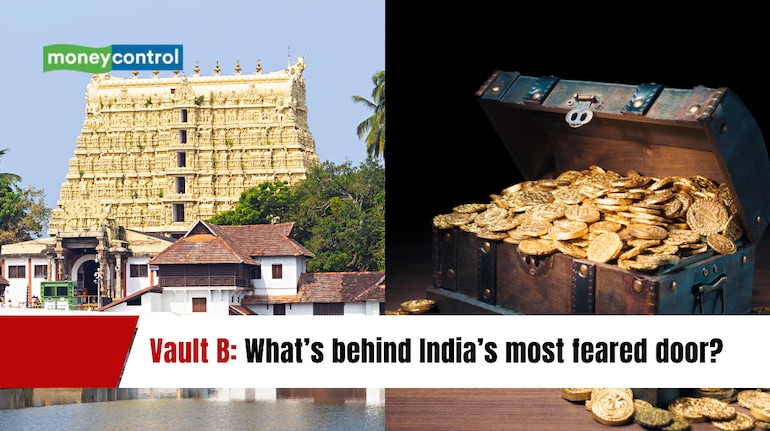

The mystery of Vault B at Sree Padmanabhaswamy Temple continues to fascinate India and the world. Located in Thiruvananthapuram, Kerala, this ancient Hindu temple is home to what is widely believed to be the largest temple treasure ever discovered. While several underground vaults were opened in 2011 under Supreme Court orders, one chamber remains firmly sealed. Vault B. Guarded by faith, tradition and centuries-old belief, it is often described as the serpent-cursed vault that no one dares to open.
Padmanabhaswamy Temple Treasure
The Padmanabhaswamy Temple treasure came into global focus on 27 June 2011, when a Supreme Court-appointed committee opened five underground vaults of the temple and what they found stunned everyone.
The vaults revealed massive collections of gold thrones, crowns, ornaments, statues, diamonds, precious stones and ancient coins, many dating back thousands of years. Media reports described the discovery as the largest accumulation of gold and precious objects in recorded history.
This historic opening followed a legal petition seeking transparency in the temple’s administration. The matter eventually led to intense legal scrutiny and national debate.
How many Vaults exist beneath the temple?
Temple authorities were initially aware of six underground vaults, labeled Vaults A to F, located around and west of the sanctum sanctorum. Later, during audits and inspections, two more vaults (G and H) were discovered.
Among them, Vault B stands out as the most mysterious and controversial.
Vault B
Vault B has not been opened since at least the 1880s. In 2011, the court-appointed committee managed to open its outer metal grille and a wooden door. Behind them stood a jammed iron door, which could not be forced open.
Before a locksmith could be brought in, the Travancore royal family obtained a Supreme Court injunction, stopping any further attempt. Their objection was based on Ashtamangala Devaprasnam (a sacred astrological ritual) which reportedly warned that opening the vault would go against the will of the deity and bring serious harm.
In July 2020, the Supreme Court refused permission to open Vault B, stating that the matter involved religious faith and sentiments. Since then, the vault has remained untouched.
What was found inside the opened Vaults?
Though the complete inventory has never been made public, reports revealed jaw-dropping details. From Vault A alone, over 102,000 groups of objects were recorded.
Some notable discoveries include:
These findings only deepened public curiosity about what might lie inside Vault B.
Where did this immense wealth come from?
Scholars believe the temple’s wealth accumulated over several thousand years. Donations were made by powerful South Indian dynasties such as the Chera, Pandya, Chola, Pallava and the Travancore royal family, along with rulers from beyond the region.
Ancient Tamil Sangam literature described the temple as a “Golden Temple”, highlighting its wealth as early as 500 BC. Sacred texts and historic records confirm continuous offerings of gold, gemstones and valuables to Lord Padmanabha.
The temple also served as a safe vault during invasions, especially when rulers fleeing conflict stored their wealth here for protection.
Cadjan leaf records and forgotten history
Over 3,000 bundles of cadjan leaf (cadjan leaves are ancient manuscripts), written in archaic Malayalam and Tamil, are preserved in the temple. These documents detail donations made over centuries but remain largely unstudied.
Historians believe these records could fully explain the origins of the treasure and reinforce the fact that the Temple Treasury (Sri Bhandaram) was always distinct from royal or state wealth.
Supreme Court verdict and royal family’s role
In 2020, the Supreme Court ruled in favor of the Travancore royal family, restoring their rights to manage the temple and its finances. The court overturned the Kerala High Court’s earlier judgment, recognizing traditional rights and customs.
This verdict further strengthened the argument that decisions regarding Vault B must respect religious traditions, not just legal authority.
Last Debate: Should Vault B be opened now?
Recently, the mystery resurfaced after senior advocate A. Velappan Nair, a member of the temple’s administrative committee, called for a formal decision on Vault B.
He stated that the Supreme Court has left the decision entirely to the temple administration. However, representatives of the Union government and the royal family objected, insisting that no such step can be taken without consulting the thantri, the temple’s chief priest.
For now, Vault B was not included in the meeting agenda, but the discussion is expected to return.
Why Vault B still remains closed
Vault B is not just about gold. It represents faith, tradition, and spiritual responsibility. For many devotees, opening it is seen as crossing a sacred boundary.
Despite public curiosity and speculation of a trillion-dollar treasure, reverence continues to outweigh wealth.
The sealed doors of Vault B at Sree Padmanabhaswamy Temple guard more than ancient riches. They protect centuries of belief, devotion, and cultural heritage. Whether it is ever opened or remains shut forever, the vault stands as a powerful reminder that in India, faith often matters more than fortune.

Discover the latest Business News, Sensex, and Nifty updates. Obtain Personal Finance insights, tax queries, and expert opinions on Moneycontrol or download the Moneycontrol App to stay updated!
Find the best of Al News in one place, specially curated for you every weekend.
Stay on top of the latest tech trends and biggest startup news.





