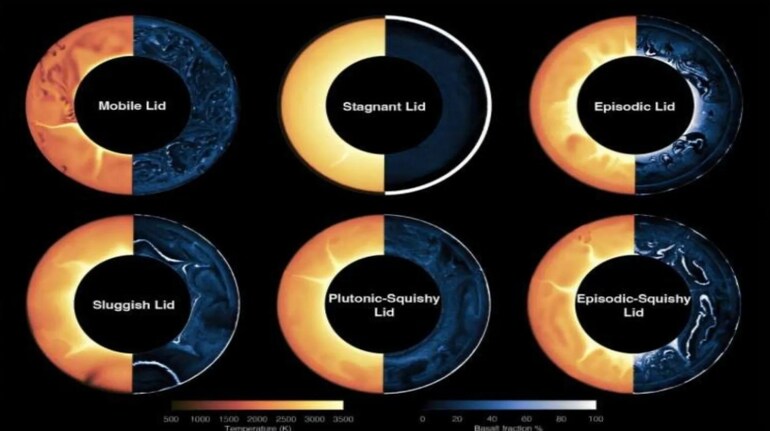
Scientists have discovered a surprising new way planets can recycle heat. Known as the episodic squishy lid, it shows tectonic activity is not constant. Planets can alternate between quiet phases and sudden bursts of movement. This discovery changes how researchers evaluate planetary habitability beyond Earth.
A New Way to Look Inside Planets
Scientists discovered a tectonic regime called episodic squishy lid. It cycles through quiet periods and sudden bursts of activity. This differs from classic plate tectonics or stagnant-lid behaviour. The discovery shows how rocky planets evolve internally and release heat. It also explains factors supporting magnetic fields and surface climates.
Implications for Earth and Venus
Early Earth may have passed through this squishy-lid phase naturally. It represents a missing stage between stagnant and active tectonics. Venus shows volcanic patterns despite lacking conventional tectonic plates.
The model reproduces Venus-like behaviour under episodic squishy-lid conditions. Understanding these phases helps explain planetary evolution across the solar system.
Redefining Habitable Worlds
Exoplanets without Earth-style plate tectonics may still support life. Intermittent tectonics stabilise atmospheres and recycle essential elements efficiently. This broadens the types of planets considered potentially habitable by scientists.
Future searches may focus on planets with hidden tectonic cycles. Habitability depends on both location and internal geodynamic processes combined.
The Science Behind the Discovery
Researchers mapped six tectonic regimes under varied planetary conditions carefully. Cooling lithospheres can weaken, delaminate, or undergo magmatic intrusion occasionally. Past planetary history influences whether tectonic regimes transition over billions. The study highlights the importance of episodic tectonics in shaping planets. It provides a framework for studying planetary habitability beyond Earth.
A New Perspective on Planetary Life
The episodic squishy lid changes how we search for habitable worlds. It suggests planets may hide life-friendly conditions beneath inactive surfaces. Scientists hope future observations reveal more planets with dynamic interiors. Understanding interior dynamics is crucial for estimating exoplanet habitability reliably.
Discover the latest Business News, Sensex, and Nifty updates. Obtain Personal Finance insights, tax queries, and expert opinions on Moneycontrol or download the Moneycontrol App to stay updated!
Find the best of Al News in one place, specially curated for you every weekend.
Stay on top of the latest tech trends and biggest startup news.