- My Alerts
- Go Ad-Free
-
My Account











NASA’s Best: 10 mesmerising images of the day from November 2025
Explore 10 mesmerising NASA images captured in November 2025, showcasing dramatic cosmic vistas, planetary close-ups and rare celestial events that reveal the beauty, scale and mystery of our ever-changing universe.




1/10

Interstellar dust in Chamaeleon forms an elegant V-shaped glow, reflecting red and infrared light. Blue Beta Chamaeleontis contrasts sharply, while distant galaxy IC 3104 appears as a faint white spot. (Image: Xinran Li & Houbo Zhao/NASA)
2/10

Orion’s Belt stars—Alnitak, Alnilam and Mintaka—shine as massive blue supergiants amid gas and dust clouds, including the Horsehead and Flame Nebulae, in a vibrant 4-degree-wide cosmic view. (Image: Aygen Erkaslan/NASA)
3/10

Interstellar Comet 3I/ATLAS brightens after its October perihelion, showing a green coma in Virgo. Visible by telescope, it nears Earth at 270 million km in mid-December during a major observing campaign. (Image: Rolando Ligustri/NASA)
4/10
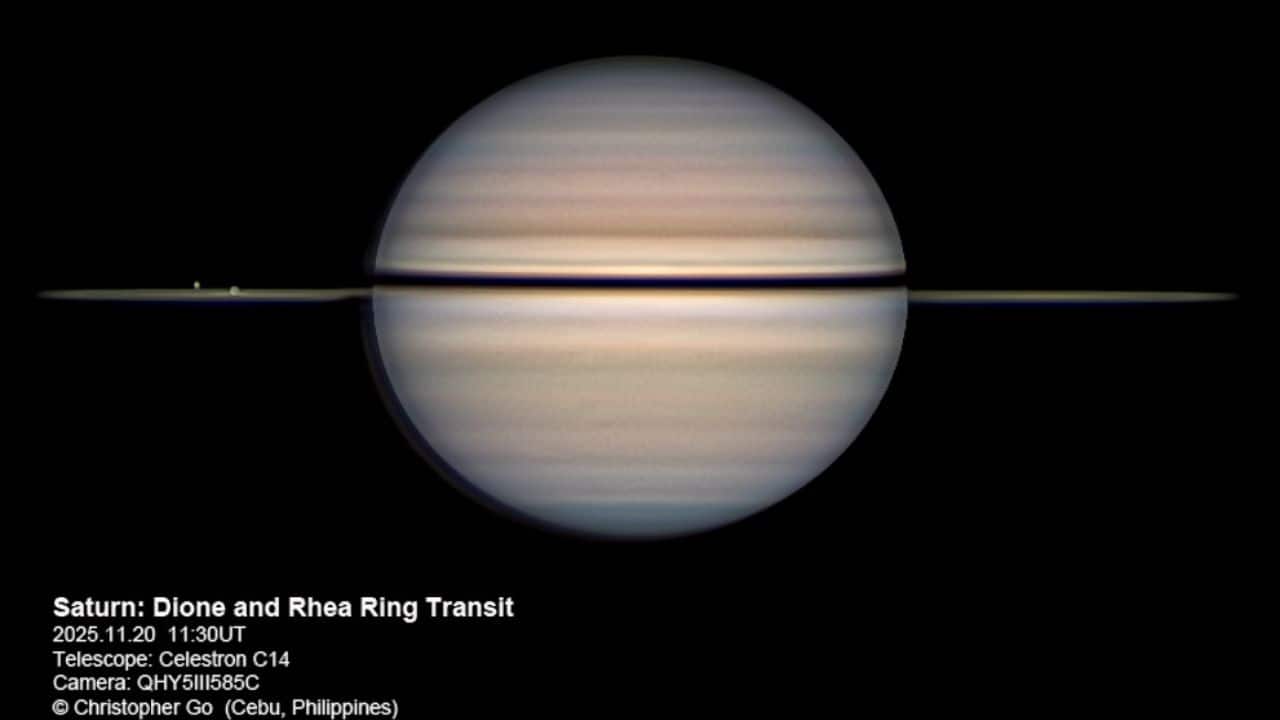
Dione and Rhea glide across Saturn’s nearly edge-on rings in this November view. Ring plane crossings briefly hide the thin rings, with the next series from Earth starting in 2038. (Image: Christopher Go/NASA)
5/10

The observable universe spans everything light reveals, from nearby stars to the cosmic microwave background. It may be one small region within a larger universe or an even broader multiverse. (Image: Wikipedia, Pablo Carlos Budassi)
6/10

Apep’s swirling shells form from two Wolf-Rayet stars orbiting every 190 years, shedding dust with each pass. A third star shapes the gaps until a future supernova ends the dance. (Image: NASA, ESA, CSA, STScI, JWST)
7/10

Comet Lemmon shines with dual tails above China’s Meili Mountains, set against the Milky Way. The comet fades now, but mountains and galaxies evolve over far longer timescales. (Image: Lin Zixuan (Tsinghua U.)/NASA)
8/10
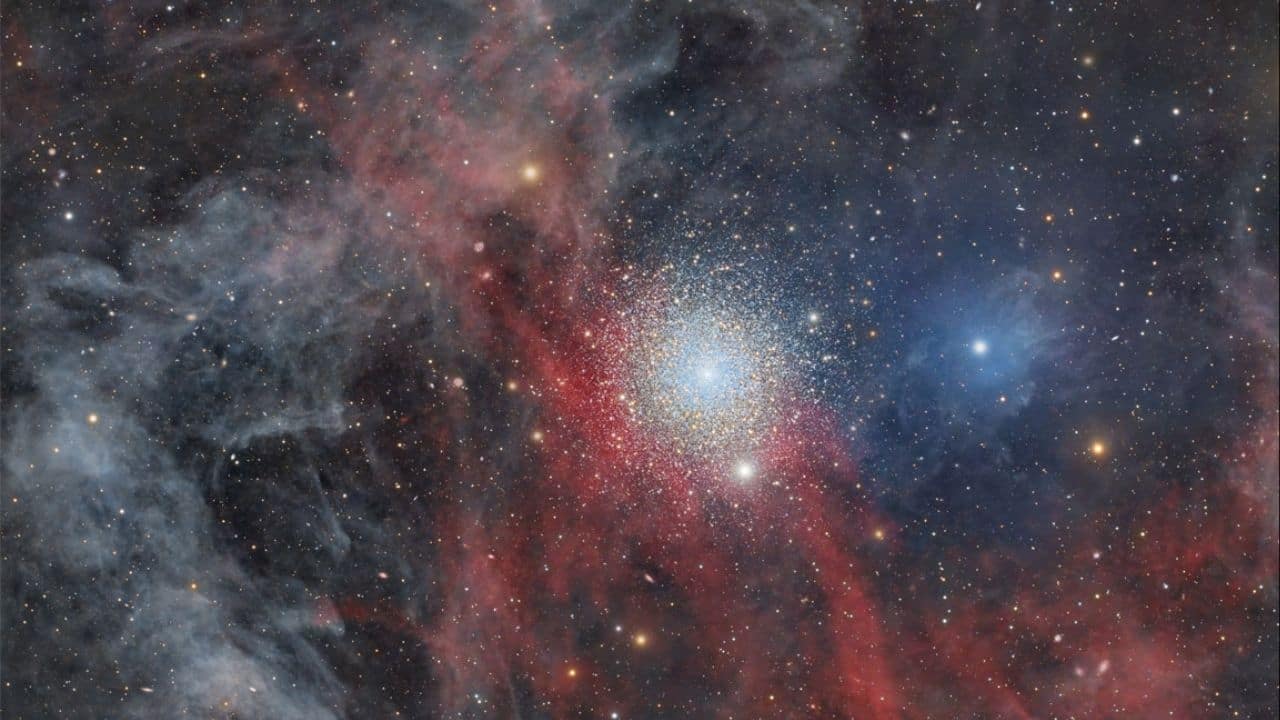
Globular cluster M15 packs over 100,000 ancient stars into a dense core. Long exposures reveal faint surrounding dust. The cluster lies 35,000 light-years away in Pegasus. (Image: Alvaro Ibanez Perez/NASA)
9/10

Edge-on galaxy NGC 1055 spans over 100,000 light-years, showing dust lanes, star-forming regions and a faint boxy halo likely built from a disrupted companion galaxy. (Image: John Hayes/NASA)
10/10
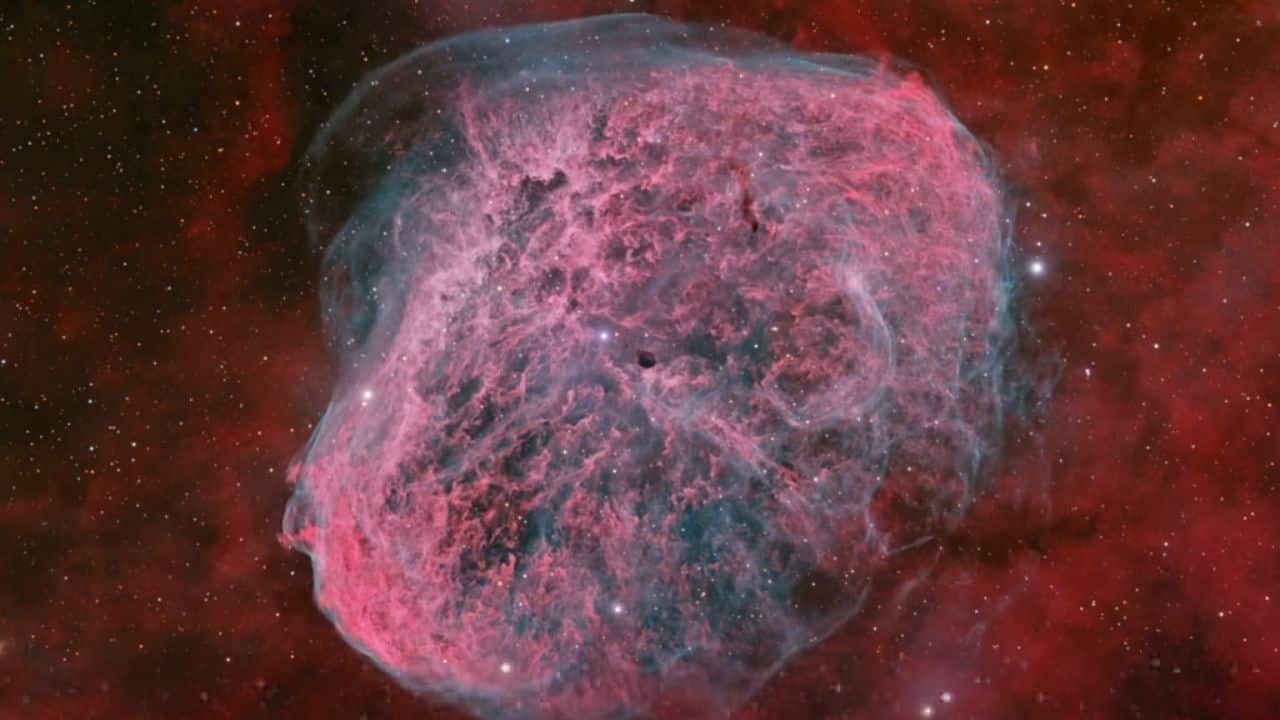
The Crescent Nebula spans 25 light-years, shaped by winds from Wolf-Rayet star WR 136. Its glowing folds reveal past eruptions, and the star will eventually end in a supernova. (Image: Greg Bass/NASA)
Discover the latest Business News, Budget 2025 News, Sensex, and Nifty updates. Obtain Personal Finance insights, tax queries, and expert opinions on Moneycontrol or download the Moneycontrol App to stay updated!



