-
Believed to be extinct from 1990s, DENR-Mimaropa confirms sightings of 10 'Philippine Brown Deers' in Marinduque
Philippine brown deer has been spotted again in Marinduque after decades. Scientists believed this species had gone extinct as it disappeared in 1990s. This sighting has raised hopes of a surviving population and ongoing conservation success.
-

Did snow just create a "Portal"? Toronto snow drift forms walkable tunnel | WATCH
A massive snow drift in Toronto has formed a rare walkable tunnel, drawing attention for its unusual structure and the science behind this short-lived winter phenomenon worldwide.
-
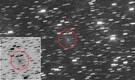
‘Great Comet’ Solar Dive on April 4: When, where and how to watch Comet MAPS approaching the Sun
A rare celestial event is set for April 4 as the ‘Great Comet’ makes an extremely close approach to the Sun. Here’s when and how you can watch it. The comet reaches perihelion at 10:23 AM EDT.
-
Meet the Lion’s Mane Jellyfish: First recorded in 1865, this longest animal can stretch upto 47 metres
At forty-seven metres, this brainless giant is the longest animal ever. Discover the hypnotic "wall of death" hunting in the deep, dark Ningaloo Canyons today.
-
ISS retirement countdown raises alarm for scientists—Will the US lose its edge in space?
The ISS is set to retire by 2030, but uncertainty over its replacement is raising concerns about a potential gap in space research and US leadership. China has already opened its own functional space and lab called Tiangong space station.
-
A 250-pound 'dolphin' defies gravity with a 20-foot leap; What the lens captured will stun you!
Naturalist Bernardo Alps has captured a "Michael Jordan" moment in the Pacific. A pantropical spotted dolphin was filmed leaping 20 feet above sea. This 250-pound acrobat is stunning scientists with its vertical reach and "hang time."
-
A huge 210-foot, airplane-sized asteroid to pass by Earth today at high speed, NASA alerts
Asteroid 2010 RA91 will pass relatively close to Earth, but if it poses no threat, why are scientists still watching it so closely and what could change?
-
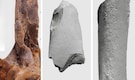
Rare 1-centimetre fossil found in Mongolia’s Gobi desert leaves scientists amazed
A 1-centimetre fossil from the Gobi Desert reveals a tiny mammal that lived with dinosaurs, but how did such a fragile creature survive and remain perfectly preserved?
-
Artemis II Update: NASA rolls out Moon rocket, astronauts enter Quarantine, lunar flyby set for April 1
NASA prepares for Artemis II launch as astronauts enter quarantine and a giant rocket reaches the pad, but what new technology and risks will shape this historic Moon mission?
-
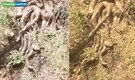
Several Giant pythons appear near Kangra temple in Himachal, viral video leaves locals terrified
A cluster near Kalothare Wali Mata temple turned into writhing pythons, but why were several giant snakes gathered together, and what does this rare sighting mean?
-
What was the 'first plant' on Earth? Scientists traced life journey of this 470-million-years-old plant
The first plants came from algae around 470 million years ago, slowly spreading on land and helping create oxygen and soil for life to grow. They reproduced using spores and formed partnerships with helpful fungi.
-
A ‘Historic First’ in Physics: Tokyo scientists unlock a new way to study atoms using lasers
Scientists have achieved a historic first using lasers to study electron behaviour, revealing new insights into how light interacts with matter at the quantum level.
-
March Equinox 2026: What will happen to Earth during equinox on 20 March?
On March 20, 2026, Earth will experience the March Equinox, when day and night nearly balance worldwide as the Sun aligns directly above the equator. Earth is tilted at about 23.5 degrees, but during the equinox, this tilt is sideways relative to the Sun.
-
Watch: Thousands of bee-eater birds turn Anamalai skies into mesmerising natural ‘orchestra’
Thousands of Chestnut-headed Bee-eaters swirl together near Anamalai Tiger Reserve, creating an orchestra-like spectacle, but what hidden survival secret lies behind their perfectly coordinated flight?
-
Meet Inspector Clouseau: This 3.3-meter male is world’s only known pink manta ray found in the Great Barrier Reef
A rare pink manta ray named Inspector Clouseau has been spotted in Australia’s Great Barrier Reef, stunning scientists and raising questions about genetics, rarity and marine life.
-
Delhi’s ‘Wild Weather’ Explained: Why sandstorms, thunderstorms and rain hit the city suddenly?
Delhi witnessed sudden dust storms, thunderstorms and rain due to a western disturbance. The system brought temperature relief, but more unstable weather is expected over next days.
-
Sørvágsvatn lake: This Faroe Islands lake floats high above the ocean’s edge, but how?
A lake in the Faroe Islands appears to float above the ocean, but the truth lies in perspective, geography, and a cliffside illusion that has long puzzled visitors worldwide.
-
‘Alien-Like’ water found inside a 400-million-year-old plant — How did this happen on Earth?
Scientists have discovered “alien-like” water inside a 400-million-year-old plant, revealing unusual chemistry that could change how science understand Earth’s climate history.
-
NASA confirms three asteroids set to pass near Earth today — How close are they really?
Three asteroids namely 2026 FA asteroid, 2026 EF2 asteroid and 2026 ED3 asteroid, will fly near Earth on March 19, 2026. NASA tracks them closely and confirms all flybys are not harmful to planet Earth.
-
Buried with bronze: Archeologists unearth 2,500-year-old children with elite warrior belts in Italy
Archaeologists in southern Italy discovered children buried with 2,500-year-old bronze warrior belts, revealing surprising insights into ancient social status and burial rituals.
-
Grown in Murshidabad, this rare Kohitur Mango can cost ₹2,000 a piece — But the way it’s sliced will surprise you!
India's rare Kohitur mango from Murshidabad, West Bengal a heritage fruit priced up to 2,000 rupees. This exotic fruit is celebrated for its delicate texture, history, exclusivity and unique botanical traits.
-
Did a 75-year-old whale song reveal ocean secrets? This 1949 recording has the answer
A forgotten 75-year-old recording is now the oldest known whale song, capturing the haunting sound of an ocean that once existed in near silence. The recording remained unknown, concealed for a long time.
-
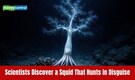
Shape-shifting squid? Scientists capture deep-sea creature 'mimicking tree' 4 km beneath Pacific
A mysterious deep-sea squid filmed 4.1 km below the Pacific can disguise itself as the ocean floor, raising new questions about hidden marine life and what we still don’t know.
-
NASA astronauts to conduct delayed ISS 'spacewalk' today — Watch it live here!
The ISS will host its first spacewalk of 2026 on 18 March at 7:00 a.m. EDT, streamed live by NASA after delays caused by an unprecedented astronaut medical issue. The EVA will be under close observation by NASA teams on Earth using live telemetry.
-
Days are getting longer: Climate change is slowing Earth’s spin at an unprecedented rate in 3.6 million years
Melting ice is not just raising sea levels, scientists say it is slowing Earth’s spin and making days longer, but how this tiny shift could disrupt modern technology is surprising.
-
What these birds do to the sky in March that looks like a 'snowstorm'? Here’s the science behind it
A ‘snowstorm’ in the sky is not weather but millions of migrating snow geese. Snow Goose with their snowy plumage, is responsible for one of the rarest illusions of nature. Here’s the science behind this stunning March phenomenon.
-
Ohio Morning Shock: Did a 7-Ton space rock break apart in the sky? NASA confirms
NASA confirms a 7-ton meteor broke apart over Ohio on 17 March at 8 am EST. This meteor creates a bright fireball and sonic boom visible across multiple states. This space rock broke apart in the atmosphere providing scientists with a rare daylight fireball sighting.
-
A heavy, airplane-sized asteroid '2026 FB' to fly past Earth on 18 March, NASA confirms
NASA is tracking 2026 FB, a 69-foot-wide asteroid set to fly past Earth at a safe distance. Scientists explain why these objects are closely monitored. Will this hit Earth or simply pass?
-
Big Leap at Sea: India successfully tests High-Tech LiDAR Buoy system in Tamil Nadu
India has successfully tested a floating LiDAR buoy system to measure wind and ocean data, boosting weather prediction, offshore energy and marine research capabilities. This marks a breakthrough in indigenous marine technology.
-
Who is Diana Abbadi? The woman who saved 40 cats from Israeli missiles in Lebanon
Amid war in Beirut, Diana Abbadi rescued 40 cats, showcasing how animals provide emotional strength and healing during crisis. Studies suggest that interacting with cats can reduce stress and anxiety levels and lower blood pressure.
-
A hidden ‘whale protein’ can help humans live up to 200 years, scientists say
Scientists are studying a mysterious “whale protein” that helps these giants live over 200 years without cancer, but could this discovery really unlock longer, healthier lives for humans too?
-
Nature Glitch? Rare ‘dual-sex’ crab species discovered in Kerala stuns scientists
A rare crab displaying both male and female traits has been discovered in Silent Valley, Kerala, offering new insights into genetics and evolution. Scientists are still studying this crab which is half male and half female due to Gynandromorphy.
-
Scientists to grow food on Moon and Mars using human waste — here’s how
Scientists are turning human waste into fertiliser for Moon and Mars farming, transforming toxic space dust into soil, but how safe and practical this system is may surprise you.
-
A 31-foot dinosaur-eating giant crocodile discovered in North America
Ancient bite marks, fossilised waste, and a 31-foot predator reveal a chilling story from Earth’s past. What made Deinosuchus so powerful, and what secrets still remain hidden in its bones?
-
A 50-year-old “Nuclear Tomb” holding 120,000 tonnes is cracking—What lies beneath Runit Dome?
With over 120,000 tonnes of radioactive material inside, the cracking Runit Dome is becoming a growing global concern. The dome was designed to contain contamination temporarily and it is cracking slowly.
-
Scientists discover a new “liquid planet” in a molten, mushy state that even smells like rotten eggs
Scientists have discovered a strange “liquid planet” covered in molten magma, challenging known planet types. Could more hidden worlds like this exist, reshaping how we search for habitable planets?
-
Atomic clock stopped working: Why ISRO is concerned over repeated satellite setbacks? NavIC mystery explained
A sudden atomic clock failure on March 13, 2026, disabled a key NavIC satellite within minutes, prompting concerns over India’s GPS alternative and its long-term performance. This event has made ISRO concerned.
-
Yaogan Satellite Launch 2026: China send 8 satellites into orbit in Kuaizhou-11 rocket Launch
China launched Yaogan Satellite into space on 16 March with 8 satellites into orbit with Kuaizhou-11 Y7 rocket marking its fifth flight. This launch happened from Taiyuan Satellite Launch Center in North China.
-
Asteroid warning: NASA confirms two asteroids will make a close approach to Earth today
Two asteroids namely VO142 and 2026 EZ2 will fly past safely on March 17. NASA is monitoring both closely for science and safety.
-
Artemis II Mission: NASA unveils how astronauts will live and work on 10-day trip to Moon
Artemis II mission will mark humanity’s first crewed lunar flight in over 50 years. NASA unveils a 10-day plan of living and working for astronauts who will fly to Moon.
-
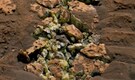
NASA's Curiosity wheel crushed a rock on Mars and revealed an unexpected yellow crystal — what happened next?
A routine drive by NASA’s Curiosity rover accidentally cracked open a Martian rock, revealing rare yellow sulfur crystals. The strange discovery has scientists questioning how such an unexpected mineral formed there.
-
Who built the 125,000-year-old ‘factory’? This German hill may hold clues to Neanderthal activity
Scientists discovered a 125,000-year-old Neanderthal site in Germany where thousands of animal bones were crushed to extract fat, revealing surprisingly advanced survival strategies.
-
What’s happening under Tamil Nadu’s sand? Over 200,000 baby turtles took their first steps into the sea
Over 200,000 sea turtle eggs who were being nurtured in Tamil Nadu hatcheries took their first steps in the sea, marking this a remarkable conservation effort.
-
Solar panels on Moon? Japan’s 6,800-mile Lunar Ring project could power Earth
A Japanese company proposed a concept of 'luna ring' that would extend about 6,800 miles (11,000 km) around the Moon and reach roughly 250 miles (400 km) in width. Scientists in Japan are looking forward to work on this project.
-
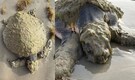
One of the World’s Rarest Sea Turtles found on Texas Beach was covered in ‘green fur’, alarming scientists
World’s rarest, a Kemp’s ridley sea turtle was found stranded on a Texas beach covered in strange green fur. Its green fur appearance raised concern among scientists who worked to rescue and rehabilitate this endangered turtle.
-
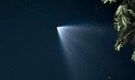
Mysterious "Jellyfish lights" appears in Sikkim’s night sky—What was that glowing object?
A strange “jellyfish flashlight” appeared in Sikkim’s night sky and went viral online. This phenomenon occurred due to a Falcon 9 rocket plume, though scientists have not confirmed anything regarding this night sky happening.
-
Titanium-rich rocks are the reason behind Moon’s magnetic mystery—Here's what scientists found!
Scientists from Oxford University finally explain why some Moon rocks show intense ancient magnetism. Titanium-rich rocks caused brief bursts in the lunar magnetic field.
-
Asteroids Alert! NASA tracks 3 large asteroids racing towards Earth today!
NASA is tracking three asteroids namely 2026 ET2, 2026 EY2 and 2026 CR3 to pass Earth on March 16, 2026. Will they hit Earth? Know more here.
-
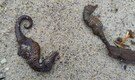
Largest Seahorse Die-Offs: 92 dead seahorses were found near Langeron Beach in Ukarine
A mass die-off of 92 seahorses was reported on Odesa’s Langeron Beach in Ukarine. Scientists are analyzing seawater samples to determine the cause and assess potential threats to the Black Sea ecosystem.
-
Solar flares recorded again by NASA — This time the Sun is producing more than expected
Citizen scientists reviewing NASA data discovered unusually high Solar flare rates, helping researchers better understand the Sun’s magnetic activity and improve space-weather predictions.