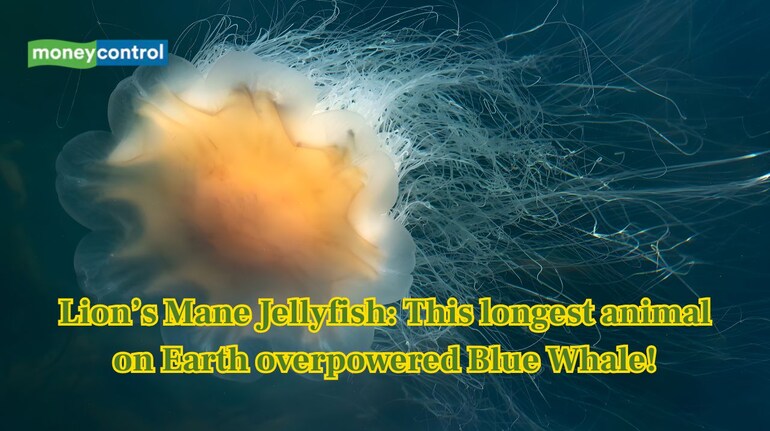

A giant gelatinous creature has smashed all global size records. Scientists found the spiral beast deep within the Ningaloo Canyons. The organism measures a staggering 47 metres in total length.
The Blue Whale look like a small fish when compared to this sea creature. It is known as the lion’s mane jellyfish. The predator was captured on camera by a deep-sea robot. It looks like a ghostly, glowing ribbon floating in the dark.
When did Lion Mane Jellyfish amazed scientists?
In 1865 this jellyfish was found dead on Massachusetts beach. After its examination, scientists discovered that its bell is 2.1 meters (7 feet) across, making it wider than most doorways. What was more shocking were its tentacles. They stretched 36.6 meters (120 feet) behind it. Longer, that is, than any other animal on Earth, even the blue whale.
This Creature uses unique Strategy
This massive hunter uses a unique strategy to catch its prey. It coils its long body into a massive and hypnotic spiral. Thousands of stinging tentacles hang down like a deadly silk curtain. Any small fish touching the thread faces an instant, toxic end.
The creature then reels in the meal for the whole colony. It acts as a floating trap in the vast, midnight zone. This spiral shape is both beautiful and a terrifying natural weapon. Nothing escapes the reach of this ancient, silent deep-sea king.
This Jellyfish is has a Body Without a Brain
The species was Cyanea capillata, the lion’s mane jellyfish. It still holds the record for the longest animal on the planet. It is a massive colony made of thousands of tiny clones. These clones are called zooids who share a single body. Some clones only swim while others only eat or reproduce.
The entire 150-foot string has no central brain or heart. It functions through a complex network of shared nerves and pulses. Each part is specialized to keep the entire giant alive. It is a biological masterpiece of teamwork and deep ocean survival.
How did Scientists led this research?
The Schmidt Ocean Institute led this historic mission off Australia. Their advanced underwater robot, SuBastian, filmed the entire eerie scene. Researchers were stunned when the glowing spiral appeared on their screens. They were exploring the Gascoyne Coast when they found the giant.
The discovery proves that our oceans still hold many massive secrets. Much of the deep sea remains a total mystery to humans. This find highlights the urgent need to protect our fragile waters.
Discover the latest Business News, Sensex, and Nifty updates. Obtain Personal Finance insights, tax queries, and expert opinions on Moneycontrol or download the Moneycontrol App to stay updated!
Find the best of Al News in one place, specially curated for you every weekend.
Stay on top of the latest tech trends and biggest startup news.