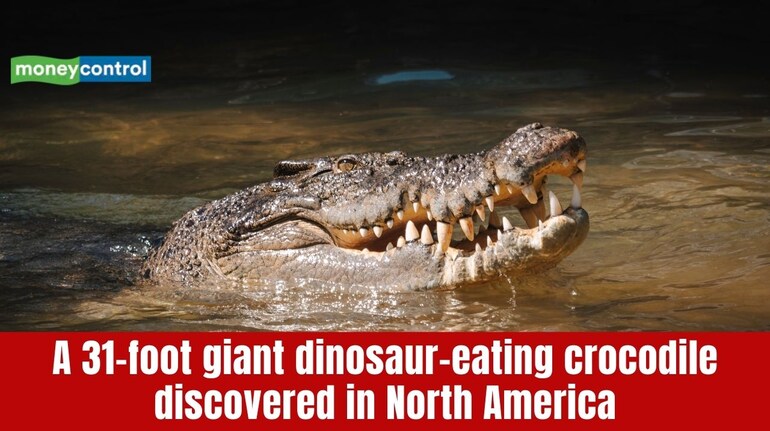

Fossil evidence from the American South is reshaping ideas about ancient predators, as researchers connect scattered finds to reveal the behaviour and scale of a massive crocodile relative from the Late Cretaceous period.
Deinosuchus Fossils Reveal Coastal Predator Behaviour
Along southern creek beds, fossil hunting often resembles careful investigation work today. Small bone fragments and unusual remains slowly point towards ancient coastal environments. In western Georgia, researchers identified bite-marked dinosaur bones and fossilised waste pieces. These clues suggested activity near a warm, shallow shoreline with mixed waters. The fossils date back nearly 79 million years within the Late Cretaceous period.
In March 2010, Columbus State University researchers linked several of these findings together. Dr David Schwimmer and student Samantha Harrell examined spindle-shaped coprolites tied to Deinosuchus. These measured between 8 and 13 centimetres in length. Harrell reported sand and shell fragments within the samples. This indicated brackish conditions rather than purely freshwater environments nearby. The findings strengthened links between bite marks and a recurring predation pattern.
Schwimmer described the scale of these encounters with striking clarity. “In some cases we’re talking about a 29-foot Deinosuchus taking down a 29-foot dinosaur,” he said. The conclusion relied firmly on physical fossil evidence collected locally.
Major Study Redefines Deinosuchus Species Across North America
A wider understanding emerged following a major scientific review in July 2020. Dr Adam Cossette and Professor Christopher Brochu published findings in the Journal of Vertebrate Paleontology. Their work reclassified Deinosuchus as a distinct lineage of giant crocodylians. The fossils studied ranged widely across North America from Mexico to Montana.
Researchers identified three separate species shaped by ancient geography divisions. These divisions were created by the Western Interior Seaway splitting the continent. Western species lived on Laramidia, while eastern forms occupied Appalachia regions. One eastern species, Deinosuchus schwimmeri, honours Schwimmer’s long field research. This classification helped museums better organise previously scattered fossil remains.
 An artistic reconstruction shows Deinosuchus schwimmeri emerging from the water to ambush an Appalachiosaurus. (Image: Bob Nicholls)
Anatomy Clues And Museum Replica Bring Predator To Life
Despite clearer classification, some anatomical features remain difficult to explain fully. Researchers noted a broad snout with unusual openings near its tip. “It had two large holes present at the tip of the snout,” Cossette said. “These holes are unique to Deinosuchus, and we do not know what they were for.” The animal also had thick teeth compared in size to bananas. Such features suggest strong crushing ability rather than simple cutting behaviour.
Evidence points towards a powerful shoreline predator feeding on varied animals. Findings indicate diets likely included turtles, fish and even large dinosaurs. By December 2025, this scientific picture gained a public display form. The Tellus Science Museum in Georgia installed a life-size replica of Deinosuchus schwimmeri. The model measures about 31 feet and uses detailed fossil scans.
Museum officials say the display helps students understand ancient ecosystems more clearly. Visitors can now visualise a predator that once dominated coastal habitats. The discovery raises further questions about similar predators still awaiting identification.

Discover the latest Business News, Sensex, and Nifty updates. Obtain Personal Finance insights, tax queries, and expert opinions on Moneycontrol or download the Moneycontrol App to stay updated!
Find the best of Al News in one place, specially curated for you every weekend.
Stay on top of the latest tech trends and biggest startup news.