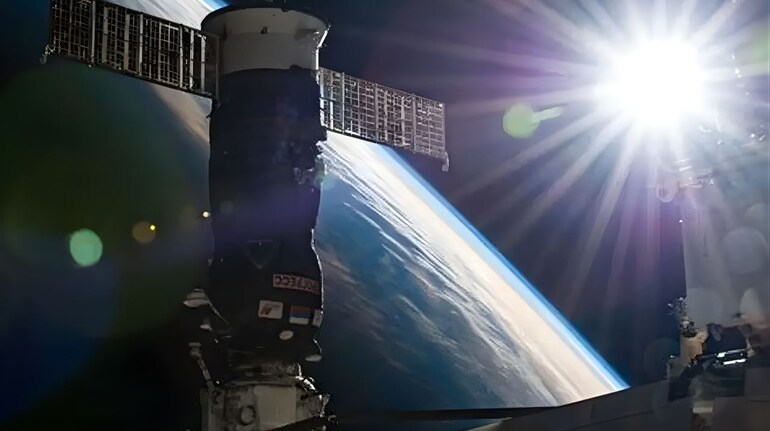

Astronauts are preparing to travel around the Moon again. Scientists at NASA have revealed new details about how the crew of Artemis II mission will live, work and travel during their historic 10-day journey around the Moon. Unlike earlier missions, however, Artemis II is designed to test new technologies that will support long-term lunar exploration and future missions deeper into space.
A Crew of Four Astronauts
The mission will carry four astronauts aboard the Orion spacecraft. The crew includes:
Reid Wiseman who is the mission commander, Victor Glover is the pilot, Christina Koch is the mission specialist and Jeremy Hansen of the Canadian Space Agency
The mission is historic for another reason. It will send the first woman and the first person of colour on a lunar mission.
How Will the Mission Begin?
The astronauts will launch aboard the powerful Space Launch System rocket from the Kennedy Space Center. Shortly after launch, the Orion spacecraft will separate from the rocket and begin its journey toward the Moon.
During the early phase of the mission, astronauts will carefully test the spacecraft’s navigation systems, communications equipment and life-support technology. These tests are critical because Artemis II will be the first crewed flight of the Orion spacecraft.
Living and Working in Deep Space
For about ten days, the astronauts will live inside Orion as it travels hundreds of thousands of kilometres through space. Inside the spacecraft, the crew will monitor spacecraft systems, conduct equipment checks and perform navigation tests.
They will capture images of Earth and the Moon and practise procedures needed for future lunar missions. The spacecraft is equipped with advanced life-support systems designed to provide air, water and temperature control during the journey.
How the 10-Day Mission Will Work
The mission will unfold in three main phases:
| Phase | Days | Activities |
| Launch and Day 1 | Day 1 | Crew launches aboard Space Launch System (SLS) rocket. Initial tests of spacecraft systems will be taken. |
| Journey to the Moon | Day 2 to 5 | The Orion spacecraft will travel on a trans-lunar trajectory. Astronauts will perform system checks and experiments during the trip. |
| Lunar Flyby and Return | Day 6 to 10 | The spacecraft will fly around the Moon and then return to Earth on a free-return trajectory, meaning gravity will naturally guide it back home. |
A Critical Step Toward Future Lunar Landings
Although Artemis II will not land on the Moon, it is a crucial step in the broader Artemis programme. The mission will help engineers confirm that the Orion spacecraft and the Space Launch System rocket are ready for future missions.
Scientists also view the Moon as a testing ground for technologies that may one day support human missions to Mars. For now, Artemis II represents the next giant leap in humanity’s return to deep space.
Discover the latest Business News, Sensex, and Nifty updates. Obtain Personal Finance insights, tax queries, and expert opinions on Moneycontrol or download the Moneycontrol App to stay updated!
Find the best of Al News in one place, specially curated for you every weekend.
Stay on top of the latest tech trends and biggest startup news.