-
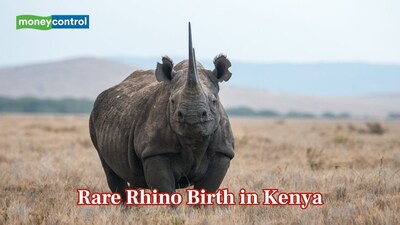
Critically endangered black rhino born in Kenya, raising fresh hope
A tiny black rhino calf has appeared in Kenya’s wild east, surprising rangers and renewing hope for a critically endangered population once thought lost.
-

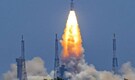
Chandrayaan-3 re-enters Moon’s sphere of influence, provides vital scientific data
Launched on July 14, 2023, aboard an LVM3 rocket from Sriharikota, Chandrayaan-3 was designed to land safely, operate the rover, and perform in-situ experiments.
-
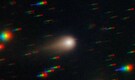
Comet C/2025 K1 (ATLAS) splits into three after sun encounter – see stunning images here
Comet C/2025 K1 (ATLAS) fragmented after its October sun approach, splitting into three pieces. Astronomers captured rare images, revealing pristine material from the Kuiper Belt, shedding light on early solar system.
-
Silent threat of constant micrometeoroid rain on the Moon-Here is what study says
Scientists warn tiny meteoroids constantly bombard the Moon, threatening future bases. Shielding and careful site selection are crucial for safe lunar habitation.
-
Science behind how animals develop their unique spots and patterns
From leopards to zebras, science explain how nature’s chemical dances create spots, stripes and swirls across animal skins and coats.
-
This underwater volcano off Oregon coast delays eruption until 2026
Scientists have delayed predictions for Axial Seamount’s next eruption off Oregon’s coast, now expecting it no earlier than mid-to-late 2026.
-
Chile’s humboldt penguins declared endangered as scientists warn of rapid decline
International bodies have long listed the species as vulnerable and banned its commercial trade. But Chilean scientists say the situation has worsened, demanding stronger local measures.
-
Researchers track land carbon transport across central Arctic Ocean
Researchers reveal 16% of Arctic Ocean carbon comes from land, influencing global carbon cycles and climate, highlighting warming impacts on permafrost and coastal erosion.
-
3I/ATLAS mystery cracked: radio signal confirms interstellar visitor is a comet, not an alien spaceship
Since its discovery, 3I/ATLAS has been at the centre of viral speculation, echoing the debate that followed the first known interstellar visitor, ‘Oumuamua, in 2017.
-
55-million-year-old crocodile eggshells found in Queensland hint at tree-climbing ‘drop crocs’
Scientists in Australia have uncovered ancient crocodile eggshells in Queensland, revealing clues about a mysterious prehistoric species that may have hunted in an unexpected way.
-
Meet Fernando Faciole: Brazilian photographer turning wildlife stories into change wins 2025 Impact Award
Brazilian conservation photographer Fernando Faciole wins the 2025 Impact Award for his powerful image “Orphan of the Road,” highlighting Brazil’s giant anteaters and raising awareness about wildlife protection and conservation efforts.
-
Scientists solved the mystery of ‘forbidden’ black hole merger
Astronomers reveal how two “forbidden” massive black holes merged, solving a cosmic mystery and refining stellar evolution and gravitational-wave models.
-
European Space Agency tests “air-food” for future Moon and Mars missions
The European Space Agency is testing microbes that turn air into protein, creating sustainable astronaut food for space missions and Earth alike.
-
Red-cockaded woodpecker may make comeback in Tennessee
Once gone from Tennessee, the red-cockaded woodpecker may return. Experts restore forests, create habitat and monitor birds for long-term survival.
-
Massive Woolly Rat thought lost for decades, spotted in New Guinea
After decades of absence, the subalpine woolly rat is rediscovered. Researchers reveal its unique size, behaviour and the urgent conservation measures required.
-
Sudden drop in numbers of Southern Elephant Seal shocked scientists
Scientists are alarmed as southern elephant seals face sharp population declines, possibly due to disease and changing oceans linked to global warming.
-
Astronomers found Pleiades cluster, which is 20 times bigger than expected
Astronomers discovered the Pleiades star cluster is twenty times larger, with hundreds of hidden stars moving together, forming a vast stellar family.
-
These three toad species skipped tadpole stage and gave birth to toadlets-Here is what study says
Scientists have discovered three live-bearing toad species in Tanzania that skip the tadpole stage and gave birth to fully formed toadlets. This discovery highlights the urgent need of forest conservation.
-
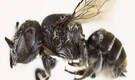
New horned ‘Lucifer Bee’ discovered in wildlands of Australia
Scientists discovered a new native Australian bee, nicknamed as the “Lucifer bee” for its horn-like protrusions. This finding emphasises on the need for habitat protection and research.
-
Scientists Alert: Earth could face higher risk from interstellar objects
A recent study reveals some Earth regions are more likely to be hit by interstellar objects. Equatorial zones face higher risks, seasonal timing matters and new observatories could enhance detection and preparedness.
-
Aurora Alert: Northern lights may glow over 21 states in America
Scientists predict the northern lights could be visible in 21 states in America, offering Americans a rare opportunity to witness one of nature’s most mesmerising celestial shows.
-
Bugs on the Space Menu: How insects could feed future astronauts
ESA’s findings show insects thrive where most species cannot. They need minimal resources and can live on plant scraps or organic waste.
-
Scientists reveal how mantle currents feed volcanic islands remotely
Scientists show deep mantle waves move continental roots across oceans, producing volcanic islands with continental chemical signatures millions of years after rifting.
-
Internet goes wild for the “Kung Fu Rabbit”, here is why it's unique
A hairless baby rabbit went viral online, sparking curiosity about genetics, rare mutations and how this “Kung Fu rabbit” grew healthy fur over time.
-
New study reveal early universe could host cannibal stars, boson stars and primordial black holes
Early Universe could host primordial black holes, cannibal stars and boson stars, offering new insights into dark matter, cosmic structure and particle physics phenomena.
-
Neanderthal DNA may reveal secrets behind human facial development, scientists find
By comparing the human and Neanderthal genomes, the researchers discovered only three single-letter differences in a short DNA segment about 3,000 letters long.
-
The comet 'C/2025 V1' misidentified as 3I/ATLAS, skims past Earth on November 11
A newly discovered comet, C/2025 V1 (Borisov), will pass Earth on November 11, offering astronomers rare insights into objects from the Solar System’s edge.
-
Mystery of enormous black hole collision solved through magnetic forces, say scientists
The event, named GW231123, was first detected by the LIGO-Virgo-KAGRA collaboration. Their detectors captured the gravitational waves created by the violent crash of two immense black holes.
-
Asteroid Alert: NASA monitoring two asteroids approaching Earth on November 11
NASA on alert as two are approaching on 11th November, while three asteroids safely passed on 10th November. The asteroids and comets that approach Earth are periodical and safe.
-
Interstellar Comet 3I/ATLAS baffles astronomers with sudden speed, blue glow and missing tail
In a surprising turn, new images revealed that 3I/ATLAS lost its tail after passing close to the Sun. Typically, solar heat makes comets release gas and dust that form bright tails, but this one disappeared instead.
-
Mysterious blue volcanic goo reveals hidden microbial life deep beneath the sea
Scientists have found microbial traces in deep-sea blue volcanic mud, offering crucial insights into how life may thrive in Earth’s most extreme conditions.
-
Scientists achieve breakthrough in Quantum satellite uplink
Researchers have modelled a viable quantum uplink from Earth to space, overturning assumptions and paving the way for secure global communication.
-
Residents of Texas faces invasion of toxic hammerhead worms, authorities advise caution
A toxic hammerhead worm species is spreading across Texas. They threaten soil health, prey on earthworms and pose risks to humans and pets.
-
Crocodile tears are natural, not emotional-Here is what study says
Crocodiles produce tears, but not from emotions. Scientists reveal tears are biological, caused by feeding and eye lubrication, not sadness or joy.
-
Scientists finally explain 5,200 mysterious holes in Southern Peru
Archaeologists have uncovered the purpose of 5,200 mysterious holes in Peru. The site, predating the Inca, served as a marketplace and later an accounting system.
-
Astronomers captured image of most detailed radio map of milky way
Astronomers have captured the most detailed radio-colour map of the Milky Way, revealing tens of thousands of sources and unseen structures from the Southern Hemisphere.
-
Turning pee into protein: Europe's technology turns astronaut waste into food
Astronauts could soon consume food produced from microbes in space, as ESA develops and tests Solein protein to provide sustainable nutrition for future deep-space missions.
-
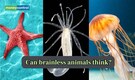
Science behind how “brainless” animals think and learn
These brainless animals are challenging what science once believed. Studies show they can learn, adapt and remember through nerve networks spread throughout their bodies.
-
Hunger and hormonal changes can drive female mice to threaten their pups
Research reveals that female mice behaviour changes with hunger and hormonal signals. The brain neurons determine whether they attack or nurture their young ones.
-
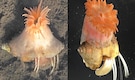
Scientists discovered a pink sea anemone that builds protective shells for crabs
A pale-pink sea anemone constructs homes for its crab companions. The discovery reveals some complex behaviour among these animals under the ocean.
-
NASA and Lockheed Martin’s X-59 ‘quiet’ supersonic jet completes first flight
NASA’s X-59 “Flying Swordfish” has completed its first test flight, marking a breakthrough in quiet supersonic aviation designed to make future air travel faster and quieter.
-
Scientists discover that Sea Urchin's nervous system can acts like brain
New research shows sea urchins have a brain-like nervous system. Neurons are spread across their bodies, with light-sensitive cells included. The findings challenge traditional views of brain evolution and animal intelligence.
-
Aditya-L1 mission tracks coronal mass ejection in India-NASA collaboration
India’s Aditya-L1 mission has captured a Coronal Mass Ejection in visible light for the first time. The observation, in collaboration with NASA, provides new insights into solar eruptions and space-weather forecasting.
-
Biologists discover two rare Hoya plant species in Arunachal Pradesh
For the very first time in India, biologists discovered two Hoya plant species in Arunachal Pradesh. The finding highlights the region’s extraordinary biodiversity and the urgent need for conservation.
-
New eDNA method detects Hammerhead sharks in shallow waters
Scientists have discovered rare hammerhead sharks using environmental DNA in seawater. The findings highlight hidden populations and offer a new tool for urgent conservation efforts.
-
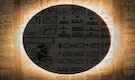
Scientists traced how 'Maya' they predicted eclipses for centuries
Researchers reveal that the Maya predicted solar eclipses for centuries using a sophisticated lunar calendar. This research lead towards extraordinary astronomical skill and mathematical precision.
-
Stargazers alert: Do not miss the pairing of Jupiter and Moon on 9th November
On November 9, Jupiter will appear near the Moon in the night sky, offering stargazers a stunning view and chance to observe Jupiter’s moons.
-
Hidden ‘tail’ found behind the spiral galaxy, M61- Here is what study says
The Vera Rubin Telescope’s first stellar-stream discovery exposes M61’s hidden tail, revealing how galaxies merge and transform over cosmic time.
-
Scientists reveal why giraffes really have such long legs
Scientists reveal that giraffes’ long legs evolved to save heart energy, reshaping our understanding of their iconic height and evolutionary efficiency.
-
Aging stars found to kill their planets, raising new questions for Earth’s future
When stars like the Sun run out of hydrogen in their cores, fusion slows and the outer layers balloon outward. The star can swell up to 1,000 times its original size, marking the start of the red giant phase.