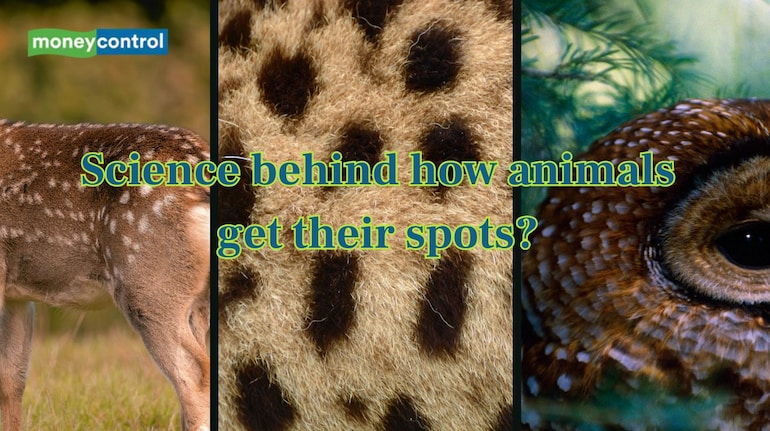
Ever wondered how leopards wear perfect dots or zebra's stripes? Scientists now know that patterns are not random at all. They are guided by nature’s chemistry, mathematics and tiny skin cells. These marks help animals hide, attract mates, or stay cool.
Nature and Its Mysterious Ways
Patterns are everywhere, from fish scales to butterfly wings. Each animal carries a signature design shaped during early growth. These spots and stripes are more than decoration or beauty marks. They are survival tools, built through evolution’s creative design process.
The Discovery of Spots in Animals
In 1952, mathematician Alan Turing proposed a famous model. He said chemicals move under skin, reacting and diffusing together. This “reaction–diffusion” process paints dots, stripes, or swirls on bodies. One chemical spread fast, and the other slows and blocks patterns.
Scientists Take on this Natural mystery
Modern scientists updated Turing’s idea with new observations. Physicists from Colorado Boulder added motion called diffusiophoresis to models. They found cells move along chemical waves to form spots. This makes patterns more realistic, uneven and beautifully imperfect too.
Learning from the Nature’s Canvas
Variation is nature’s way to celebrate balance between chaos and order. Learning about this natural mystery helps scientists to design smart materials and healing tissues. Even in science, beauty hides inside randomness and gentle imperfection.
Nature reminds that art and science work together. From ocean fish to big cats, patterns tell life’s hidden code. Every stripe and spot carries a story shaped by chemistry. Sometimes the wildest designs are nature’s cleverest equations.
Discover the latest Business News, Sensex, and Nifty updates. Obtain Personal Finance insights, tax queries, and expert opinions on Moneycontrol or download the Moneycontrol App to stay updated!
Find the best of Al News in one place, specially curated for you every weekend.
Stay on top of the latest tech trends and biggest startup news.