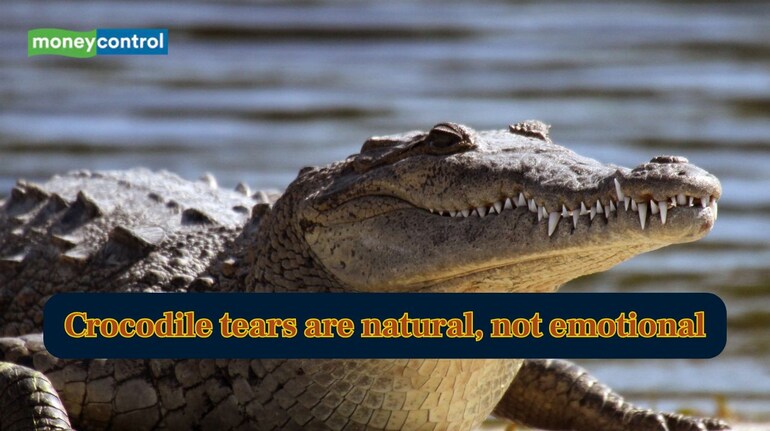
Crocodiles are often said to cry while eating prey. This gave rise to the phrase “crocodile tears” worldwide. However, scientists confirm tears are not linked to emotional feelings. Tear production is mainly a physiological and protective response mechanism.
Why crocodiles produce tears?
Crocodile's tears are caused by jaw movement while feeding regularly. Pressure on their tear glands forces fluid to appear around eyes. When they leave water, tears help lubricate and clean eyes naturally. This tear secretion can sometimes look like emotional crying behaviour.
Emotional crying is unique to humans
Humans are the only species that shed tears emotionally. Other animals secrete fluids from tear ducts for protection only. Reptiles, birds and mammals all produce tears mainly for safety. Crocodile's tears therefore have no link to sadness or joy.
Misunderstanding and cultural impact
The “crocodile tears” expression has persisted in culture and literature. It often symbolise fake emotion or deceit in many countries. But according to scientific understanding, it is clear that crocodile tears are simply biological actions. This correction helps debunk myths about crocodile behaviour and emotion.
What did scientists observe?
Scientists have studied crocodile behaviour in the wild and captivity. The observations confirm tears appear during feeding or after long water exposure. No evidence shows crocodiles respond emotionally like humans do. The tears are purely biological, not connected to feelings.
Discover the latest Business News, Sensex, and Nifty updates. Obtain Personal Finance insights, tax queries, and expert opinions on Moneycontrol or download the Moneycontrol App to stay updated!
Find the best of Al News in one place, specially curated for you every weekend.
Stay on top of the latest tech trends and biggest startup news.