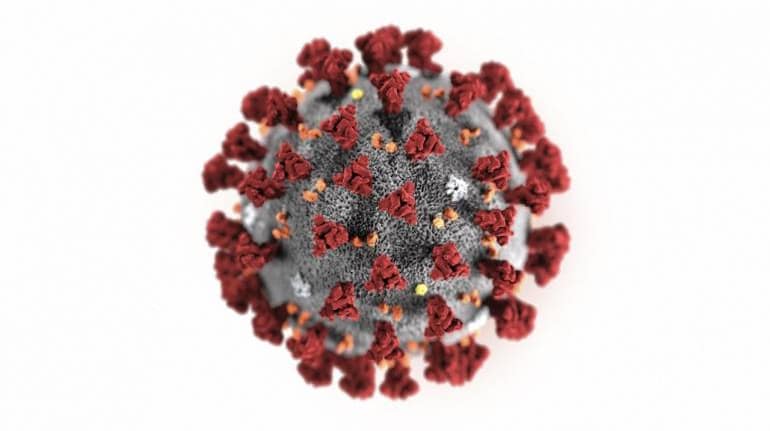
India has over 135 reported cases of COVID-19. While the government is taking measures to curb the spread of coronavirus, several reports online suggest the lack of enough test kits for a population of over 1.3 billion people. On a global level, the numbers are a lot higher.
Amidst the rising number of reported coronavirus cases around the world lies a relatively straightforward test, which has been around for decades, but has not been developed to quickly handle large scale epidemics.
Polymerase Chain Reaction (PCR) is a test that is said to be the most reliable method of diagnosing a viral infection in a patient. PCR is highly sensitive and detects the slightest existence of the virus in the sample.
To run PCR tests, a doctor swabs a patient’s nose or throat and sends the sample to a lab. The lab then looks for tiny snippets of the virus’s genetic material. The process, although complicated, is said to be very reliable.
However, in spite of being touted as the ‘gold-standard testing platform’ for viruses, the biggest hurdle for scientists is its turnaround time. PCR tests are relatively slow.
Physicians would, ideally, be able to run tests in an office or at a patient’s bedside. However, due to a lack of large-scale investment, there has not been a way to commercialise such a test even when the technology exists.
Currently, the samples have to be repeatedly brought up to high heat and back down in a process called thermocycling, which is done on a specific machine. The process takes hours to generate results, which ideally should not be the case when handling pandemics.
Follow all Coronavirus updates LIVE: Death toll in India climbs to 147
“Not every lab can do PCR. It requires a very clean lab, and it’s hard to troubleshoot,” Catherine Klapperich, director of the Laboratory for Diagnostics and Global Healthcare Technologies at Boston University, said in a report by The Verge.
Labs that can do PCR testing need special approval to run tests for patients, and getting permission can take months.
Normally, PCR methods work well. But in an infectious disease outbreak, when diagnosing patients quickly is of utmost importance, having the infrastructure to develop a point of care tests would improve the response — to this and future pandemics.
“The tools are there, for engineers. We have to put them together, which requires a lot of systems to work together,” Klapperich says.
Discover the latest Business News, Sensex, and Nifty updates. Obtain Personal Finance insights, tax queries, and expert opinions on Moneycontrol or download the Moneycontrol App to stay updated!
Find the best of Al News in one place, specially curated for you every weekend.
Stay on top of the latest tech trends and biggest startup news.