





On April 17, Sunith Rao took off from Bir in Himachal Pradesh on a routine flight. The site is a hot spot for paragliding and draws some of the top pilots from around the world. By the time he reached Dharamsala in the north-west, around 45 km from the start, he realised he had been slower than usual.
But he also sensed the perfect conditions that could allow him to soar longer than usual. He soon turned his attention to the record for the longest flight by an Indian pilot — a distance of 256.49 km logged by Debu Choudhury in 2022.
“On that day, the cumulus clouds had formed beyond the 65 km point, where you don’t usually see them. These were signs of good thermals, which allow the glider to soar higher. I had also taken off earlier than usual, so I realised this was going to be a long flight,” Rao, 27, says.
By the time he landed that evening, Rao had the record — over 8 hours 29 minutes, he had flown 259.84 km. To put it in context, that’s the distance between Mumbai and Satara or Delhi and Rishikesh according to Google maps.
Rao had also bettered his own distance of 245 km that he had flown last year. It was the mark of a rapidly improving pilot, who has been making quick progress over the last few years.
First flight
Rao grew up around paragliding. Back in 1997, his father, Sanjay, started the flying school Nirvana Adventures in Kamshet near Lonavala.
At age 3, Rao took his first tandem flight, a harness devised through local jugaad that allowed him to fly with his mother Astrid. By the time he was 9, he was working with a glider on the ground. It was a long wait until he could finally fly solo.
“He was really small and light and we didn’t have a glider that suited his weight. I reached out to a British manufacturer, asking them to develop gliders for the Asian and Indian market, where the average adult is way lighter than the Europeans. It was the only way I could get a glider for Sunith,” Sanjay recalls.
 By the time Sunith Rao was 9 years old, he was working with a glider on the ground but it was a long wait until he could finally fly solo.
The delay meant that Rao’s basics were thorough by the time they could find a glider for him. At 14, he finally took his first solo flight, the initial nerves making way for a sense of exhilaration to finally set off on his own journey. Like most other students, the initial drill was to takeoff from a small hill, make a few turns and land in a field at the bottom, what is called “top to bottom” in paragliding parlance. But while most beginners would be asked to log 10-15 of these flights before graduating to the next step, Sanjay pushed his son to finish a hundred, which took him close to a year.
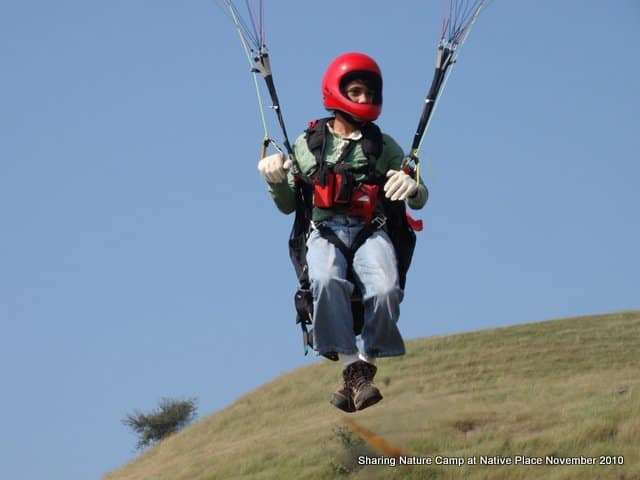 At 14, Sunith Rao took his first solo flight. His father had to reach out to a British manufacturer, asking them to develop gliders for the Asian and Indian market, where the average adult is way lighter than the Europeans.
A couple of years later, Rao had his first taste of flying cross-country in Kamshet. The conditions allowed him to gain height and he landed around 7 km away from the takeoff.
“While growing up, I had heard of people flying for miles from one spot to another. It sounded like an incredible thing to do. I was hooked on after that first flight,” he recalls.
Flying challenges
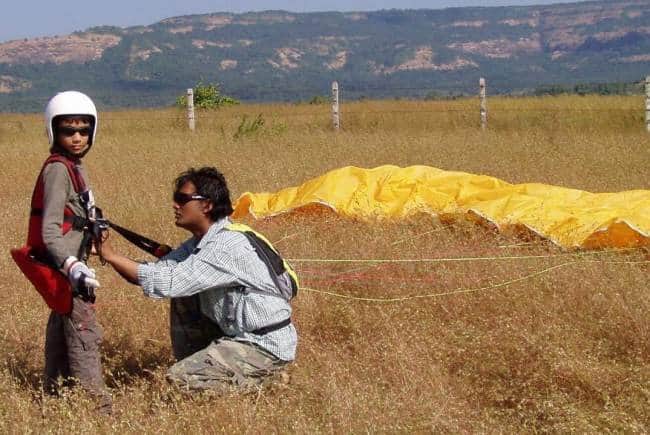 Sunith at age 9 with his father Sanjay Rao.
At age 3, Rao was diagnosed with dyslexia. Right through school, his parents realised that reading and writing wasn’t his thing. Instead, they would have a tutor come home and read out the lessons.
“The boy would be sitting at the table holding his chin, but he would be listening to every word,” Sanjay says.
It was the same on his many visits to the flying school in Kamshet. Rao would spend hours in the classroom during theory sessions, listening intently to the instructions being delivered to other students. Sanjay would source videos as a substitute for manuals that addressed everything from flying to understanding clouding formation and weather patterns. Even today, Rao prefers a podcast over a book.
“That turned out to his advantage because he doesn’t follow convention while flying. He’s got his own approach in the air, a very different way of thinking. That’s what makes him a good competition pilot,” Sanjay says.
 Sunith Rao (centre) with parents Sanjay and Astrid.
The access to the sport allowed Rao to log many hours in the air and he soon started focussing on performance.
“The top pilots of the world are more or less the same when it comes to skills. The best stand out with their decision-making — understanding the sky, terrain and wind, where the next thermal is likely to be and the kind of tactical calls that need to be made,” he says.
In 2018, Rao went to his first competition in Panchgani. Around the same time, an internship in data mining and marketing made it evident that his interest lay in flying. He started gaining experience at various competitions in India and abroad, even finishing on the podium in the lower classes. In the time ahead, he wants to gather enough points to qualify for the World Paragliding Championships in 2025.
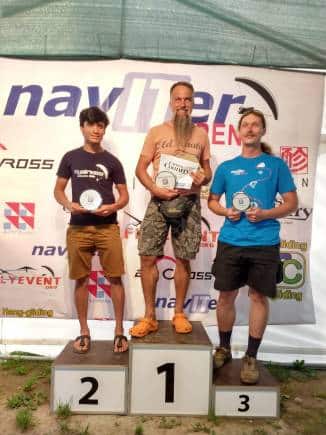 Sunith Rao came second in Slovenia paragliding competition.
“There’s a lot of support for pilots from top paragliding nations like France and Switzerland — more flying spots, academies for advanced training and more lucrative job opportunities. In India, most paragliding is still recreational and once you reach a good level, there’s no further guidance,” Rao says.
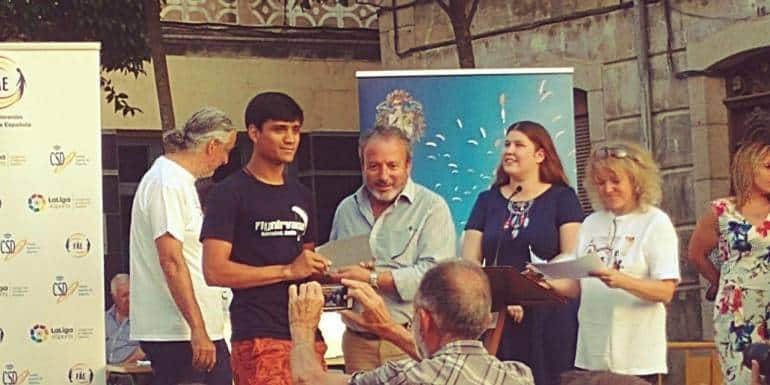
 Sunith Rao came first in paragliding in Àger, Spain.
Record flight
To continue his progress, Rao makes the annual visit to Bir every April. Back in the day, he had trained under Choudhury, one of India’s experienced pilots and the first to log over 200 km in 2009. He considers the area around Bir to be ideal for long flights.
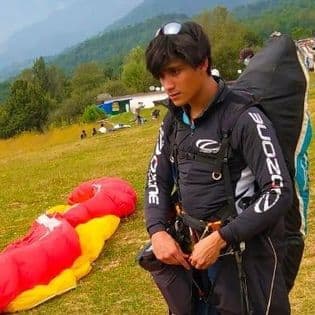 Sunith Rao's landing in Bir.
“The terrain is perfect and there are good thermals since the Dhauladar is the first mountain range that the hot winds from the plains encounter. And the days are long in summer, so you can soar longer,” Choudhury says.
The conditions looked good as Rao set off towards Dharamsala that morning. The snow-capped mountains around him were radiant, but he had little time to appreciate the surroundings.
“There are decisions to be made all the time if you want to fly fast and efficiently. I had noticed that the wind was blowing from the west lower down, so I knew I had to drop altitude and make the most of it once I turned around near Dalhousie. Two hours into the flight, I realised that the record was possible,” he says.
 Sunith Rao at a competition in Piedrahita, Spain.
Rao stayed well above 4,000 m for a couple of hours and climbed to a maximum altitude of 4,595 m. He needed multiple layers of clothing and battery-heated gloves to keep warm. Once he turned at the 80 km mark, he set off towards Mandi in the south-east.
“There’s about nine hours of flying time that you get before the wind starts blowing down the mountain and the thermals shut off. So, I decided to turn around once I was near Parashar Lake in Mandi,” Rao says.
 Sunith Rao at a competition in Chabre, France.
The mental calculation told him that he had achieved the record, but he still had to land close to the start point to register a complete flight. The longest flight in the region is 272 km logged by Philipp Zellner of Austria.
“I experienced this rush the moment it was done, this incredible feeling of euphoria. But after a while it was back to thinking what’s next. It’s going to be very tricky and I’ll have to be a lot more efficient if I want to beat Philipp’s mark. But I certainly want to give it a go,” he says.
Discover the latest Business News, Sensex, and Nifty updates. Obtain Personal Finance insights, tax queries, and expert opinions on Moneycontrol or download the Moneycontrol App to stay updated!
Find the best of Al News in one place, specially curated for you every weekend.
Stay on top of the latest tech trends and biggest startup news.




