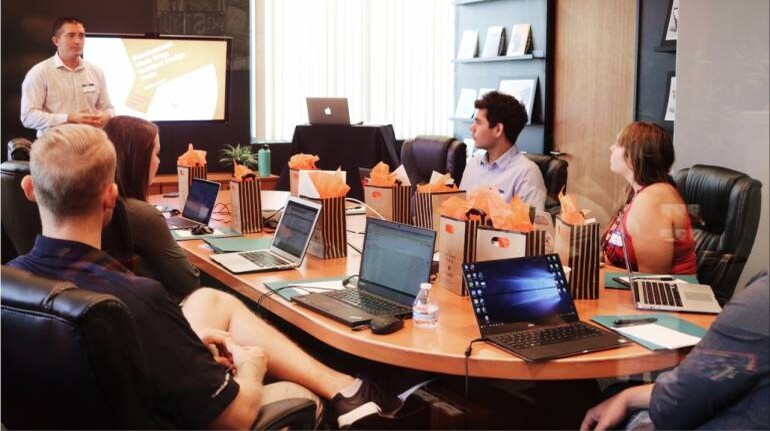
Meta has announced that failing to comply with Mark Zuckerberg's three-day-a-week policy would result in the responsible employees getting fired. Goldman Sachs has told workers they need to be in the office five days a week, without fail. Zoom and TCS have also called its employees to return to office. Tesla's Elon Musk has always been a supporter of working from the office.
As leading global companies begin to put pressure on employees to begin working from offices again, other firms are likely to follow suit. But why are companies increasingly urging their workers to give up on remote work?
"Because the labour market is looser and there's more talent to be hired, I think the employers think they'll be able to get their way," Dr Grace Lordan, associate professor in behavioral science at the London School of Economics told Business Insider. Companies feel confident in taking a "like it or lump it and we hire somebody else" approach, she said.
There is also a certain kind of CEO -- noticeably skewing male and older, Dr Lordan said -- who have been drawing from this "command and control" playbook as a way to rebuild an employee base that suits their idea of being hard-working and productive.
"This belief of a certain cohort of people, and they are represented across all sectors, that presentee-ism is productivity, for them it's perfectly rational that if somebody doesn't want to come into the office then that basically means they're not somebody who wants to add value to the firm," the professor told the publication.
Highlighting the sharp disconnect between the way CEOs and employees think about work right now, Stanford economist Nick Bloom told Business Insider, "For most employees, life is partly work, but partly things outside work. These elite CEOs probably work 100-plus hours a week and they're much more work-focused."
Bloom also elaborated that it's all part of a reversal in power as the world recovered from the pandemic. A number of companies that recorded a bump in business during the pandemic went on a hiring spree, triggering the "Great Resignation" as employees quit for higher salaries and perks. With flexible top management, employees enjoyed an unprecedented amount of autonomy while deciding how and where they worked.
But now, for CEOs, it's "them versus us," Bloom added -- a sharp contrast from the pandemic-era push towards empathetic leadership. "What happens is you get higher quit rates -- but it's not evenly distributed."
Discover the latest Business News, Sensex, and Nifty updates. Obtain Personal Finance insights, tax queries, and expert opinions on Moneycontrol or download the Moneycontrol App to stay updated!
Find the best of Al News in one place, specially curated for you every weekend.
Stay on top of the latest tech trends and biggest startup news.