A new scientific paper underlining that, globally, there are a high number of preventable cancer incidences and deaths annually, has yet again put the spotlight on India.
India does worse than the world average when it comes to cancer cases due to avoidable causes.
According to Dr Tejinder Singh, consultant, medical oncology with Apollo Cancer Centres in Navi Mumbai, compared to the Lancet study, the risk of preventable cancer is even higher in nations like India.
The latest paper by Lancet assessed 34 risk factors for cancer across 204 countries and territories and concluded that half of the tumours in men and a third of cancer cases in women—44.4 percent in total—stem from avoidable risk factors.
Prohibitive treatment cost a hurdleDr Ravi Mehrota, former director of the ICMR’s National Institute for Prevention and Research of Cancer, highlighted that, for a country like India, where prohibitive costs often make cancer treatment unavailable for a large number of patients, the emphasis should largely be on prevention.
“We are, for instance, the largest contributor of cervical cancer which can be prevented with the Human Papilloma Virus (HPV) vaccine,” he said. “Initiatives like HPV vaccination and mass awareness about the bad effects of tobacco and alcohol, and modification in lifestyle should be prioritised aggressively to reduce the cancer burden in the country,” he said.
Also read: To boost herbal products exports, industry bats for GMP compliance by Ayurvedic drug makers
The Union health ministry, starting this year, is looking to launch HPV vaccine for adolescent girls.
In India, various researchers have estimated 40 percent cancer cases are tobacco-related, 20 percent infection-related and 10 percent because of other factors. All these are caused by potentially modifiable or preventable factors.
The Lancet paper did a detailed analysis of cancer incidence, mortality, and risk factor data from across the world. The study found that these risk factors, ranging from tobacco use to workplace carcinogen exposure, caused 4·45 million deaths and 105 million disability-adjusted life years (DALYs).
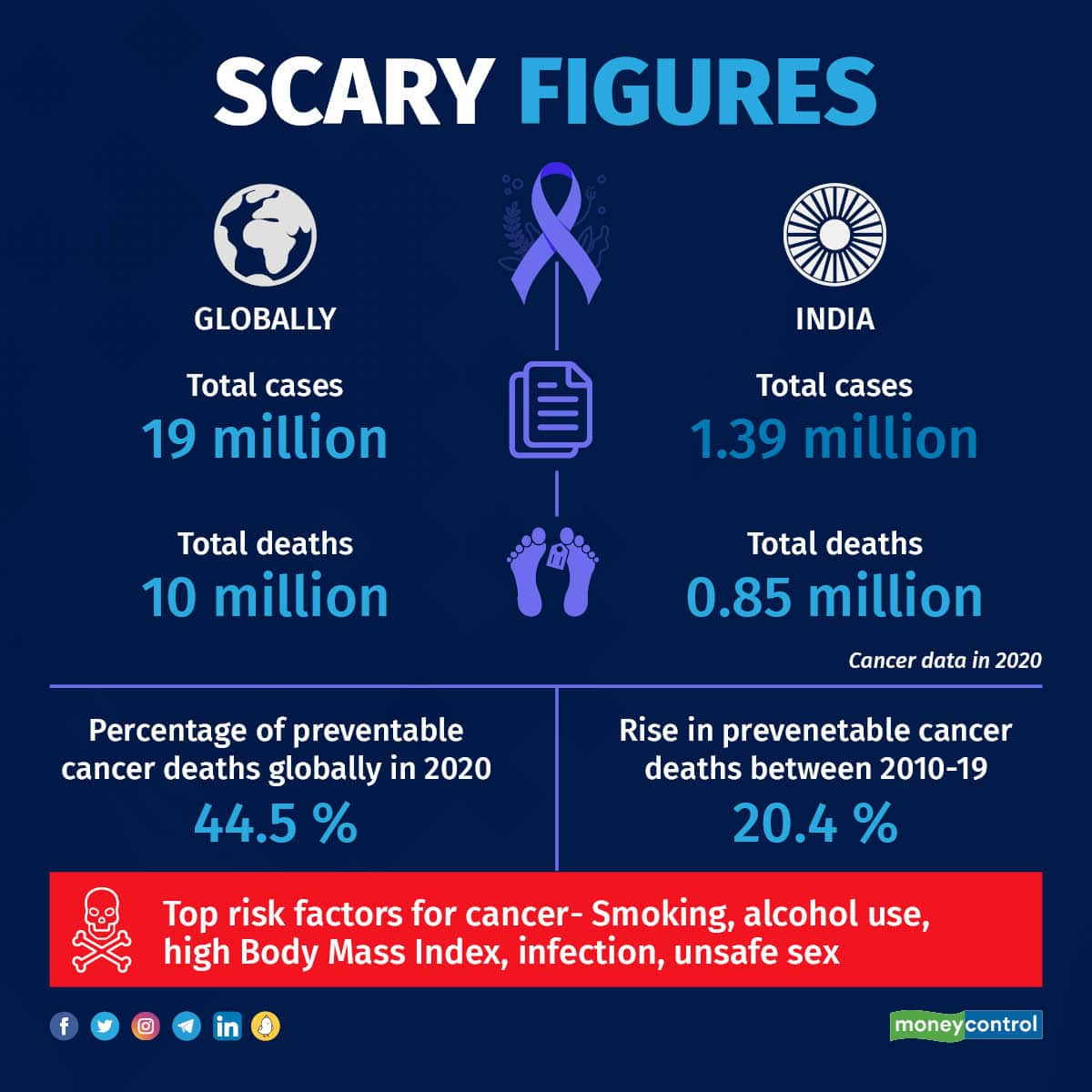
In 2020, more than 19 million new cancer cases were diagnosed worldwide, and 10 million people died.
The Global Cancer Observatory says that, by 2040, around 30 million new cancer cases and 16 million deaths are feared annually.
In India, according to the Indian Council of Medical Research’s National Cancer Registry Programme, nearly 1.39 million new cancer cases were recorded in 2020, and more than 8.5 lakh patients succumbed to the disease.
Extrapolating the numbers, it can be assumed that more than 6-7 lakh cases could have been avoided in India.
Smoking main villainSmoking, the Lancet study found, is the leading cause of preventable tumours by a factor of 4, followed by alcohol and obesity. Other causes included pollution, unhealthy diet, and exposure to harmful chemicals. It has also underlined that deaths from preventable cancer increased 20.4 percent, globally, from 2010 to 2019.
“We have been seeing a greater number of head and neck cancers, mainly due to the high use of tobacco,” Dr Tejinder Singh of Apollo Cancer Centres said. Cancers of oesophagus, colorectal, breast, endometrial, and kidney cancer are mostly related to obesity, he added.
“Smoking is the most important avoidable risk factor which is associated with cancer mortality," he said.
Figures also show that 10 million people died of cancer worldwide in 2020, with a whopping one-third because of smoking, alcohol consumption, and obesity.
In India, where oral, breast, cervical, lung and gastric cancers are at the top, concerns specific to the population have mainly been smokeless tobacco, areca-nut chewing (often with tobacco), country-made liquor and infections (mostly ano-genital HPV and Hepatitis).
Also read I What is the true burden of cancer? 13 states in India not even trying to know
“Unique dietary habits (deep fried and spicy food), coupled with an increasing burden of obesity and a propensity of the population towards physical inactivity, is also a growing area of concern,” a study published a few years back had noted.
‘Use data to define strategies’Dr Rahul Bhargava, principal director of hematology and bone marrow transplant with Fortis Memorial Research Institute, said that in low-middle income countries, studies like the Lancet paper should be used to define and formulate cancer prevention strategies.
“The need of the hour is to use data from these analyses to have strategies for behavioural modification for both prevention and early detection of cancer. This disease continues to be a big burden on the already-stressed health care system in India,” he said.

Discover the latest Business News, Sensex, and Nifty updates. Obtain Personal Finance insights, tax queries, and expert opinions on Moneycontrol or download the Moneycontrol App to stay updated!
Find the best of Al News in one place, specially curated for you every weekend.
Stay on top of the latest tech trends and biggest startup news.