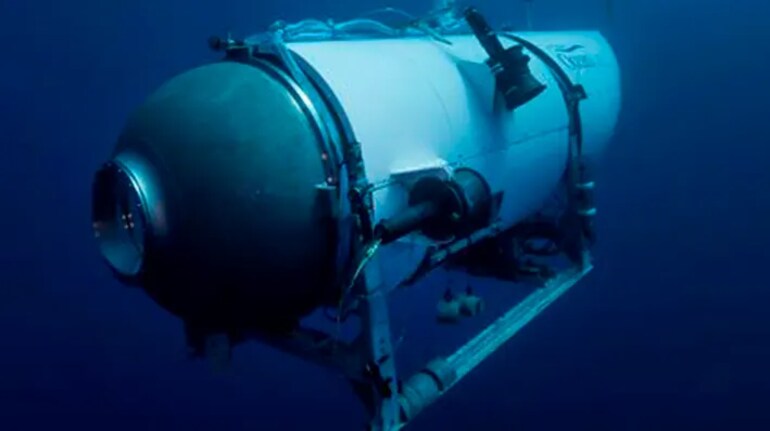
Years before OceanGate’s submersible craft went missing in the Atlantic Ocean with five people onboard, the company faced several warnings as it prepared for its hallmark mission of taking wealthy passengers to tour the Titanic’s wreckage.
It was January 2018, and the company’s engineering team was about to hand over the craft — named Titan — to a new crew who would be responsible for ensuring the safety of its future passengers. But experts inside and outside of the company were beginning to sound alarms.
OceanGate’s director of marine operations, David Lochridge, started working on a report around that time, according to court documents, ultimately producing a scathing document in which he said the craft needed more testing and stressed “the potential dangers to passengers of the Titan as the submersible reached extreme depths.”
Two months later, OceanGate faced similarly dire calls from more than three dozen people — industry leaders, deep-sea explorers and oceanographers — who warned in a letter to its CEO, Stockton Rush, that the company’s “experimental” approach and its decision to forgo a traditional assessment could lead to potentially “catastrophic” problems with the Titanic mission.
Now, as the international search for the craft enters another day, more is coming to light about the warnings leveled at OceanGate as the company raced to provide extreme tourism for the wealthy.
A spokesperson for OceanGate declined to comment on the 5-year-old critiques from Lochridge and the industry leaders. Nor did Lochridge respond to a request for comment.
Rush, the company’s CEO, is one of the passengers on the vessel and was serving as its pilot when it went missing Sunday, the company said Tuesday.
An aerospace engineer and pilot, he founded the company, based in Everett, Washington, in 2009. For the past three years, he has charged up to $250,000 per person for a chance to visit wreckage of the Titanic, which sank in 1912 on its inaugural trip from England to New York.
The critiques from Lochridge and the experts who signed the 2018 letter to Rush were focused in part on what they characterized as Rush’s refusal to have the Titan inspected and certified by one of the leading agencies that does such work.
Lochridge reported in court records that he had urged the company to do so, but that he had been told that OceanGate was “unwilling to pay” for such an assessment. After getting Lochridge’s report, the company’s leaders held a tense meeting to discuss the situation, according to court documents filed by both sides. The documents came in a lawsuit that OceanGate filed against Lochridge in 2018, accusing him of sharing confidential information outside the company.
In the documents, Lochridge reported learning that the viewport that lets passengers see outside of the craft was only certified to work in depths of up to 1,300 meters.
That is far less than would be necessary for trips to the Titanic, which is nearly 4,000 meters below the ocean’s surface.
“The paying passengers would not be aware, and would not be informed, of this experimental design,” lawyers for Lochridge wrote in a court filing.
The meeting led OceanGate to fire Lochridge, according to court documents filed by both sides. OceanGate has said in court records that he was not an engineer, that he refused to accept information from the company’s engineering team, and that acoustic monitoring of the hull’s strength was better than the kind of testing that Lochridge felt was necessary.
The company said in its lawsuit that it appeared Lochridge was trying to be fired. Lochridge responded by alleging wrongful termination. The legal battle ended in a settlement later in 2018.
The separate warning that OceanGate received that same year came from 38 experts in the submersible craft industry; all of them were members of the Manned Underwater Vehicles committee of the Marine Technology Society, a 60-year-old industry group that promotes, studies and teaches the public about ocean technology. The experts wrote in their letter to Rush that they had “unanimous concern” about the way the Titan had been developed, and about the planned missions to the Titanic wreckage.
The letter said that OceanGate’s marketing of the Titan had been “at minimum, misleading” because it claimed that the submersible would meet or exceed the safety standards of a risk assessment company known as DNV, even though the company had no plans to have the craft formally certified by the agency.
“Their plan of not following classification guidelines was considered very risky,” Will Kohnen, the chair of the committee, said in an interview Tuesday.
The industry leaders said in their letter that OceanGate should, at minimum, test its prototypes under the watch of DNV or another leading certification company.
“While this may demand additional time and expense,” the signatories wrote, “it is our unanimous view that this validation process by a third-party is a critical component in the safeguards that protect all submersible occupants.”
Kohnen said that Rush called him after reading the letter and told him that industry standards were stifling innovation.
Submersibles, unlike boats and other vessels, are largely unregulated, particularly when they operate in international waters, said Salvatore Mercogliano, an associate professor of maritime history at Campbell University in North Carolina.
Because the Titan is loaded onto a Canadian ship and then dropped into the North Atlantic near the Titanic, he said, it does not need to register with a country, fly a flag or follow rules that apply to many other vessels.
“It’s kind of like a boat on the back of a trailer,” Mercogliano said. “The police will ensure the trailer meets the requirements to be on the road, but they really won’t do a boat inspection.”
The Passenger Vessel Safety Act of 1993, which regulates submersibles that carry passengers and requires that they be registered with the Coast Guard, does not apply to the Titan because it does not fly an American flag or operate in American waters, he said.
Rush has spoken publicly in the past about what he viewed as regulatory red tape in the industry.
“There hasn’t been an injury in the commercial sub industry in over 35 years,” he told Smithsonian Magazine in a profile published in 2019. “It’s obscenely safe, because they have all these regulations. But it also hasn’t innovated or grown — because they have all these regulations.”
In a CBS report last year, David Pogue, a former New York Times technology columnist, joined one of OceanGate’s Titanic expeditions and said the paperwork that he signed before getting onboard warned that the Titan was an “experimental vessel” that had not been “approved or certified by any regulatory body, and could result in physical injury, emotional trauma or death.”
This article originally appeared in The New York Times.Discover the latest Business News, Sensex, and Nifty updates. Obtain Personal Finance insights, tax queries, and expert opinions on Moneycontrol or download the Moneycontrol App to stay updated!
Find the best of Al News in one place, specially curated for you every weekend.
Stay on top of the latest tech trends and biggest startup news.