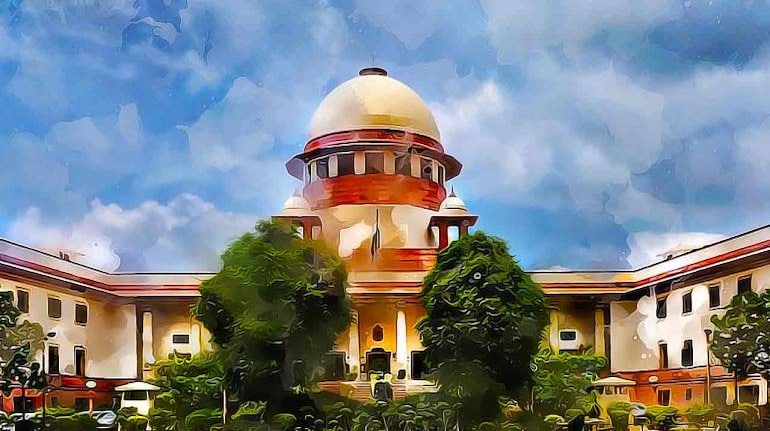
The Supreme Court on February 17 set aside the interim order passed by the Punjab and Haryana High Court that stayed the implementation of the Haryana state's law providing for 75% reservation in the private sector.
The apex court set aside the stay order today on a petition filed by the state of Haryana. The SC has requested the high court to decide the batch of cases challenging the law within a period of one month. It further asked the parties involved in the case not to seek any adjournments when the high court hears the case on merits.
The top court has directed the state of Haryana to ensure that no coercive steps are taken against employers that are found to be in violation of the provisions of this law until its constitutional validity is decided.
The state of Haryana had moved the top court after the high court stayed the implementation of the law on February 3. The grounds for mounting this challenge was inadequate hearing given to the state by the high court before passing the stay order.
Solicitor General Tushar Mehta arguing for the state said that any law passed by the Parliament or a state assembly is presumed to be constitutional and cannot be stayed without sufficient reason.
On the other hand, the counsel representing private employers and their associations argued that the law does not have constitutional backing as it talks about carving out a quota in the private sector, something that the constitution is silent on.
While the Supreme Court agreed that this law raises larger and important issues concerning reservation, it also expressed concern about the way the law was stayed by the high court.
The Supreme Court bench said that it is an established principle that an implemented law can be stayed only when there is found to be some "patent and manifest illegality or unconstitutionality". In this case, the high court did not give adequate reasoning for staying the law leading to the concern regarding the manner in which the law was stayed.
On being told that the law may have an adverse effect on employers as it provides for punitive action for entities not setting out the requisite quota, the apex court said that a direction can be passed for not taking coercive action till the main case is decided. But, "this is not the way a statute is dealt with", the bench said. "If this (stay order without sufficient reasons) is permitted then look at the consequences... all statutes can be stayed with one-line orders then."
The court, as such, set aside the stay order and asked the high court to hear the case on merits within the stipulated period of time.
The Haryana state’s law under challenge came into effect on January 15 and provides for 75% reservation in all private sector organisations for the local candidates. This law is applicable for all employment opportunities up to the wage band of Rs 30,000.
While the state’s rationale is to give a boost to the local youth in terms of employment, the industrial sector has opposed this move as being restrictive. Contravention of the provisions of the constitution of India is another ground on the basis of which the law came to be challenged when the Punjab and Haryana High Court was moved.
The high court, while agreeing to hear the challenge to the law at length, also imposed a stay on the implementation of the law. This interim order became subject matter of the petition filed by the state of Haryana before the Supreme Court.
Discover the latest Business News, Sensex, and Nifty updates. Obtain Personal Finance insights, tax queries, and expert opinions on Moneycontrol or download the Moneycontrol App to stay updated!
Find the best of Al News in one place, specially curated for you every weekend.
Stay on top of the latest tech trends and biggest startup news.