
Someone is making a presentation and you’re editing their slides for them? Your team has an offsite and you’re stuck making reservations? You are constantly helping someone with the data and research they really ought to be collecting themselves? Helping others at work may look like a virtue, it may often also make you the beloved and trusted resource of a team, but it can also leave you overworked, strapped for time and energy, and exploited.  It’s also not the virtue you think it is if you are covering up another’s flaws, and carrying the team, as you and the company might be better served by having an overall more efficient team.
You might have white knight syndrome, often referred to simply as the hero syndrome, a compulsive need to save others, and effect a rescue. This is often in relationships but it can be most detrimental to you in the workplace. If you’re constantly drawn to helping people out, you could need the rescuing more than those you’re doing it for. There are four types of white knights: overly empathetic, tarnished, balanced and terrorized.
The overly empathetic white knight is drawn to people who need their help and their relationship becomes one of control and dominance through help with the rescued person. So maybe a colleague asked for your help on a report once, but now you need them to show you every report so you can approve. It’s just too much and the person you helped resents you. So now you try to help them even more so they will like you.
The tarnished white knight is typically a bit of a narcissist. They enjoy the superiority that comes from being the rescuer. When the adoration is not sustained, they find the person they rescued ‘ungrateful’ and become enraged at them.
The terrorizing white knight actively seeks out someone with trauma in their life and helps them overcome it to make themselves feel like they have overcome their own. This often cultivates a co-dependency which gratifies them. They can leave the person they rescue feeling ashamed, guilty, angry; i.e., emotions they themselves feel, when their help is not acknowledged.
It is the balanced white knight, who has undergone their own trauma, acknowledged, sought help for and overcome it who is able to help others without it becoming a compulsion, an ego boost, a co-dependency that does it the right way.
Constantly helping others speaks to a lack of self-esteem and poor boundary setting. Often the rescuer needs acknowledgement, praise, and the role or identity of the helper, more than to actually help.
The reasons for this could be varied. For instance, it could be a childhood role as a sibling in the family, or that which met the approval of the parent, so the child grew up believing the only way to receive attention is to help. It could stem from a projection that stems from a lack of praise, or a fear of abandonment if one doesn’t help. Many with a compulsion to help are often externalizing an internal lacuna that ranges from outright abuse to loss of a parent in early childhood, to neglect.
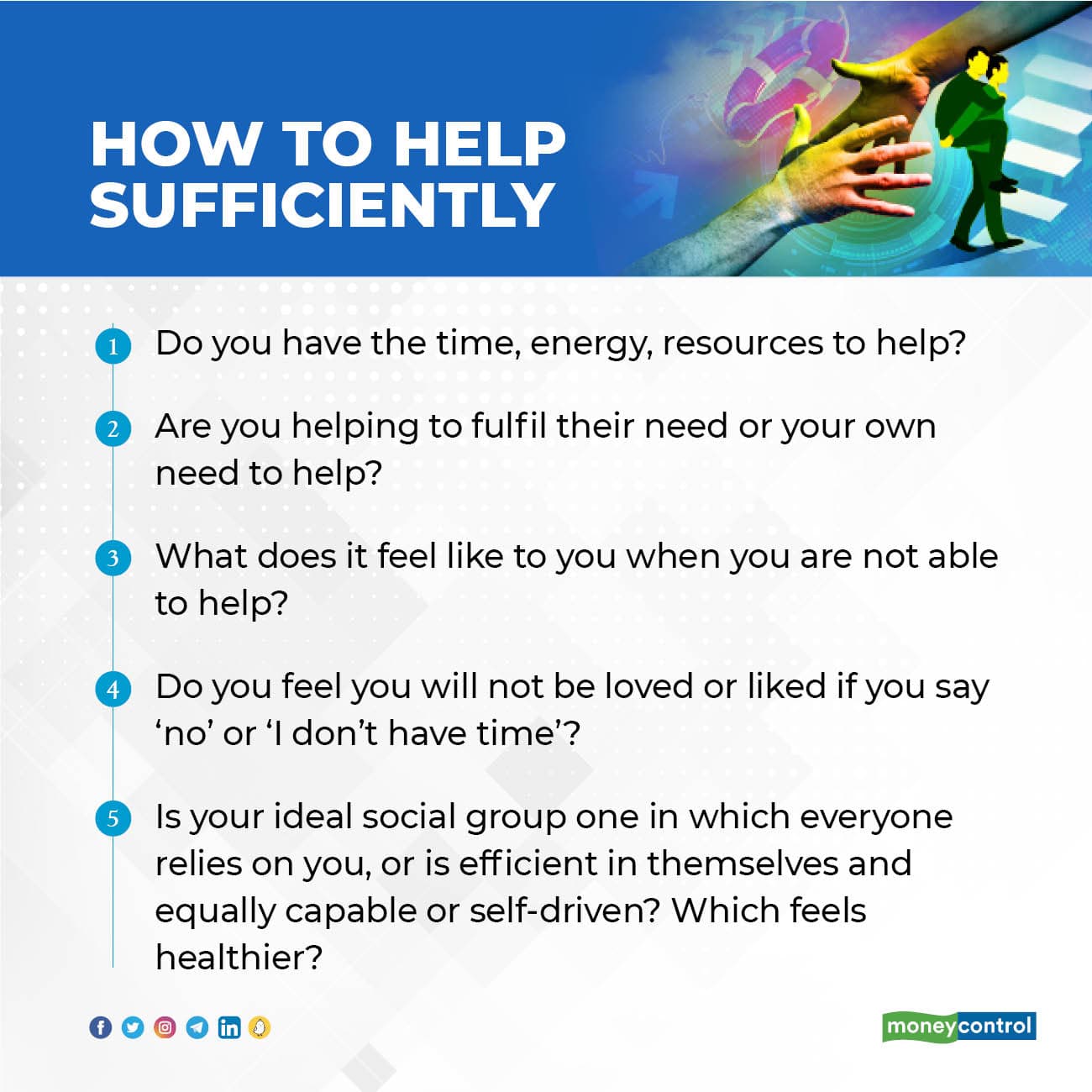
 Compulsive helpers often fear losing respect, friendship, social acceptance, and validation if they say no or draw hard boundaries. The help they offer often becomes a way of ‘buying’ a special position within the group, and they do this because they do not trust that they are adequate to be loved for who they already are.
The helper can fall into the stereotyped role of the giver because it makes them feel good about themselves. It builds a positive self-image to replace their internal lack of one. If enough people say that they are helpful, it means that they are productive, useful to society, and ‘good’ in an altruistic sense. This helps them shape their personal identity when they don’t feel productive, useful or ‘good’ themselves. But people who thrive in this role often cultivate a need for the group to rely on them and this can affect the goals and identities of those being helped, especially if they are juniors, they can lack the confidence to reach their own goals independently, they become reliant on others, and do not feel the need for growth. It’s the equivalent of parents who complete their children’s homework for them, they often need the sense of completion more than their children do.
It's good to be helpful when one can be, but it’s always best to do it unemotionally, without a need or compulsion, in one’s free time and with the additional resources one has at hand. This is often only possible when you have looked after yourself first, fulfilling your emotional needs, taking the resources you need to heal, and identifying what the requirements of your own self-image are. Else, it is difficult to read the real requirements of another clearly and you are likely catering to your needs through someone else’s, and that is neither healthy for them nor you.
Discover the latest Business News, Sensex, and Nifty updates. Obtain Personal Finance insights, tax queries, and expert opinions on Moneycontrol or download the Moneycontrol App to stay updated!
Find the best of Al News in one place, specially curated for you every weekend.
Stay on top of the latest tech trends and biggest startup news.