The wars of the future, the Spanish General Manuel Fernández Silvestre y Patinga concluded in 1910, as he gazed out at the great war between Russia and Japan, “will be concluded in one day’s hard fighting”. Like most of his contemporaries, General Manuel Fernández believed the Japanese victory showed sheer élan would, as they had through history, overcome new military technologies and structural changes to the nature of war: “The officers quit shelter with ringing shouts of Banzai,” wrote an enthused French observer, “wildly echoed by all the rank and file”.
In his study in Warsaw, the banker Jan Bloch had examined the rise of rapid-fire field guns and repeating small arms, and came to just the opposite conclusion: “The future of war”, he wrote in 1898, “is not fighting, but famine, not the slaying of men, but the bankruptcy of nations and the breakup of the whole social organisation”. No-one listened
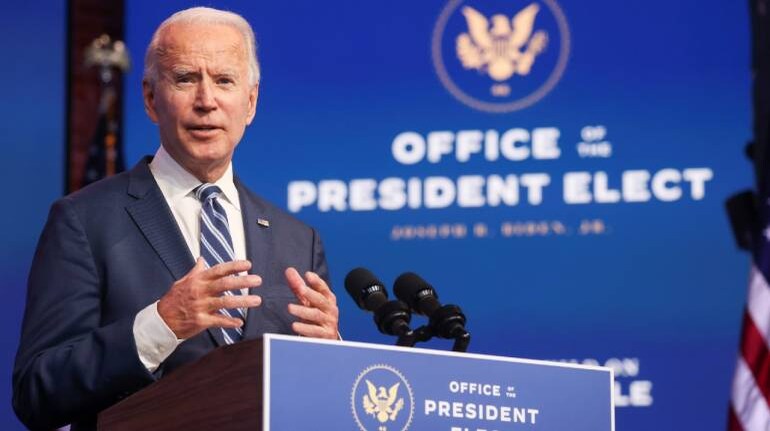
This week, United States President-elect Joseph Biden said he intends to develop a new policy to address the rise of a rich and militarist new China—a policy “which gets every one of our—or at least what used to be our—allies on the same page”. Those allies fear Biden’s domestic crisis—the economy, a disenchanted youth cohort, racial tensions—may constrain his ability to commit resources, and lives, overseas. To China’s ruling élite, these fears are a foundational premise of policy: the United States, it believes, cannot and will not commit itself in wars in Asia.
Like General Manuel Fernández, China’s Generals are wrong, for the real danger is elsewhere: Beneath the boots of the PLA lies a nuclear time-bomb, which threatens the future of all of Asia.
Even as the crisis on the Line of Actual Control has unfolded, China has repeatedly sent ever-growing numbers of combat aircraft into Taiwan’s air defence identification zone, and stationed warships into the waters off the Japan-controlled Senkaku Islands for record periods of time. Kim Jong-eun’s regime has pushed forward with its nuclear weapons and missile programmes, threatening South Korea. And China’s with Australia are at an all-time low, with the two countries mired in trade war—in part intended to punish Canberra for participating in the Quad, the Australia-United States-India-Japan.
From history, we know this: Prime Minister Indira Gandhi’s India wasn’t the only Asian state to begin preparing for exactly this kind of geo-politcal landscape. In 1971, General Park Chung-hee’s military dictatorship ordered his scientists to develop a nuclear weapon inside six years, along with long-range missiles. A now-declassified diplomatic cable sent by the United States’ ambassador Philip Habib in 1974 records that the decision was driven by “increasing doubts about [the] durability of US commitments”.
Those doubts were well founded. In Vietnam, from where the United States had withdrawn in 1973, its Generals had discovered that while their adversaries could sacrifice human life on an epic scale, domestic political life made the costs of their own victories unsustainable.
In the Korean war of 1950-1953, the historian David Halberstam has shown, much the same lesson was taught to the United States military. Though it registered victory after victory, there was an unending flow of People’s Liberation Army troops to replace the dead. Their own citizens, residents of an affluent industrial society, were willing to pay the cost, measured in sons.
For years now, polls have suggested many South Korean citizens support acquiring strategic weapons capability to guard against China-backed North Korea. Last year, former Foreign Minister Song Min-soon—a nuclear dove—publicly underlined growing support for “the Republic of Korea taking its own measures to create a nuclear balance on the peninsula”.
President Donald Trump’s policies—which included drawing down the number of troops committed to guarding South Korea’s borders, railing against its supposedly-anaemic payments for this protection, and bragging about his relationship with North Korea’s dictator, Kim Jong-eun—have fuelled calls for South Korea to acquire an independent nuclear deterrent.
Efforts are likely, early in Biden’s tenure, to rebuild the relationship—but South Korea’s strategic community has learned, from bitter experience, that the most roseate promises amount to little in geopolitics.
Tactical nuclear weapons deployed by the United States from 1958 were withdrawn from South Korea in 1991, driven by the argument that they were driving North Korea to develop its own arsenal. In 1992, the two Koreas agreed to not “to test, manufacture, produce, receive, possess, store, deploy or use nuclear weapons”. In spite of not facing a nuclear-weapons adversary, though, North Korea pressed ahead—without facing military consequences.
Fears about the United States’ commitments are also driving some in Japan to consider the role, and value, of nuclear weapons, despite the horrific legacy of Nagasaki and Hiroshima. The country has the third-largest civilian nuclear programme, after the United States and France. Experts estimate the plutonium stockpiles this has allowed the country to grow, along with its sophisticated industrial base, could allow Japan to produce a nuclear weapon inside a month, should a political determination be made.
Little remembered by history, Japan had its own nuclear-weapons programme from 1940. Led by the scientist Yokio Nishina, the Institute of Physical and Chemical Research, as well as the Imperial Japanese Navy’s F-Go programme headed by Bunsaku Arakatsu, worked to build a nuclear bomb—an effort that ended in April 1945, when Nishina's thermal diffusion separation apparatus was damaged in an air-raid.
Eisaku Sato—Prime Minister from 1964 to 1972, and winner of the Nobel Peace Prize in 1974—has acquired near-sainthood among non-proliferation advocates for shaping Japan’s three nuclear ‘No’s: a commitment not to “develop, use, or allow the transportation of nuclear weapons through its territory”.
Yet, Sato is believed to have authorised nuclear-weapons research in 1960, allowed the secret placement of United States nuclear weapons in Okinawa, and discussed their use against China, as the Vietnam war raged, with President Richard Nixon. In 1964, he told the United States’ ambassador, Edwin Reischauer, that “if other fellow nations had nuclear weapons, it was only common sense for Japan to also have them”.
Prime Ministers Hatoyama Ichiro, Ishibani Tanzan and Kishi Nobusuke, the scholar Kusunoki Ayako has pointed out, all argued for a Japanese nuclear arsenal in the wake of World War II—fearing the threat from the Soviet Union and China, even before the latter tested its first atomic and thermonuclear weapons in 1964-1966.
Taiwan, in turn, has invested heavily in conventional weapons which will make Chinese assault expensive—interestingly, turning to new-generation asymmetric weapons like coastal defence missiles and drones rather than costly aircraft and surface ships, based on the knowledge it cannot outspend the PLA. Yet, Taiwan knows these investments will not protect against a full-scale conventional attack, only slow an inevitable PLA victory.
Following China’s nuclear tests, Taiwan—like India—began a secret nuclear weapons programme to secure itself against existential threat, a story magisterially told by the scholars David Albright and Andrea Stricker. The programme was, however, sabotaged by the United States, using Col. Chang Hsien-yi, a spy at the apex of Taiwan’s nuclear establishment recruited by the Central Intelligence Agency.
In the absence of a clear United States commitment to protect it from China, influential foreign policy figures like Michael Rubin have been arguing for the country to be given medium-range missiles capable of delivering nuclear weapons.
Even less developed countries facing pressure from China might choose to go down the nuclear-weapons route. Vietnam, scholar Oliver Thranet has noted, has been an exemplar of the nuclear non-proliferation regime. In recent years, though, it has begun to grow a civilian nuclear capability, and has commissioned several nuclear power plants to meet growing domestic electricity demands. Though these reactors are not suited for the extraction of weapons-grade fissile material—and will operate under international safeguards—they will give the country infrastructure and technology which can be further developed.
From 2014, when Vietnam and China skirmished over offshore oil fields, anti-Chinese sentiment has mounted in the country; the two countries went to war in 1979, over Hanoi’s defiant foreign policy.
Australia, for its part, is seeing resurgent debate on the merits of acquiring an independent nuclear arsenal. In an article published last year, expert Rod Lyon made the case for developing the necessary infrastructure. “We have neither an enrichment capability for uranium nor a reprocessing facility for plutonium,” Lyon noted, “And our best delivery vehicle, the F-111, has long since faded into history.” “We should be acting to minimise the lead time required for us to have such a capability,” Lyon argued, “just in case we decide we do need it.”
For India, this isn’t bad news: More nuclear states across Asia would undermine the foundational element of the muscular foreign policy President Xi Jinping has rolled out—the idea that smaller or poorer states can be bullied into submission. The dispersion of nuclear weapons would raise that risk that each military could end in catastrophe.
An Asia more vulnerable to nuclear missteps, though, isn’t one anyone should welcome: The awful destructive potential of nuclear weapons make it impossible for either side to hope to win anything that can meaningfully be called a victory. Yet, each Chinese soldier or sailor crossing into its neighbours’ borders is also, inexorably, ensuring this dystopic world will be built.
Discover the latest Business News, Sensex, and Nifty updates. Obtain Personal Finance insights, tax queries, and expert opinions on Moneycontrol or download the Moneycontrol App to stay updated!
Find the best of Al News in one place, specially curated for you every weekend.
Stay on top of the latest tech trends and biggest startup news.