From car market leader Maruti Suzuki to billionaire Sajjan Jindal’s JSW Group to motorcycle specialist Bajaj Auto, everyone is finding the electric vehicle (EV) market way too lucrative to avoid.
These companies have fast-tracked EV projects, set up crack teams under new verticals, forged cross-border alliances and drawn lengthy brand-oriented strategies to hit the electric freeway.
Sales of all EVs (including two, three-wheelers and buses) last year stood at 25,000 units of which 92 percent were two-wheelers and just 8 percent were four-wheelers. In comparison, more than 3 million vehicles powered by fossil fuels were sold in the same year.
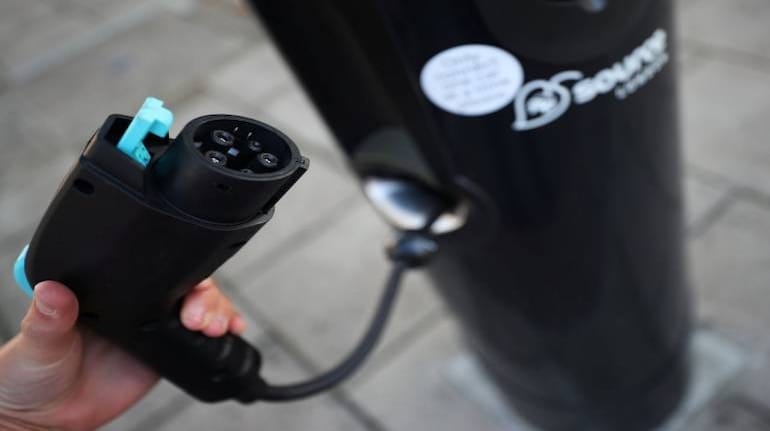
But the ratio of charging stations to new electric vehicles is much better when compared to fuel stations for all new petrol/diesel-powered vehicles. At about 500 charging stations each such station covers 50 new electric vehicles as of now.
Concurrently, there are 60,800 fuel (petrol and diesel) pumps in the country (behind only US and China) that served more than 21.8 million new vehicles last year translating to one fuel pump serving 360 vehicles. Given the total number of vehicles running on Indian roads, these pumps serve a much larger number of vehicles in total.
But considering that India intends to electrify 40 percent of the projected 10 million new car sales by 2030, translating to 4 million cars, the number of charging stations required would be multiple times more than what the country has at present.
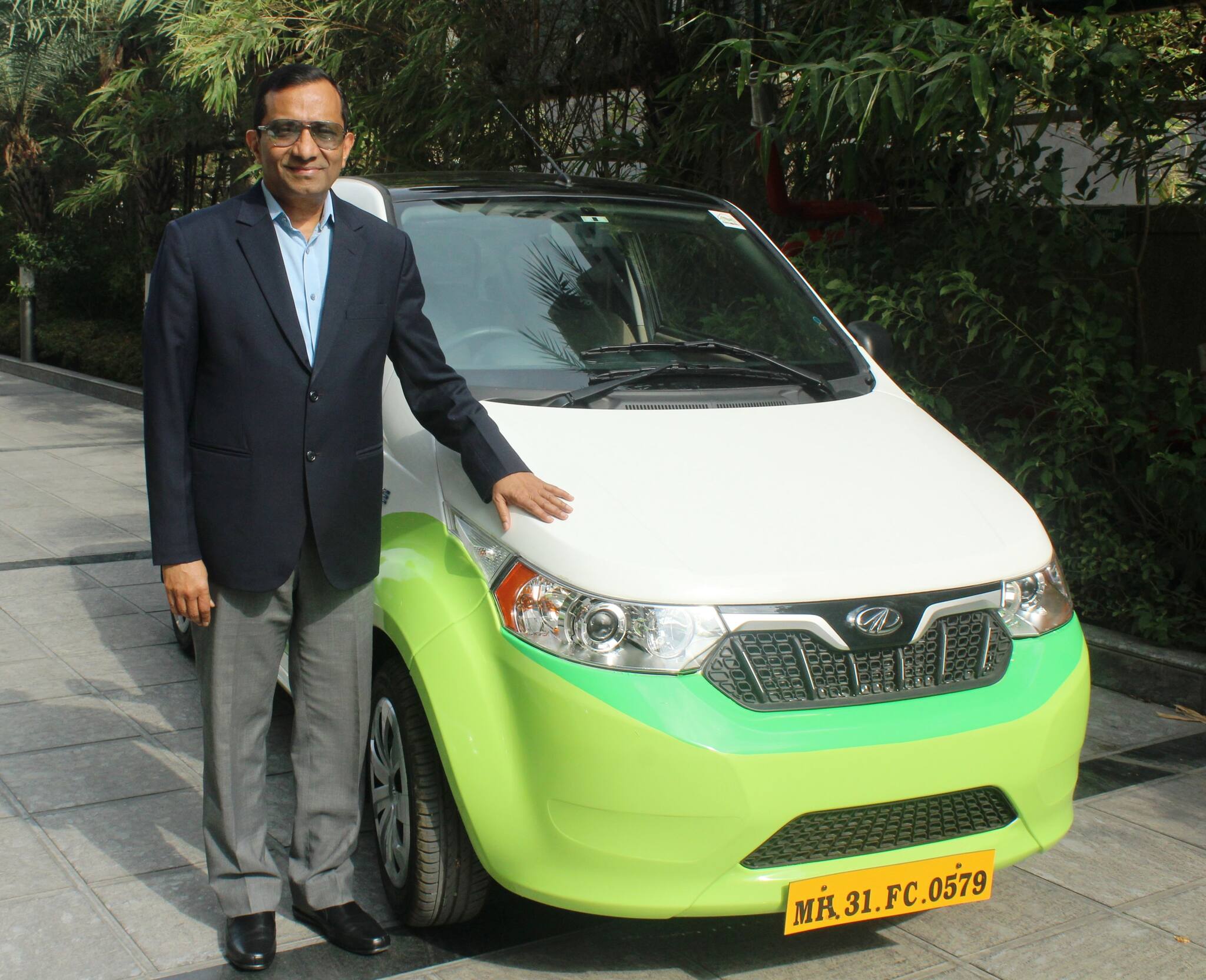
Mahindra e2o, the most well-known fully electric car, takes six hours to a full charge. Nissan Leaf, the world’s highest-selling electric car takes 6-15 hours to a full charge depending on the charging point.
Even with advancements in technology over the next 13 years the time required to charge an electric vehicle will be in the range of 10 minutes to 1 hour, which will still be significantly higher than the time required to fill fuel at any of the petrol stations. This will thereby lead to extended time spent at the charging stations.
“Even if we assume there will be one charging station for every 50 vehicles India will need no less than 80,000 charging stations ready by 2030. And that is just for 40 percent of the vehicles. Imagine the number of charging stations required when India goes 100 percent electric”, said a senior executive from a Delhi-based car maker.
After its initial indecision Maruti Suzuki said it will launch its first fully electric car (made by parent Suzuki and Toyota) in India in 2020. Senior company officials believe that the charging infrastructure required to support the sales won’t be ready by that time and therefore it will set up such charging stations on its own. The company’s dealerships, workshops or other such allied partners may double up as charging stations but Maruti Suzuki has not decided on that yet.
Speaking to Moneycontrol News R C Bhargava, Chairman, Maruti Suzuki India, said, “When we start (sales of) electric vehicles in 2020 we would certainly set up some number of charging stations. Initially, probably, electric vehicles will only be bought by people who have charging facilities at home because I don’t think infrastructure will come up by 2020. But even if I have charging at home I won’t always remain within 70-80 kms reach of my home.”
Range anxiety will be one of the biggest challenges before the industry. Besides the practical driving range offered by the vehicle, consumers will have to be assured about a recharge in the event of a faster-than-expected battery drain. Not only does the recharge have to be fast and hassle-free it has to be economical too.
“What happens if I want go to Chandigarh or Arga (from Delhi), how do I do that with my electric vehicle. If I don’t have a solution for that then I have a problem selling that car. So I have to provide charging stations on various places outside city range. But certainly we have to ensure that the customer can take his electric car for trips longer than just 70 kms”, added Bhargava.
Then there are technical issues that needs to be overcome. For instance, a home private charger are generally used with 230V/15A single phase plug which can deliver a maximum of up to 2.5KW of power. A 3KW single phase 16 Amp charger can charge a Mahindra e2o in 6 hours.
Public Direct Current (DC) chargers can deliver more than three times the power to between 10KW-15KW and can recharge an electric vehicle in one hour or less depending on the battery used in the vehicle.
In India all electric 2, 3 and 4-wheleers vehicles use voltages less than 100V and power of less than 15KW. DC Chargers based on these specifications will cost Rs 1.25 lakh in ‘volumes of thousands’ and can be used by all class of electric 2, 3 and 4-wheleers as per a report prepared by Department of Heavy Industry, Government of India.
Charging stations will need power round-the-clock but many parts of the country today, especially the hinterlands, enjoy power for just 8 hours a day. Many states are power deficit and have to borrow power from other power surplus states at premium rates.
During the UPA-1 rule 9 ultra-mega power projects (UMPP) were envisioned. Later more thermal-powered UMPPs were added to the list. Projects numbering more than half of the final 16 are yet to be awarded while others are embroiled in a legal battle or companies have exited the project.
A surge in demand for electricity (powering an additional 4 million cars) will stretch the then prevailing supply in 2030 by which time India will have to ensure adequate power supplies to keep public and private road transport on track. By that time a uniformity in power distribution and changes to the regulatory framework will have to be done for flawless power supplies.
In recent developments Minister of Road Transport and Highways Nitin Gadkari declined the idea of employing battery swapping stating that ‘it will be a very difficult thing to do and won’t be possible’. Chetan Maini-led Sun Mobility was one such company that was banking on the concept of battery swapping. This Bengaluru-based firm had floated the idea of charging batteries using solar power.
Opportunities for CompaniesSeveral companies have come forward with an intention to set up charging stations. These include state-owned NTPC and Indian Oil, privately held companies like Tata Power, JSW Energy, Fortum Oyj have evinced interest.
As per reports NTPC is looking for a national license for EV charging stations as a new growth area for the future. Tata Power, India’s largest integrated power company, installed their first electric vehicle charging station at Vikhroli, Mumbai.
Fortum Oyj, is a Finnish clean energy company, signed a memorandum of understanding with state-owned NBCC, for developing charging infrastructure across the country at all NBCC projects.
Fortum has installed one 22 KW AC Charger on pilot basis in New Moti Bagh Colony maintained by NBCC, which shall be operated using Fortum’s cloud-based system.



Discover the latest Business News, Sensex, and Nifty updates. Obtain Personal Finance insights, tax queries, and expert opinions on Moneycontrol or download the Moneycontrol App to stay updated!
Find the best of Al News in one place, specially curated for you every weekend.
Stay on top of the latest tech trends and biggest startup news.