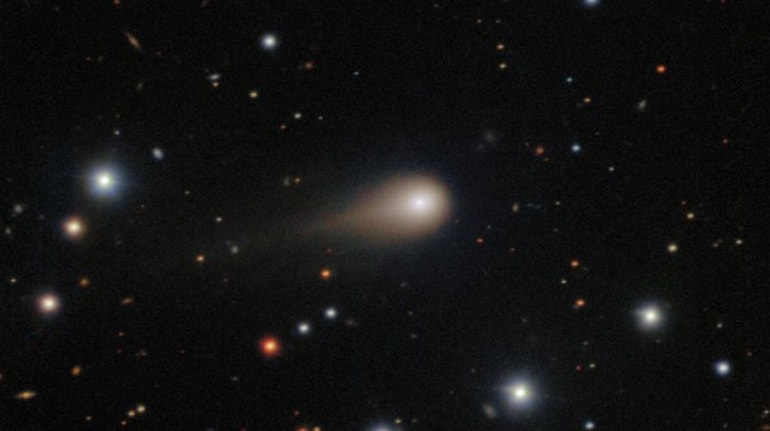
Astronomers say interstellar comet 3I/ATLAS will pass closest to Earth on Friday, offering a rare viewing opportunity before the visitor exits the solar system forever.
What is happening as comet nears Earth
The comet will pass within 268.9 million kilometres of Earth. This flyby occurs on Friday, 19 December 2025, scientists confirmed. The object is racing through the solar system. It is only the third confirmed interstellar visitor.
NASA reported the comet was discovered during summer surveys. The ATLAS telescope in Chile spotted it. The telescope searches for potentially dangerous asteroids. Scientists quickly confirmed its interstellar origin.
As of 14 December 2025, the comet was 270.5 million kilometres away. Images appear delayed by roughly 15 minutes. This delay occurs because light takes time. Researchers stress the flyby poses no risk.
What scientists are learning from 3I/ATLAS
NASA continues observing the fading comet using space telescopes. Scientists estimate its size between 440 metres and 5.6 kilometres. The object is dimming as it exits. Experts say now is best for observation.
Astronomers are puzzled by a strange feature. Images show a bright structure pointing toward the Sun. Scientists call this feature an unusual anti tail. Typical comet tails point away from sunlight.
The anti tail appeared in images taken since July. It remained visible through November observations. Researchers say viewing angles cannot explain it. Thousands of images confirm its persistence.
Two peer reviewed studies co authored with Eric Keto suggest icy fragments are responsible. These fragments may scatter sunlight sunward. Radiation pressure may not act quickly enough. A third paper links it to acceleration effects.
When and how to watch the comet live
NASA advises observing before dawn on Friday. Stargazers need powerful binoculars or backyard telescopes. The comet should appear as a glowing star. It will be visible east to northeast.
Observers should look beneath Regulus in constellation Leo. Chelsea Gohd from NASA shared December skywatching tips. She said this may be the best chance. Weather conditions will affect visibility.
Those unable to watch outdoors can view online. The Virtual Telescope Project will host a livestream. The stream begins 11 p.m. Eastern on Thursday. Weather conditions must allow observation.
The comet will later pass near Jupiter in March. It will approach within 53 million kilometres. Paul Chodas of NASA confirmed this trajectory. The object will exit interstellar space mid 2030s.
Scientists say this visit offers rare insight. Interstellar comets originate beyond the Milky Way. Researchers have not identified its home system. They say current observations are especially important.
Discover the latest Business News, Sensex, and Nifty updates. Obtain Personal Finance insights, tax queries, and expert opinions on Moneycontrol or download the Moneycontrol App to stay updated!
Find the best of Al News in one place, specially curated for you every weekend.
Stay on top of the latest tech trends and biggest startup news.