One important thing: Paytm gets a double upgrade from...wait for it…Macquarie!!
Since Paytm's initial public offering in November 2021, the brokerage has been extremely bearish. It has published numerous research reports questioning Paytm's path to profitability, and each time, the stock price has reacted significantly.
But today, analysts at Macquarie gave a double upgrade to Paytm to ‘outperform’ from ‘underperform’ with a raised 12-month price target of Rs 800. The stock obviously rallied, and ended nearly 15% up! (Phew! Perhaps some relief for investors)
In today’s newsletter:
- PhonePe CEO on why B’luru is India's startup capital
- A central law for online gaming
- Digital lenders knock on MeitY's doors
Was this newsletter forwarded to you? You can sign up for Tech3 here
 Top 3 stories
PhonePe CEO on why B’luru is India's startup capital
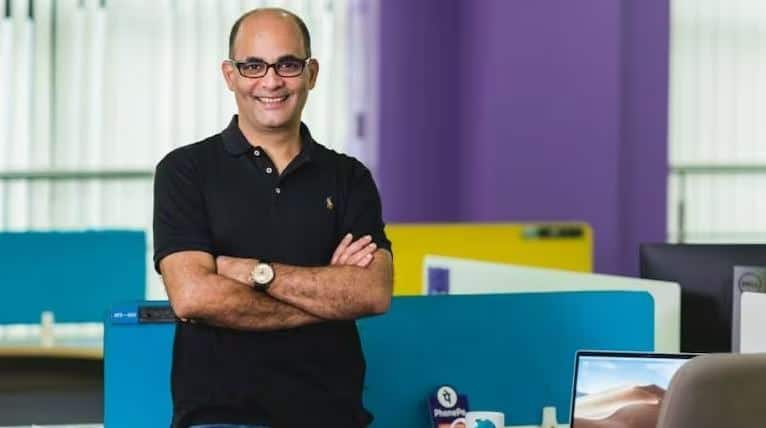
The battle over which city in India is the startup capital continues, and Sameer Nigam, co-founder of digital payments decacorn PhonePe, has one unequivocal answer: Bengaluru.
"Anyone counting startups in Delhi and terming it to be the startup capital is making up stuff…Bengaluru is absolutely the startup capital of the country," Nigam said.
Why does he think so?
He narrows it down to three things:
- The city’s technology pathos
- Best weather + affordable living for migrants
- The presence of a full ecosystem for startups
PhonePe’s ghar wapsi
PhonePe announced in October 2022 that it had completed the process of shifting its domicile from Singapore to India — and it paid Rs 8,000 crore in taxes to do so.
Nigam addressed this, stating that it made sense given that India is their home market and where their customers and employees are located. He is certain that he wishes to list in India as well.
"We want to go public here. We believe the market will reward us if we're doing well here," he said.
More on that here.
On banking ambitions
PhonePe is the top player in the Indian payments ecosystem, and while the aspiration is there, Nigam believes they are not there yet and still need to grow.
He said that they have been around for seven years, so people don't want to put their money in a PhonePe bank right now.
- The answer, however, may change in 10 years, he said
Nigam also mentioned that PhonePe is aiming to become a full-fledged financial services super app.
A central law for online gaming
The Indian gaming sector has grown by leaps and bounds in recent years. As with any other new and emerging tech sector, regulation has not kept pace. However, India seems to have some plans on the cards.
Driving the news
Government should have a central law to regulate the online gaming sector and the recent draft rules are the first step towards this end, Union IT minister Ashwini Vaishnaw told Lok Sabha today.
State of affairs
The minister said regulating the sector is a complex subject with different courts having different interpretations on the classification of games based on skill or chance. Games of chance typically come under gambling and are prohibited. Authorities globally are grappling with the right way to regulate it, he said.
- 19 states and union territories have passed their own laws and 17 states have introduced online gambling elements to the Public Gambling Act, 1867 to regulate real-money games since gambling is a state subject, the minister said
Real-money games, which account for more than half of the industry's revenue in the country, have been suspended in several states over the last year, but many of them have been overturned by state high courts.
- Industry executives have previously told us that state legislation also has limitations and cannot be enforced against illegal offshore gaming operators, thereby raising the need for central law
Yes, but
Digital lenders knock on MeitY's doors
All digital lending startup founders are busy booking flight tickets to Delhi.
The Ministry of Electronics and Information Technology (MeitY) met with several digital lenders in relation to the blocking of their websites and on platforms such as Google Play and Aptoide.
In hurry for clarity
Several domestic online lending platforms, including Kissht and PayU-backed LazyPay, were spiked over the weekend after MeitY banned 138 betting apps and 94 loan lending apps with alleged Chinese links.
Lending startup founders are sleepless and are in a rush to get more clarity on the ban. While industry experts say that the ban has more to do with app hosting platforms like Google Play and Aptoide, startups are feeling the heat in terms of business impacts.
Industry reacts
While the fintech industry awaits further clarification on the possible ban of more than 200 lending and betting apps, it praised MeitY’s initiative to eliminate bad actors.
Several fintech founders, investors and industry insiders told us that these apps were likely targeted for their Chinese connections, illegal data sharing and cybersecurity threats.
- These apps are currently being reviewed by Google before a possible removal from its play store
- Some said lending apps might now have to rethink their business models and strategies
Tech trivia: Unifying technology, inspired by history

Every day, whether at home or at work, we use Bluetooth on our phones, computers, and tablets. But have you ever wondered how it got its name or what the logo means?
Drum roll!
The wireless technology that connects our devices owes its name to a 10th-century Viking King with bad teeth. Yes, you read that correctly!
King Harald Gormsson, who had dark blue teeth and was nicknamed "Blåtand," Bluetooth in English ("blå" for blue and "tand" for tooth), was known for uniting Denmark and Norway, much like the technology that bears his name.
In December 1996, Jim Kardach of Intel, who had read a book on Viking history, suggested Bluetooth as a codename until the marketing team came up with a formal technology name.
The Bluetooth logo is a bind rune merging the Younger Futhark runes (Hagall) (ᚼ) and (Bjarkan) (ᛒ), Harald’s initials.



 PREVIOUS
 Tweet of the day
 QUICK HITS
 GLOBAL PICKS