-
India nearly launched naval strike on Pakistan: Navy chief's big revelation on Operation Sindoor
It was only after Pakistan requested to halt 'kinetic actions' that the Navy didn't proceed as planned.
-

Operation Sindoor fallout: How Asim Munir has made Pakistan’s nuclear posture look fragile after India action | Explained
Operation Sindoor marked a significant shift in India’s security response doctrine, focusing on punitive strikes against terrorist infrastructure rather than restraint.
-
Trump Reveals 'Untold Story'; Stopped India-Pakistan Nuclear War? Saved Pak PM's Life!
In his 2026 State of the Union Address, President Donald Trump claimed that during his first 10 months back in office, he ended eight wars worldwide. He said his intervention prevented a catastrophic conflict between India and Pakistan, which could have escalated into a nuclear war. Trump asserted that the Pakistani Prime Minister personally told him that 35 million lives would have been lost without his involvement. He also claimed that his actions directly saved the life of Pakistan’s leader. Trump framed this as a major foreign policy achievement, highlighting his role in global conflict prevention.
-
Bhushan Kumar and Vivek Agnihotri team up for a film based on India’s targeted strikes 'Operation Sindoor'
Producer Bhushan Kumar and filmmaker Vivek Agnihotri have teamed up for Operation Sindoor, a new film backed by T-Series and I Am Buddha Production, with Agnihotri set to direct the project
-
'Pakistan was finished': Expert cites 'ample proof' IAF struck Kirana Hills nuclear site during Operation Sindoor
Aviation historian Tom Cooper described the alleged attack as a calibrated message designed to demonstrate capability without triggering catastrophic escalation
-
Hawk-eye from Meerut: Operation Sindoor spurs India’s first dedicated drone runway and aviation base
India plans its first dedicated drone runway in Meerut under a Rs 406 crore BRO project to boost HALE RPA operations post Operation Sindoor.
-
Nearly a year after Operation Sindoor, border villages still await civilian bunkers
The MHA has reportedly sanctioned more than 500 bunkers for the Uri sector, with construction scheduled to start in April 2026.
-
Pakistan faces vaccine shock as Indian supplies dry up post Operation Sindoor, import bill could triple by 2031
With no domestic vaccine production and international support set to taper off, Pakistan now faces the prospect of soaring import bills at a time when its economy is already under strain.
-
Asim Munir chooses Bahawalpur for his latest show of force: Why India sees a dangerous terror link | Explained
The timing, location and optics of Munir’s presence have raised serious red flags in New Delhi, especially given Bahawalpur’s central role in jihadist infrastructure and its recent targeting by India during Operation Sindoor.
-
India calls out Pakistan’s military coup at UN, targets Asim Munir’s power grab and 'lifetime immunity'
India’s remarks at the UN came as Pakistan attempted to raise Operation Sindoor during the Security Council debate. Islamabad once again accused New Delhi of aggression, prompting a blistering response.
-
Operation Sindoor takes centre stage in tri-services display at Republic Day parade
Titled “Victory Through Jointness”, the tableau projected the combined fighting power of the three services and their ability to execute synchronised operations across land, sea, and air.
-
Operation Sindoor: India's air dominance forced Pakistan to seek truce, says Swiss study
The 47-page report, authored by military analyst Adrien Fontanellaz, was published last week by the Centre d’Histoire et de Prospective Militaires (CHPM), an independent military history and strategic studies institution based in Pully, Switzerland.
-
Tharoor defends stance on Op Sindoor amid rift buzz in Congress: 'Remain unapologetic'
Answering questions during a session at the Kerala Literature Festival here, Tharoor said he had taken a strong stand on that issue and remained "unapologetic".
-
India’s next space move: To launch 52 new spy satellites sfter night-time blind spots exposed, says report
India is rushing to upgrade its spy satellites after night-time blind spots surfaced during a brief conflict, prompting new technology shifts, overseas stations plans and deeper questions about future space security.
-
'They were going to go nuclear': Trump once again takes credit for India-Pak ceasefire after Operation Sindoor
India has consistently maintained that ceasefire was brokered directly between New Delhi and Pakistan following India’s launch of Operation Sindoor, which targeted terror bases in Pakistan in response to the April 2025 Pahalgam terror attack in Jammu and Kashmir, in which 26 people, mostly tourists, were killed.
-
Supreme Court pulls up MP govt over delay on sanction to prosecute Vijay Shah for remarks on Col Sofiya Qureshi
The apex court directed the Madhya Pradesh government to decide within two weeks whether permission would be granted to prosecute Shah.
-
Operation Sindoor fallout: Pakistan's terror twins are regrouping under ISI protection. Why India need to watch closely
Lashkar and Jaish, once competing outfits, are closing ranks in what officials describe as a dangerous and ISI-driven fusion aimed at reviving jihad against India.
-
Indian Army chief on J&K situation since Op Sindoor: 'Sensitive but ...' | WATCH
Indian Army chief on J&K situation since Op Sindoor: 'Sensitive but ...' | WATCH
-
‘Bangladesh threatening India’: Nawaz Sharif aide warns of Operation Sindoor-style action against Dhaka under Modi's 'aggressive policy'
Najam Sethi's comments come amid growing strain in India–Bangladesh ties following the ouster of former Bangladeshi prime minister Sheikh Hasina, who is currently in exile in India.
-
‘We worry India has only paused military action, attacks could resume’: Pakistan told US after Operation Sindoor
The disclosure punctures Pakistan’s carefully crafted narrative during the May conflict, revealing deep anxiety within its establishment as Indian airstrikes hit terror camps and military infrastructure across the border.
-
Jaishankar hits back at West’s 'unsolicited' advice on India’s Op Sindoor: ‘Look at your own region’
Speaking about reactions during Operation Sindoor, Jaishankar said Western nations expressed worry about tensions, but he questioned their stance.
-
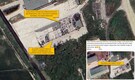
Pakistan pushes fake images to claim strikes in Amritsar during Op Sindoor, satellite visuals tell a different story
Notably, this is not the first time Pakistan has attempted to recycle false claims using doctored imagery. Similar assertions made earlier were also disproved using satellite data and on-ground verification.
-
India trashes China's Operation Sindoor truce claim, says Pak sought ceasefire: Report
The clarification from New Delhi follows remarks by Chinese Foreign Minister Wang Yi, who claimed that Beijing had played a mediating role in easing tensions in several conflict zones
-
From provocation to punishment: 2025 was the year Pakistan paid for its India obsession and Asim Munir's misadventures
If 2025 proved anything, it is that India has moved on from managing Pakistan to deterring it. Pakistan, trapped in its own delusions, appears incapable of understanding the shift.
-
India–Pakistan and Pakistan–Afghanistan conflicts could reignite in 2026: US think tank flags Islamabad-backed terror
The CFR flags Pakistan’s continued role in fuelling regional instability, warning of a “moderate likelihood” of a “renewed armed conflict between India and Pakistan due to heightened terrorist activity.”