Six planets will line up after sunset on 28 February, visible across India under clear skies. From bright Venus to faint Neptune, this rare parade holds more surprises than many expect.
Scientists suggest superionic “hot black ice” deep inside Neptune may explain its tilted, offset and chaotic magnetic field, offering insights into ice giant interiors and planetary physics.
New research suggests Uranus and Neptune may not be true ice giants, with rocky interiors dominating instead, challenging long-standing models of planetary formation and classification.
The Sam Altman-led firm is already a Neptune customer, using Neptune's tracker to monitor and debug training of its GPT large language models
Eight distant worlds hold secrets that still puzzle scientists and spark endless curiosity. Each moon offers a strange allure, inviting questions about what lies beneath, beyond, and waiting to be discovered.
Astronomers discovered a primordial cluster beyond Neptune in the Kuiper Belt. Stable, ancient icy bodies may reveal planetary migration and the Sun’s early formation environment.
Voyager 2 launched in 1977 to tour the outer planets. It visited Jupiter, Saturn, Uranus, and Neptune, returning data that transformed scientific understanding.
Planet Nine was previously suggested as a possible explanation for distant orbital clustering. It was thought to be ten times Earth’s mass, orbiting far beyond Neptune.
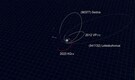
Japan's Subaru Telescope in Hawaii detected a faint, icy body. Now named 2023 KQ14, or Ammonite, it lies well beyond Pluto.
This young planet is just 8 million years old today. That’s nearly a thousand times younger than our Earth. But unlike Earth, it sits dangerously close to its parent star.
This year, the Flower Moon will look slightly different. The Moon will appear about 14 per cent smaller than usual.
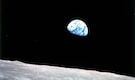
Have you ever wondered how our home planet, Earth, looks from other planets in our solar system? Let's take a cosmic journey to explore the breathtaking views of Earth from our celestial neighbors.
Astronomers are on the hunt for a mysterious ninth planet, known as Planet Nine, which could change our understanding of the solar system. Is this hidden world real, or just a myth?
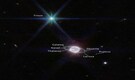
Estimated to be about 12 miles (20 km) in diameter, the moon is located about 65,400 miles (105,251 km) from Neptune. Follow-up analysis of other archived Hubble images of Neptune verified the object was a moon.