OPINION | Budgeting process for India’s defence is far better than commonly believed
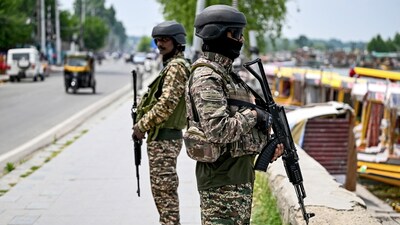
Flexibility is a key feature of the process, with governments enhancing outlays immediately when there’s an enhanced level of threat or conflict. Last year, for example, there was an immediate increase in outlay following the conflict with Pakistan

OPINION | Dr Hedgewar’s final message and his lasting vision for the RSS
RSSFACTS: Dr Hedgewar’s final address distilled the RSS’s core ideals of organisation, unity, and lifelong commitment, offering a guiding vision that continues to shape the Sangh’s journey a century later
OPINION | India-Germany defence ties are on the cusp of a structural upgrade
Chancellor Merz’s recent visit led to a critical defence agreement. When seen in the context of Germany’s strategic reorientation in response to geopolitical fluidity, Indo-German defence ties have the potential to eventually reach the level of French ties with India
OPINION | India’s civilisational journey is complicated; neat demarcations are ahistorical
Interpreting history as society classified into good and villainous segments is inaccurate. The past is messier than is often acknowledged
OPINION | How Trump and Xi are igniting horizontal nuclear proliferation
Trump’s actions in Venezuela and Xi’s machinations around Taiwan are creating the optimum conditions for horizontal nuclear proliferation in Asia, Africa and Latin America in the decade to come
OPINION | Union Budget 2026 and India’s Evolving Global Tax Framework: Balancing revenue, compliance and investment
There have been significant tax reforms. Now, the task of policy is to harmonise domestic administration with evolving international standards
OPINION | What makes Bengaluru, Chennai and Pune the most conducive Indian cities for women?
Cities that find a balance between providing economic opportunities and fostering a safe public environment work best for women. This can happen only when governments, employers and society pull in the same direction
OPINION | Does the Iranian regime’s survival depend on a strategic reset?
The 2026 protests have come in the backdrop of severe economic hardship, caused partly by relentless US sanctions. If the regime prioritises survival, an economic revival may depend on a strategic pullback
OPINION | What AI Still Cannot Do: The limits that will matter most in 2026
AI’s predictive power is transformative, but its lack of explainability, contextual understanding, and causal reasoning raises concerns. Trustworthy deployment demands transparency, fairness, and human oversight, especially in diverse societies like India
OPINION | On National Youth Day, a forgotten lesson on unity for opposition
RSSFACTS: The Vivekananda Rock Memorial’s history reveals how the RSS, transcending political divides, mobilised national support to honour Swami Vivekananda and advance his vision of spiritual and national rejuvenation
Sridhar Vembu rules out active politics, says focus remains on technology-led nation building
Vembu says his goal is to contribute towards making India a technologically strong and self-reliant nation, which is as critical to the country’s prosperity and long-term civilisational revival
OPINION | US decline is overstated; India’s chance to influence affairs is underestimated
If the world values norms, uses international groups to limit single countries’ actions, and lets smaller countries work together around shared principles, then India’s influence, though limited, can be used most effectively
OPINION | A budget on a Sunday and other vignettes from India’s annual economic highpoint
India’s annual union budget has its roots in the 19th century. Change has been the only constant as practices have evolved to meet contemporary requirements
OPINION | Building Momentum: Power sector priorities for Budget 2026
Budget 2026 should address refinancing for legacy discom debt. Subsidies must be paid directly to consumers. Reform attempts such as Electricity Bill, 2025 must be pushed to avoid losing incremental progress to structural issues
OPINION | The conflict between the carbon offset mechanism and green credit programme
Overlapping registration of forestry projects under India’s carbon and green credit schemes enables double-counting of environmental benefits, threatening market integrity, credibility, and investor trust in the country’s emerging climate frameworks
OPINION | China hooks up with Pakistan to challenge India’s primacy in South Asia
The nuanced joint statement of the two countries on ‘regional order’ reflects an attempt to challenge India’s historical and geographic dominance in the subcontinent
OPINION | West Bengal needs an AI agenda, not just SIR debates
Eastern India’s biggest economy must not risk losing out on the opportunity to leverage artificial intelligence to fast-track growth and development
OPINION | Budget 2026 can free India’s motor manufacturing ecosystem from rare earth disruption
China dominates and weaponises rare earth supply chain. India’s EV ecosystem can be insulated from it through carefully targeted fiscal incentives
OPINION | The Unaccountable Pillars: India’s real reform begins within
For Viksit Bharat, India must replace its inherited ‘master-servant’ culture with a governance-model rooted in genuine transparency, measurable performance, and moral accountability
OPINION | Siddaramaiah beats Devaraj Urs in longevity, but not legacy
Karnataka’s politics has always been characterised by chronic instability, with only two of the state’s 23 CMs finishing a full term. Siddaramaiah and Urs are the two who each lasted a full term. But it was Urs who was the real game changer
OPINION | As the 'Don' runs riot in Venezuela, Western media reach for the dictionary
By avoiding legally precise language when Maduro was kidnapped, Western media reframed a foreign military operation as procedural necessity, echoing patterns seen during past interventions
OPINION | India: The ally America treats as an adversary
India has been clear about its position on strategic autonomy. The question is whether Washington can accept a partner that does not follow instructions but whose interests nonetheless align on the issues that matter most
OPINION | From Risk to Returns: Why adaptation is India’s next climate-business frontier
India’s climate future hinges on adaptation, not just mitigation. By investing in resilient infrastructure, supply chains, and technologies, India can turn climate risks into economic opportunities
OPINION | Global Trade in a Fractured World: Why India must help shape a reformed WTO
A central fault line in the coming years will be whether MFN and consensus survive in their current form. There is credible reason to believe that a significant group of WTO members—including most major trading powers—may settle for their dilution
OPINION | Regulatory oversight, not competition law, needed for aviation crisis
The aviation disruptions in India stem from operational and regulatory failures, highlighting the need for stronger DGCA oversight, rather than competition law, to address structural issues and protect passengers