






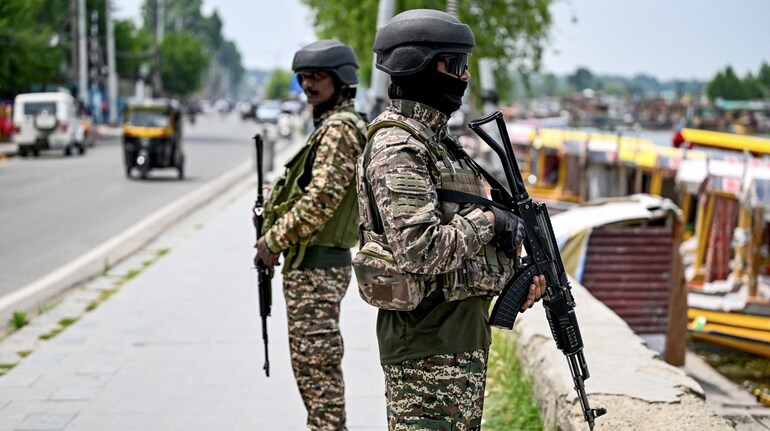
This is a time of wars – many countries are suffering from the direct or tangential impact of wars and conflicts or are preparing for war in Europe, Asia and Africa. Consequently, national defence budgets are stressed in many countries and are rising faster than ever all over the globe.
A new US proposal to increase the 2027 national defence budget by 50 per cent would certainly spice up the clamour for higher defence budgets in many countries. While India remains largely immune from such war atmospherics, navigating its own defence budget amidst global pulls and pressures remains a challenge.
US is driving debate over defence budgets
The US remains at the center of the recent defence budget increases or the clamour for such increases. All these days, it has kept its defence budget ‘near flat’ while encouraging, instigating or even compelling allied countries to go for defence budget increases in last one decade. The NATO allies were first goaded towards crossing the 2 percent
rubicon of national GDP on defence budget in President Donald Trump’s first tenure. Now, they are being forced to spend up to 5 per cent of national GDP on defence budget.
Russia’s protracted war with Ukraine has also adversely affected many countries in Western Europe that feel ‘sandwiched between war and peace’ and have no option other than spending huge sums of money towards their war readiness. Far away in Eastern Asia, Japan – a pacifist country with a record of spending only 1 per cent of its GDP on defence during much of its post – World War II history, has long crossed that figure. This is partly in response to continuous double-digit increases in Chinese defence budget for much of the post – Cold War period.
However, the recent US salvo of increasing its 2027 defence budget 50 per cent will turn the cart upside down and trap many nations in the action – reaction conundrum. The proposed $600 billion rise will be a huge one – it will mean more demands over American arms producing companies, more international arms trade and consequently more (artificially induced) conflicts and even wars in potential hotspots!
Since President Trump does not believe in subsidising allies’ defence burden, they will have to fend themselves and even cross-subsidise American defence establishment.
All these would entail heavy increases in national defence budgets in all allied countries. Russia and China that are already into ‘heavy defence budget league’, would be emboldened further to make a graduated response. It would be chaos galore.
India’s preferred spending target
How should India respond to this global pandemic of fast-rising defence budgets? The protagonists would argue that India is also affected by war atmospherics and the 2025 India – Pakistan conflict after the Pahalgam incident is cited as evidence. They would, therefore, argue for a matching response to the global trends when India’s defence budget is announced in coming days. An ideational figure, often suggested, is a minimum of 3 percent of the GDP, i.e., a whooping rise of almost 50 per cent. Such suggestions ignore the fact that India is already the world’s fifth largest spender.
What makes India’s defence budgeting process effective
Demands for such high figures also ignore certain features typical of India’s defence budgeting processes.
First, India’s defence budgeting process is quite dynamic and flexible. An immediate extra budgetary allocation of Rs 50,000 crore was made in the wake of India – Pakistan conflict last year. Even in past, there were many years, often contiguous, when the defence budget allocations were far above the 3 per cent rubicon.
For example, in early sixties, early seventies and late eighties, the defence budget was above 3 per cent. War or war-like conditions with neighbours had made this high defence budget allocation a necessary arrangement.
Second, little credit is given for the astutely crafted ‘peace dividend’ moment that India enjoys now. These ‘peace dividend’ moments would not have been possible if India had allowed itself to be swayed into the murky war politics, characteristic of Russia–Ukraine War or wars elsewhere. India has not allowed the war clouds to come near its vicinity or violently disturb the supply-chain logistics so vital for its economy. It also did not allow the last year’s short conflict escalate into a full-scale war.
Third, largely budgetary allocations do not necessarily guarantee a place amongst front-end military powers. Ask the Russians, who despite huge budgetary allocations are not able to out rightly defeat the Ukrainians. Ask the Saudis, who despite ranking a front-end defence spender, are not able to convert the huge weapons procured from the West into offensive military power and defeat the Houthis.
Budgetary allocations cannot ignore trade-offs
Those aware of India’s budgeting mechanism sympathise with the resource constraints atmospherics within which the government makes allocations to different ministries and departments. Raising the budgetary allocations for one ministry or department is possible only when there is a concurrent reduction in the budgetary allocations for some other ministry or department. Unless a war situation is forced upon India, government may not adopt a ‘libertarian approach’ in defence budget allocations at the cost of other vital sectors.
Unfortunately, there is a generic lack of understanding that health, education, social welfare spending etc. are equally important and deserve preferential treatment in budgetary allocations. Unlike the defence sector, these sectors do not have protagonists speaking up for their cause in the budgetary debates.
Those who do not understand the budget dynamics come out with fanciful and imaginative solutions. For instance, defence modernisation fund on non-lapsable basis was floated for long and accepted in principle by the 15th Finance Commission. Then, there were suggestions about defence bonds. Fortunately, it emerged that such suggestions are simply not implementable and would violate the well-laid budgetary procedures.
Most democratic countries do not match India’s robust and responsive budgetary mechanism. Therefore, instead of clamouring for more budgetary resources for defence, doubting Thomases should trust our budgetary procedures and consider offering three cheers to India’s defence budget, whether during war or peace.
Note: The author is in the Indian Defence Accounts Service. Views are personal and do not represent the stand of this publication.Discover the latest Business News, Sensex, and Nifty updates. Obtain Personal Finance insights, tax queries, and expert opinions on Moneycontrol or download the Moneycontrol App to stay updated!
Find the best of Al News in one place, specially curated for you every weekend.
Stay on top of the latest tech trends and biggest startup news.




