






As Parliament moves towards its 75th year, a new first will be recorded this year. For the first time in parliamentary history of the country, the Union Budget is scheduled to be presented on a Sunday. This had no precedence unlike two weekend presentations made in the previous century – for the first time in 1987 and then in 1999.
This year is the 10th anniversary of the first major shift effected by the government when the time of presentation was moved from conventional end of February to February 1. The pragmatic decision now allows parliamentary scrutiny of the Budget, completion of the process and permits the government to draw monies from the treasury right from Day One of the new financial year, i.e. April 1. It eliminated the mandatory a vote-on-account required earlier for the government to continue spending in the new financial year.
Budget is a word that’s not found in the Constitution
Incidentally, while the word ‘Budget’, is popular, it does not find a place in the Constitution. Article 112 refers to Annual Financial Statement while the word Budget is mentioned in the Rules of Procedure and Conduct of Business of the Lok Sabha.
Between Hailey and Chetty, India gains independence
Historically, the practice of presenting the annual financial statement in India began in the Central Legislative Assembly. On March 1, 1921 WM Hailey informed the first session of the Assembly that provision of the Government of India Act granted power that all proposals of expenditure except a few items are subject to the vote of the House. A conditional power of the purse was granted to the House to provide or withhold its assent to the expenditure proposed. The last Budget of British India was presented in February 1947 and passed in March.
Soon after Independence, a Budget for India was required and this honour went to Finance Minister R K Shanmukham Chetty. While presenting his proposals on November 26, 1947, the lawyer-economist acknowledged the privilege of presenting the first Budget of a free nation. The exercise covered the period between August 15, 1947 and March 31, 1948. The Budget estimated an expenditure of Rs 197.29 crore and a revenue of Rs. 171.15 crore and deficit of Rs 24.59 crore.
Two budgets in 1952 as India elects its first Parliament
With the country electing its first batch of Parliamentarians and both Houses coming into being in May 1952, the then Finance Minister C D Deshmukh had the distinction of presenting two Budgets in one year. On February 29 he presented an interim Budget to the Provisional Parliament with an estimated expenditure of Rs. 406.25 crore and revenue projected at Rs 425 crore and a surplus of Rs 18.75 crore. Then on May 23, when the first Lok Sabha commenced its sitting, the Budget proposals estimated a surplus of Rs 3.73 crore projecting expenditure of Rs 401.15 crore and revenue at Rs 404.98 crore.
Railway finance gets a separate platform in 1924
Till 2017, Parliament had a practice of presenting a separate Budget for the Ministry of Railways. It now is subsumed in the general Budget. The separate Budget practice began in 1924 when the Central Legislative Assembly adopted a resolution. It flowed from a suggestion in 1921 to separate railway finance from general finance.
Budgets by Prime Ministers and Deputy PMs
For the first time in February 1958, Prime Minister Jawaharlal Nehru who concurrently held the finance portfolio, presented budget proposals. The task fell on him as his finance minister T T Krishnamachari ‘’TTK” resigned in the run-up to the day. Twelve years later, Indira Gandhi as the Prime Minister had a precedent. Holding the finance portfolio, she presented the Budget in 1970, and in 1987, her son and then Prime Minister Rajiv Gandhi followed the route after finance minister Vishwanath Pratap Singh quit the Union Cabinet.
The only minister to have the distinction of presenting 10 Budgets is Morarji Desai. Two of these were Interim Budgets and on four occasions, he was the designated Deputy Prime Minister. A decade later, Charan Singh was the deputy to PM Desai in the Janata Party government, and presented the Budget as he had the finance portfolio.
Budget presentation and subsequent scrutiny
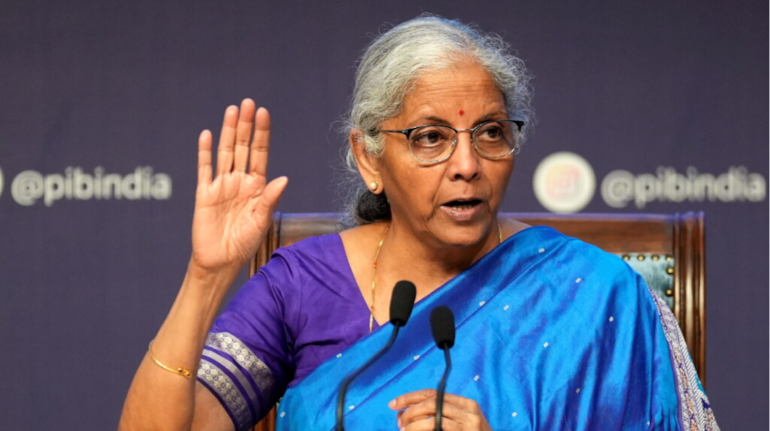
Now, finance minister Nirmala Sitharaman is on the cusp of reaching Desai’s record of 10 budgets. The 2026 budget will be the ninth time she will be placing the proposals in the Lok Sabha. The finance minister has overseen a transition of carrying the budget proposals in a new briefcase each year, a practice in vogue till 2019. That year, she carried the document in a red wrapped cover, symbolising ‘Bahi-Khata”, traditional book-keeping system. The second transition occurred with proposals now being read from a tablet, marking progress towards a paperless Parliament.
The Lok Sabha followed the practice of examining demands during discussion in the House. However, since 1993 this is undertaken by the Parliament’s Departmental Related Standing Committees.
The system was formalised during the 10th Lok Sabha by the then Speaker Shivraj Patil and the proposals are studied during the break in the Budget session, enabling greater parliamentary scrutiny when ministry officials have to explain the rationale behind the allocations being sought in the proposals.
This year, both the Houses will not meet between February 14 and March 8. The Budget session will start on January 28 and end on February 13 for the first part and reconvene from March 9 to April 2, for the second part.
Rajya Sabha’s limited power
During the second part, while the Lok Sabha takes up select ministries for discussion, before the Guillotine is applied, the Rajya Sabha holds debates on the working of select ministries. Since the Upper House does not have financial powers, the Finance Bill is returned. However, if it does not do so, after 14 days the Bill is deemed to have been returned.
(K V Prasad is a senior journalist and co-authored a book ‘An Introduction to Indian Parliament Process and Practices.’)
Views are personal, and do not represent the stance of this publication.
Discover the latest Business News, Sensex, and Nifty updates. Obtain Personal Finance insights, tax queries, and expert opinions on Moneycontrol or download the Moneycontrol App to stay updated!
Find the best of Al News in one place, specially curated for you every weekend.
Stay on top of the latest tech trends and biggest startup news.




