






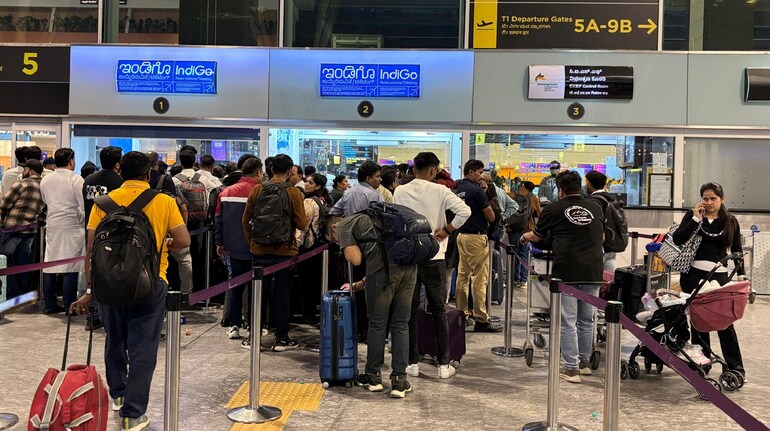
The chaos that unfolded in Indian skies this December, marked by mass cancellations, soaring fares, and stranded passengers, has understandably sparked public outrage. When the country’s largest airline faces operational failure, the consequences extend well beyond individual consumers to the broader economy. In the immediate aftermath, demands for intervention by the Competition Commission of India (CCI) have grown louder, driven by concerns over market concentration and dominance.
However, before competition law is pressed into service, it is important to ask a more fundamental question: is this primarily a competition problem or a regulatory one? The nature of the crisis, rooted in cancellations, operational continuity, and pricing volatility triggered by regulatory and safety considerations, suggests that the answer lies squarely within the domain of India’s aviation regulator.
Aviation is a Heavily Regulated Sector by Design
Civil aviation in India is not governed by market forces alone. Parliament has consciously placed the sector under an extensive statutory and regulatory framework through the Bharatiya Vayuyan Adhiniyam, 2024, the Aircraft Rules, 1937, and subsequent amendments. The Directorate General of Civil Aviation (DGCA) derives wide-ranging powers under this framework, including oversight of safety, crew deployment, operational preparedness, scheduling, and passenger facilitation.
Crucially, pricing in aviation cannot be viewed in isolation. Fare volatility is often a downstream consequence of safety advisories, capacity constraints, crew shortages, or regulatory directives – all of which fall within the DGCA’s remit. Where flight cancellations are linked to operational or safety-related concerns, regulatory scrutiny by the aviation authority is not merely appropriate; it is essential. In fact, in October 2025, the Ministry of Civil Aviation explicitly directed the DGCA to take concrete steps to ensure price surges are controlled. This clearly demonstrates that the DGCA is the appropriate authority for regulatory scrutiny in the sector.
It is tempting to view the current market structure, where one airline commands a significant share, as the root of the problem. But concentration in Indian aviation is better understood as an outcome of persistent structural constraints rather than anti-competitive conduct.
High taxation on aviation turbine fuel, escalating airport charges, infrastructure limitations, and a complex aircraft leasing environment have historically made market entry and long-term viability exceptionally difficult. Over the last decade, several airlines have exited the market, not because of exclusionary practices, but due to economic fragility. In such a landscape, consolidation becomes a function of survivability, not market manipulation.
Why the DGCA Is Institutionally Better Placed
The December disruptions were reportedly triggered by failures in pilot rostering and crew availability. These are not commercial strategies or market signals, but compliance and operational failures. Addressing such failures requires sectoral expertise, real-time supervision, and the ability to issue corrective directions – powers that reside with the DGCA, not with a competition authority.
This is not to suggest that competition law has no role in aviation. Where there is evidence of collusion, exclusionary conduct, or deliberate capacity restriction aimed at distorting the market, regulatory intervention would be justified. But operational failures resulting in cancellations, even when they cause consumer harm, do not automatically translate into competition law violations.
A series of judgments have buttressed the principle that the CCI cannot encroach upon areas that fall within the core jurisdiction of sectoral regulators, particularly where pricing and operational decisions are intertwined with regulatory mandates. The Bombay High Court, in Bharti Airtel and Star India, established that the CCI cannot investigate disputes until TRAI first determines jurisdictional facts. This "two-step" approach requires specialised regulators to define technical breaches before the CCI evaluates anti-competitive impacts, a principle the Supreme Court later upheld to prevent jurisdictional overlap. The legal framework was further solidified in Star India Pvt. Ltd. v. CCI (2019), where the Bombay High Court extended the principle to the broadcasting sector, followed by the Asianet Star Communications (2025) and Jiostar (2025) rulings, which clarified that the CCI retains jurisdiction over "abuse of dominance", provided the sectoral regulator's findings on the potential abuse are established first.
The principle established is that competition law is not intended to displace technical regulators, but to complement them where genuine market distortion lies beyond regulatory oversight. In aviation, both pricing outcomes and cancellations are often inseparable from safety and capacity decisions overseen by the DGCA. In the current case, the DGCA needs to undertake its own investigation first and subsequently refer the matter to the CCI if it finds evidence of abuse of market dominance.
Incrementally, and most importantly, passenger rights should continue to be protected under consumer protection laws, contractual obligations, and DGCA-issued passenger charters. Consumers remain entitled to refunds, compensation, and grievance redressal through appropriate legal forums.
India’s aviation turbulence calls for regulatory introspection rather than jurisdictional expansion. Strengthening DGCA oversight, addressing structural cost barriers, and revisiting policy choices that discourage entry will go a long way in stabilising the sector.
(Shreya Suri is Partner at INDUSLAW.)
Views are personal, and do not represent the stance of this publication.
Discover the latest Business News, Sensex, and Nifty updates. Obtain Personal Finance insights, tax queries, and expert opinions on Moneycontrol or download the Moneycontrol App to stay updated!
Find the best of Al News in one place, specially curated for you every weekend.
Stay on top of the latest tech trends and biggest startup news.




