The Reserve Bank of India’s monetary policy committee delivered a unanimous rate cut this month. This contrasted with the 4-2 vote in favour of keeping rates on hold in December’s rate review. A change in the composition of the MPC – new external members joined in October 2024, a new Governor in December 2024, and a new Deputy Governor to be named soon (represented by Deputy Governor Rajeshwar Rao until then) – led to a softening of the previously held hawkish bias. This was likely driven by concerns over being behind the curve as inflation has been on a downtrend towards the 4 percent target, and high-frequency growth indicators exhibit weak momentum.
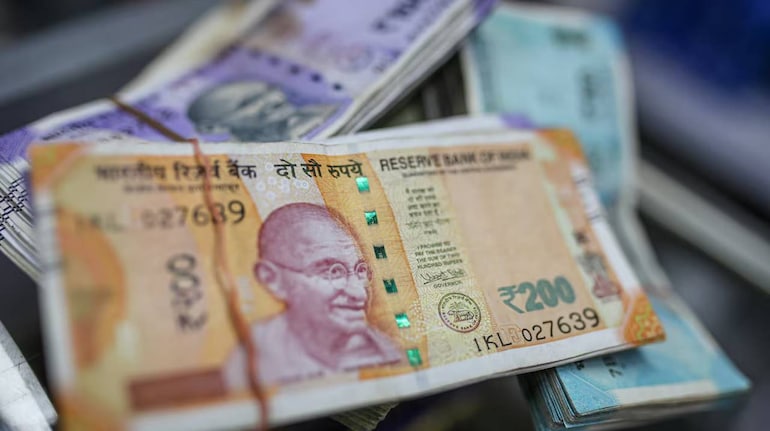
Recent depreciation pressure on the currency is a thorn in the side of the policymakers. The rupee depreciated 2.1 percent vs USD in fourth quarter of 2024, compared to nearly flat 1Q-3Q. The weakening bias continued into the New Year, demonstrated by a further 2 percent fall this quarter-to-date, amongst the worst performers in the Asia-10 space. Overvaluation of the broad real effective exchange rate (REER) has also weighed on the exchange rate, with December REER off high but still holding up well above 100 and one standard deviation above the moving 10-year average.
Indian authorities have engaged in an asynchronous strategy with regards to currency management in the past eight years, divided into two phases. In the first, during occasions of a broader dollar weakness, dollar inflows were absorbed by active intervention, limiting the rupee’s appreciation. On the other hand, a strong USD-led up-move in the USD/INR was largely tolerated, which saw the rupee weaken steadily, while intervention capped volatility. In the second phase, since 2023, intervention has been directed at both ends of trade, minimising volatility.
Dynamics appear to have shifted since late-2024 as the rupee depreciated in sync with a stronger US dollar, pushing up implied volatility and forward premiums. While a shift in the RBI’s tolerance is palpable, the pace of rupee decline can’t be solely attributed to the change in guard at the central bank. Strong-handed intervention had become unsustainable as a rapid appreciation in the dollar magnified the liquidity misalignment, increasing the need to ease grip on the rupee. The balance of payments also swung into negative from 4Q24 with FPI outflows and a sharp reduction in net FDI adding to the liquidity squeeze.
A case in point was the rupee’s notable depreciation in the second week of February, in response to which the central bank intervened heavily (market estimates of upwards of $10bn in two days). Concurrently, bond purchases worth Rs 400 billion were announced to sterilise the intervention efforts to prevent any impact on liquidity conditions. This comes close on the heels of a slew of other measures, including dollar swaps, VRR auctions, OMOs etc.
Proof of the pudding (about a shift in the intervention strategy) will, however, be in the eating. A shift in the intervention strategy will only be material if a correction in the US dollar index translates into rupee appreciation.
Will the central bank’s easing cycle be constrained by a depreciating rupee? In theory, emerging market policymakers refrain from lowering rates in the face of currency pressure to prevent further narrowing of the rate differential with the US counterparts, in effect decreasing the attractiveness for debt investors. Add to this, a falling currency also adds to imported inflation risks.
On both these counts, the risks are manageable at this juncture. With regards to the risk of pass-through to price pressures, a 5 percent depreciation in the currency adds 0.35 percentage point to headline inflation according to the central bank. Manufacturers are unlikely to immediately and fully pass on costs amidst the ongoing cyclical slowdown. An escalation in the US-China trade skirmish will also impart a deflationary impulse as China will seek to channel more exports into this region. The risk of transmission from higher oil onto local fuel prices is limited as global crude prices are low and official preference will be to keep domestic petrol and diesel costs unchanged to preserve households’ purchasing power. Rate differentials are a point of support; it is less of a hurdle in this cycle as equity markets had witnessed bulk of the flows in the past two years, whilst the index inclusion tailwind benefited bonds.
While currency volatility is a concern for central banks, including the RBI MPC, these are overrun by domestic priorities. The fiscal policy assumed a contractionary impulse on the back of a narrower deficit target for FY26, passing the baton to the central bank. If inflation is aligned with the targets, monetary policy is likely to assume a growth supportive stance in the quarters ahead. Beyond a 25bp cut in February, we expect another 50bp reduction in 2Q25 from the RBI MPC. This will amount to half of the US Fed’s 150bp projection (100bp delivered in 2024 and our baseline has two more cuts in 2H25).

Discover the latest Business News, Sensex, and Nifty updates. Obtain Personal Finance insights, tax queries, and expert opinions on Moneycontrol or download the Moneycontrol App to stay updated!
Find the best of Al News in one place, specially curated for you every weekend.
Stay on top of the latest tech trends and biggest startup news.