








Systematic Investment Plans (SIPs) are often described as a simple way to build wealth, invest regularly, stay disciplined, and let compounding do the rest. But anyone who has tracked their SIP closely knows the experience isn’t always smooth. Some periods feel rewarding, while others can test patience.
That raises an important question many investors quietly wonder about: when does an SIP actually start working in your favour?
A long-term analysis of Nifty 50 SIP performance offers useful perspective. Looking at how returns behaved across different holding periods shows that the investing experience changes with time. It’s not just about average returns, it’s about understanding what outcomes are more likely over shorter versus longer horizons.
It’s not just about chasing high averages, it’s about understanding what is likely to happen over different time frames.
The short-term reality: results can feel messy
When SIPs run for only 1-3 years, outcomes can be all over the place. A February 2026 Wealth Conversations study by FundsIndia analyzing long-term Nifty 50 SIP returns shows that several short holding periods since 2000 have delivered flat or even negative XIRR outcomes, depending on when the investment began. In extreme cases, one-year SIP returns have fallen as low as about -65 percent, while two- and three-year windows have seen outcomes near -40 percent and -22 percent, respectively.
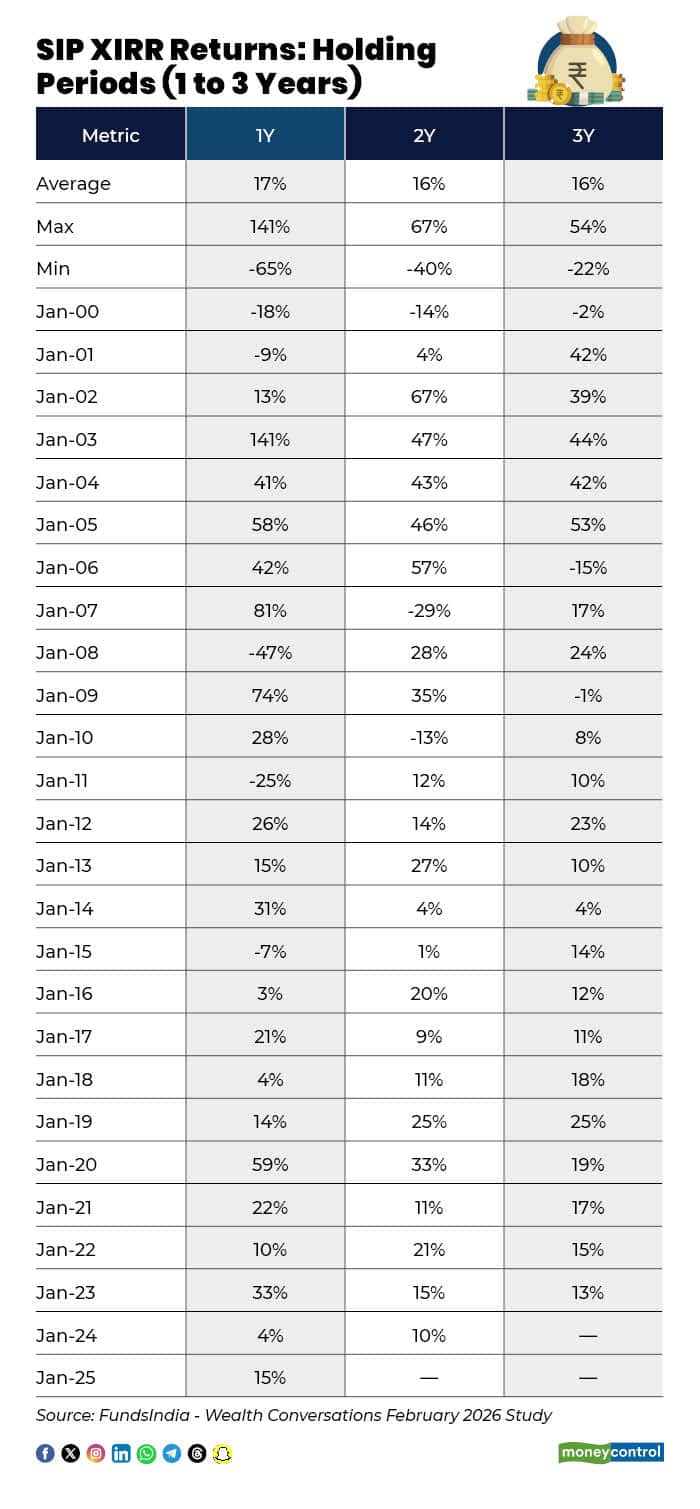
This isn’t surprising once you consider how markets behave. Equity returns move in cycles, and shorter windows don’t always give investments enough time to recover from downturns. So if an SIP overlaps with a correction, the final outcome can look disappointing, even if the broader market trend remains intact.
Simply put, shorter horizons carry higher timing risk. The investment hasn’t had enough time to absorb volatility, which is why short-term SIP results can feel unpredictable.
What changes when you give it more time
As the investment period stretches, the picture starts to look very different and this is where the numbers begin to tell a reassuring story.
Once the SIP holding periods move into the 5-7 year range, the downside seen in shorter windows starts fading quickly. Based on the same report several 5-year SIP periods that began during volatile market phases still delivered mid-single to double-digit annualised returns once recoveries played out. By the 7-year mark, most rolling SIP periods gave positive returns.
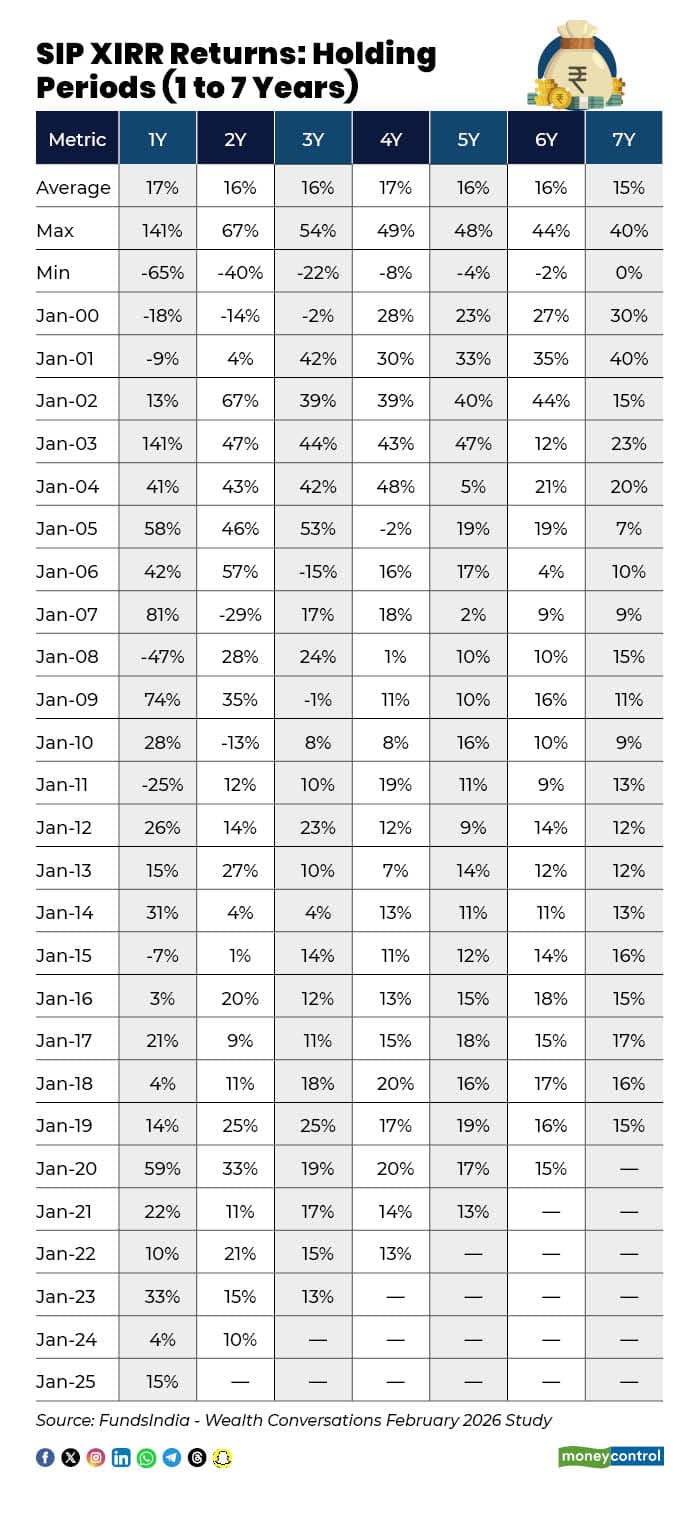
In practical terms, this means the sharp swings visible in 1-3 year windows begin smoothing out. Market corrections get balanced by rebounds, and the compounding effect becomes easier to see. Gains from earlier years start contributing meaningfully to future growth, creating a steadier overall trajectory.
This is the point where SIP investing starts to feel less reactive to market noise and more aligned with long-term wealth building.
When you stay invested for the long run
Now what happens if you extend the horizon further - the pattern becomes even clearer.
Beyond roughly 7 years, the study shows that negative SIP outcomes largely disappear. Most rolling periods move into a tighter band of moderate-to-strong positive returns, with double-digit annualised outcomes becoming increasingly common. While markets continue to fluctuate, the range of outcomes narrows significantly compared with short holding periods.
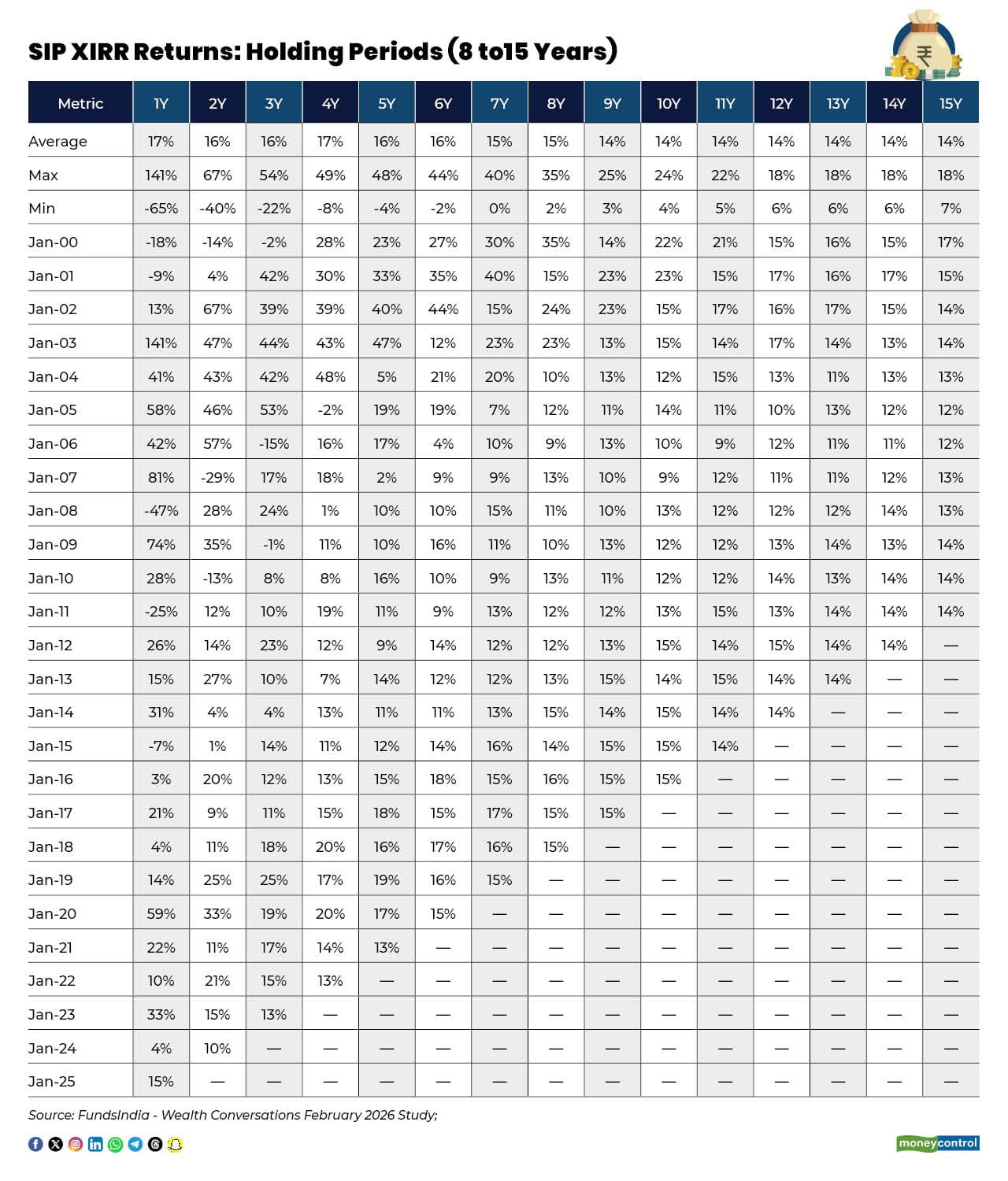
What changes here isn’t market volatility, it’s the investor experience. Longer horizons give investments enough time to absorb downturns and participate in recoveries, which historically improves return consistency.
Why this matters for everyday investors
Many SIPs are stopped too early, not because the strategy fails, but because expectations don’t match the time horizon.
If you enter with a 2-3 year mindset, normal market volatility can feel like underperformance. But the data shows that duration is a major driver of outcomes. The longer the SIP runs, the more market ups and downs are averaged out, improving the likelihood of a stable return experience.
Industry experts say, short-term noise is part of the journey, while longer participation has historically shifted the odds in the investor’s favour.
Discover the latest Business News, Sensex, and Nifty updates. Obtain Personal Finance insights, tax queries, and expert opinions on Moneycontrol or download the Moneycontrol App to stay updated!
Find the best of Al News in one place, specially curated for you every weekend.
Stay on top of the latest tech trends and biggest startup news.





