

Edelweiss Mutual Fund has introduced a new hybrid index scheme that combines equities and government securities, offering investors a structured approach to long-term investing.
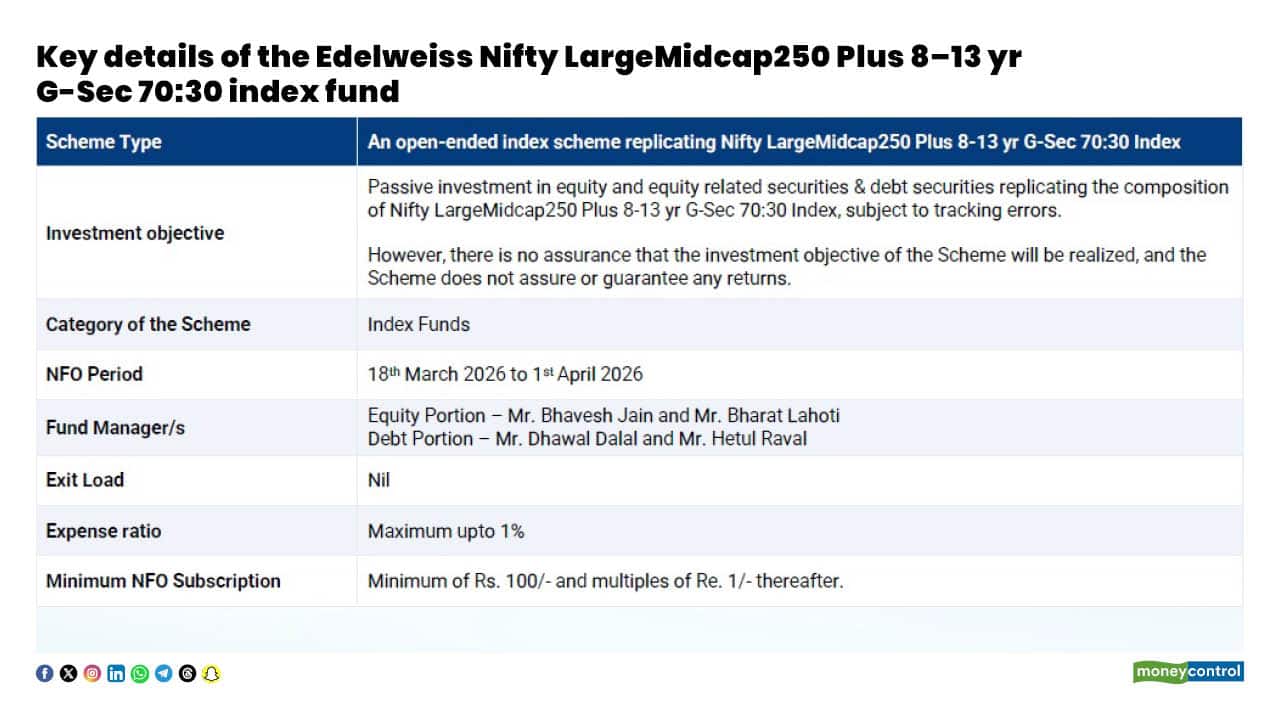
The Edelweiss Nifty LargeMidcap250 Plus 8–13 year G-Sec 70:30 Index Fund will replicate a hybrid index that allocates 70 percent to equities and 30 percent to government bonds.
"The Edelweiss Nifty LargeMidcap250 Plus 8–13 year G-Sec 70:30 Index Fund is the first hybrid passive product in India, combining simplicity and innovation to solve a customer need that has remained unaddressed for decades," Edelweiss MF managing director and chief executive officer Radhika Gupta said.
NFO Period
The fund will follow the Nifty LargeMidcap250 index for equity exposure and the Nifty 8–13 year G-Sec index for fixed income exposure. The scheme’s new fund offer (NFO) open on March 18 and will close on April 1.
Rule-based allocation
The design aims to eliminate the need for investors to decide how to allocate between equity and debt, as the index automatically maintains the 70:30 mix through regular rebalancing, the company said.
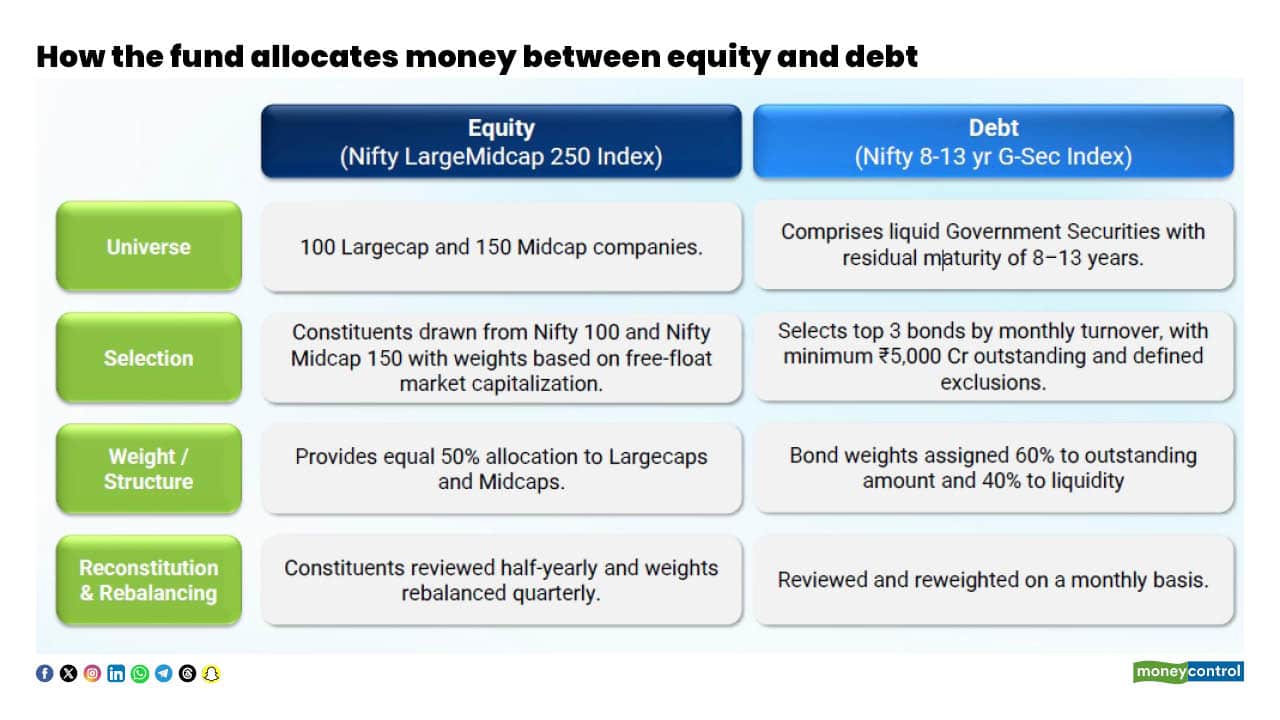
The Nifty LargeMidcap250 index includes 250 stocks, including 100 large-cap and 150 mid-cap companies. The index covers around 85 percent of India’s free-float market capitalisation and maintains a balanced exposure between large and mid-cap companies. This broader coverage helps diversify investments across more sectors and companies, the company stated in its report.
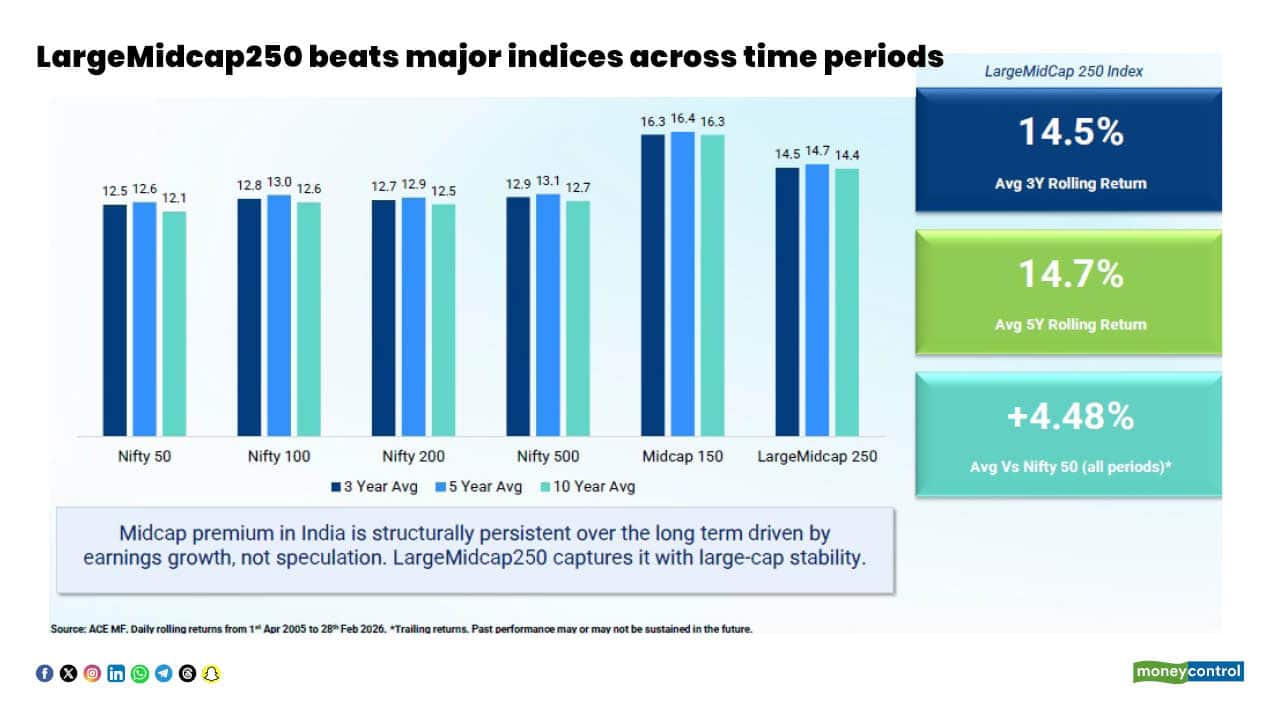
How a rule-based 70:30 index stacks up against active strategies
A rule-based 70:30 equity–debt index works differently from active strategies because it follows a fixed structure instead of relying on fund manager decisions. The index automatically keeps 70 percent in equities and 30 percent in government securities and rebalances regularly, which helps maintain discipline and removes the need for market timing. According to the presentation, this structure can deliver better return per unit of risk across different time horizons, as the G-Sec portion helps absorb market shocks while periodic rebalancing allows the portfolio to buy equities when prices fall. It also avoids issues such as style drift or changing allocation decisions that are common in actively managed funds.
Government bonds add stability to the fund
The fixed-income portion of the fund will invest in government securities with maturities between eight and thirteen years. According to the company report, these sovereign bonds carry no credit risk and can help stabilise the portfolio when equity markets become volatile.
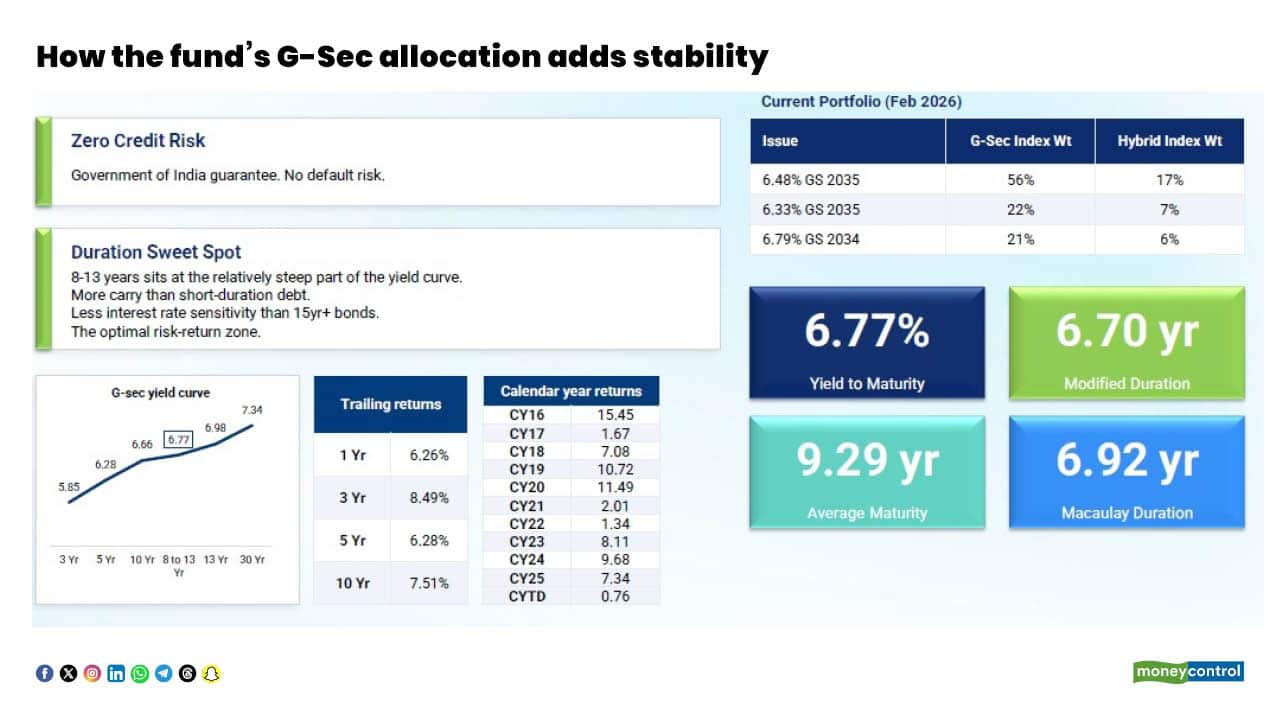
Combining equities with government bonds may help cushion declines during weaker market periods.
"The passive funds segment is growing tremendously in India, and we believe this category will add new feathers to the passive solutions available for investors. With two powerful asset classes and a disciplined allocation framework, this fund can work across market cycles to deliver a smoother investing experience for many investors," Gupta said.
The hybrid index is rebalanced monthly, automatically restoring the target allocation between equities and bonds. The company says this disciplined approach removes behavioural bias and eliminates the need for investors to time the market themselves.
Risk associated with the fund
The fund carries a very high level of risk, according to the scheme riskometer. This means it is suitable only for investors who understand and are willing to take significant market risk. The benchmark index, Nifty LargeMidcap250 Plus 8-13 yr G-Sec 70:30, also falls in the very high risk category, indicating that the fund’s investments may experience strong market fluctuations. Investors should carefully assess their risk tolerance and consult a financial adviser if they are unsure whether the product is suitable for them.
Taxation
The tax treatment of the fund depends on whether the fund qualifies as an equity-oriented hybrid fund. Since the index allocates around 70 percent to equities and 30 percent to government bonds, it will be treated as an equity-oriented mutual fund for taxation since the equity exposure is more than 65 percent.
The fund is designed for long-term investors, and the presentation recommends a minimum investment horizon of five years, with seven to 10 years considered ideal for goal-based investing.
Disclaimer: The views and investment tips expressed by experts on Moneycontrol.com are their own and not those of the website or its management. Moneycontrol.com advises users to check with certified experts before taking any investment decisions.

Discover the latest Business News, Sensex, and Nifty updates. Obtain Personal Finance insights, tax queries, and expert opinions on Moneycontrol or download the Moneycontrol App to stay updated!





Find the best of Al News in one place, specially curated for you every weekend.
Stay on top of the latest tech trends and biggest startup news.