The Supreme Court is, at present, hearing petitions by queer people demanding marriage equality. It makes for a triggering or interesting conversation depending on where you’re on the sexuality spectrum.
It’s disappointing — to put it mildly — to watch and listen to the so-called learned and educated attorneys, against the motion, putting forth ignorance and insensitivity in their argument on the matters related to the lives of queer people. The Solicitor General of India Tushar Mehta, leading the pack, has already made a series of uninformed comments. Among his many eyeroll-worthy statements is a question he asked: what the “+” stands for in LGBTQIA+? His malformed understanding of the matter, arguing on how there exists only a biological man and biological woman, invited an explanation by the Chief Justice of India DY Chandrachud, who said to him, “there’s no absolute concept of man or woman”.
Mr Mehta also said in the apex court that “there are two different schools of thought” when it comes to sexual orientation. Per him, it can be both innate and acquired. A basic homework would have armed the Solicitor General with information to argue well. To those sharing his world view, concepts of living a fulfilling life seem to be built on the erasure of queer people and their lived experiences.
The ongoing Lesbian Visibility Week is, perhaps, a good opportunity to visibilise such experiences by celebrating five recently published books that spotlights stories of queer women:
After Sappho (Picador, an imprint of Pan Macmillan) by Selby Wynn Schwartz
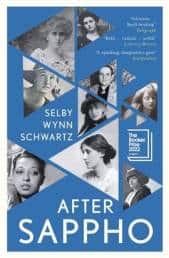
Longlisted for the 2022 Booker Prize, After Sappho is a unique, experimentative work that draws from the life-experiences of queer-feminist icons.
The vignettes that propel the story forward are full of anecdotes of love affairs, oppressive laws that governed women’s bodies, and how lesbians back in the day lived, loved, and lost.
A true representative of the kind of tale our generation needs rights now to heal and to feel belonged, After Sappho is an incredible feat that readers will remember and treasure for a long time.
Footprints of a Queer History: Life-Stories from Gujarat (Yoda Press) by Maya Sharma

Maya Sharma is a name that one can register immediately if one hears Gujarat and queerness in the same breath. She has been someone who has forever believed in spotlighting untold lesbian experiences from the underprivileged parts of the country when it was not even mainstream to do so. Footprints of a Queer History is a natural outcome of the decades of documentation of stories of lesbians and trans men. At once exhilarating and rewarding, the book underlines what’s ailing society: the mindset that compels a group of people to think that they can and should control the right of the others to their own bodies and sexuality.
Happy Endings (HarperCollins Publishers) by Minita Sanghvi

Sanghvi has written an immensely entertaining book that pries open the hypocrisy of the Indian families and the movie industry that lead to the separation — and reunion — of a lesbian couple in this story. Written in an everyday language, she tries to make conversations regarding queerness accessible to the average reader — a praiseworthy feat by all means. Additionally, the book premonitions marriage equality in India. It’d be interesting to see it materialise in the real world.
Homeless: Growing Up Lesbian and Dyslexic in India (Yoda Press x Simon & Schuster) by K Vaishali
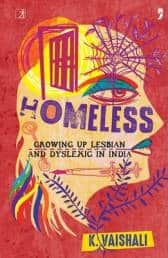
Vaishali’s memoir is unlike any piece of personal writing in the sense that it challenges the very mechanics of how such a narrative should be told, what should form the core of it, what should be avoided, and what can be carefully slipped in without making too much of it. It remains honest in its endeavour — of documenting one’s experiences as a lesbian and a dyslexic person — throughout and constantly wrestles with the idea of home, making for an insightful read.
Nightcrawling (Bloomsbury) by Leila Mottley

Mottley’s debut novel was also longlisted for the 2022 Booker Prize. It’s an enthralling book that tells the story of a Black woman who’s trying to hold pieces of herself and her family together in a structure that’s designed to disintegrate them. Nightcrawling’s principal arc is, however, based on the 2015 cover-up by the Oakland Police Department of the sexual exploitation of a young woman. What Mottley does in this work, using Kiara, the protagonist who walks the streets of Oakland at night when life leaves no choice for her to do anything, is that it creates an experience that’s unforgettable and haunting by outlining her hunger, vulnerabilities, desires, and dreams.
Discover the latest Business News, Sensex, and Nifty updates. Obtain Personal Finance insights, tax queries, and expert opinions on Moneycontrol or download the Moneycontrol App to stay updated!
Find the best of Al News in one place, specially curated for you every weekend.
Stay on top of the latest tech trends and biggest startup news.