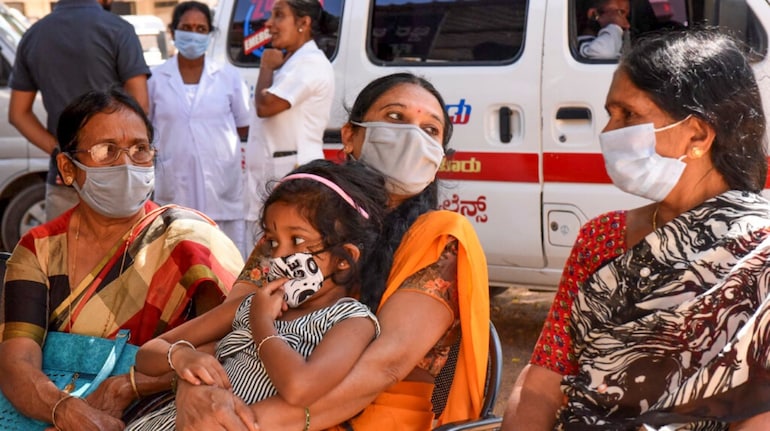
A newly identified COVID-19 variant, known as XFG, has been detected in 163 cases across India, according to the latest bulletin released by INSACOG – the Indian SARS-CoV-2 Genomics Consortium.
According to data from INSACOG, the XFG variant of the COVID-19-causing virus has been found in a total of 163 samples – highest (89) in Maharashtra, followed by Tamil Nadu (16), Kerala (15), Gujarat (11), and Andhra Pradesh, Madhya Pradesh and West Bengal (six each).
In May, as many as 159 samples were detected with XFG variant while two samples tested for this variant in April and two in June yet, data shows.
India's active COVID case tally crossed the 6,000 mark, with 769 added in the last 48 hours, according to the Union health ministry data released on Sunday.
What is the XFG variant?The XFG variant is classified as a recombinant sub-lineage, which means it likely emerged as a result of genetic recombination between two previously circulating Omicron sub-variants. Recombinant variants are not new in the pandemic's trajectory – strains like XBB, XE, and XBF were also recombinants of earlier Omicron branches.
XFG contains a mixture of genetic material from these prior variants, but virologists caution that recombinants aren’t inherently more dangerous — their threat level depends on how transmissible they are and whether they can evade existing immunity.
So far, XFG has not been designated as a Variant of Concern (VOC) or Variant of Interest (VOI) by either the World Health Organisation (WHO) or India’s Ministry of Health. This means that, for now, it is not linked with major outbreaks, spikes in hospitalisations, or vaccine resistance.
Is XFG more dangerous?At this stage, there is no evidence that XFG causes more severe illness or leads to higher mortality compared to other Omicron sub-variants. Like most Omicron-descendant strains, it appears to be associated with mild upper respiratory symptoms in most vaccinated or previously infected individuals.
However, health officials stress that the evolution of the virus remains unpredictable. Variants with immune-evasive characteristics or mutations that enhance their binding to human cells (via the spike protein) could cause new waves if left unchecked.
Indian scientists are monitoring the XFG variant due to key spike protein mutations—His445Arg, Asn487Asp, Gln493Glu, and Thr572Ile—that could impact the virus’s ability to infect cells, dodge immunity, and spread more quickly, according to The Lancet.
Some mutations weaken the virus’s ability to bind to human cells—known as reduced ACE2 receptor binding—while others help it evade the immune system, allowing it to slip past the body’s natural defences or vaccine protection.
Are vaccine effective against XFG?India’s current Covid-19 vaccines – including Covaxin, Covishield, and newer booster doses – are still expected to offer protection against serious illness and hospitalization from the XFG variant. While mild breakthrough infections are possible, particularly as antibodies wane over time, the T-cell immunity provided by vaccines is likely to remain effective.
Discover the latest Business News, Sensex, and Nifty updates. Obtain Personal Finance insights, tax queries, and expert opinions on Moneycontrol or download the Moneycontrol App to stay updated!
Find the best of Al News in one place, specially curated for you every weekend.
Stay on top of the latest tech trends and biggest startup news.