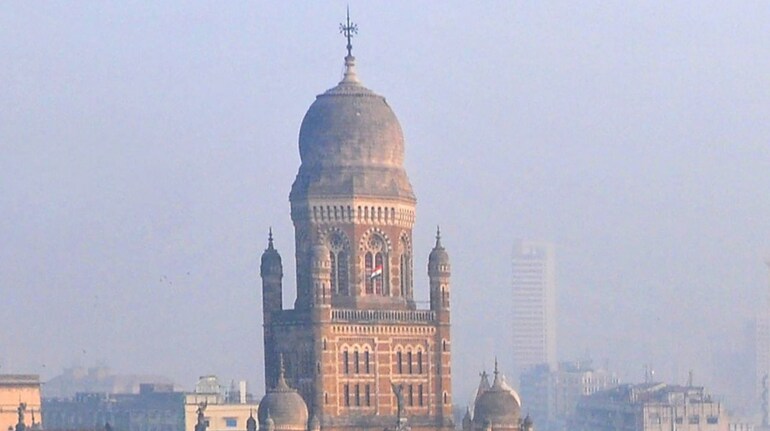

As the battle for control of the Brihanmumbai Municipal Corporation (BMC) enters its final stretch, the contest has increasingly crystallised around a familiar but high-stakes question over who truly represents the 'Marathi Manoos' in Mumbai.
Days after Shiv Sena (UBT) chief Uddhav Thackeray and MNS leader Raj Thackeray unveiled a joint manifesto framed squarely around Marathi pride, language and cultural assertion, the BJP-led Mahayuti on Sunday released its own civic poll manifesto making it abundantly clear that it is unwilling to concede the emotive "sons of the soil" plank to the reunited Thackeray cousins.
Unveiled by Chief Minister Devendra Fadnavis and Deputy CM Eknath Shinde, the Mahayuti manifesto seeks to blend Marathi identity politics with governance and positioning development, infrastructure and security as critical for the protection of Marathi interests in the city.
Competing claims over Marathi identity
The Mahayuti's emphasis on the Marathi manoos comes amid sustained attacks by the Thackeray brothers who have accused the BJP and its allies of imposing Hindi, marginalising Marathi language and culture, and pushing native Mumbaikars out of the city through unaffordable housing and redevelopment policies.
On Sunday, Maharashtra Navnirman Sena chief Raj Thackeray revived the emotive issue of migration from North India as he stepped up his campaign ahead of the BMC polls. Framing the civic polls as a decisive moment for the "Marathi manoos", Thackeray warned migrants from Uttar Pradesh and Bihar against what he described as the imposition of Hindi and the erosion of Maharashtra’s linguistic and cultural identity.
"I don't hate the language, but if you try to impose it, I will kick you. They're coming from all sides to Maharashtra and snatching away your share. If land and language are gone, you will be finished. Today, this crisis has arrived at your doorstep," said Thackeray, adding that the upcoming civic elections would be the "last election for the Marathi man" and urged voters to unite in the name of Marathi identity and Maharashtra's future.
In a bid to counter this narrative, the Mahayuti manifesto promises the preservation of Marathi language and culture, including the setting up of a Marathi Kala Kendra, incorporation of Marathi history and the Samyukta Maharashtra movement in school curricula, and redevelopment of chawls and housing clusters aimed at ensuring that Marathis are able to continue living in Mumbai.
"This is for the well-being of Mumbai's Marathi people and the protection of Marathi language and culture," Shinde said, adding that the ruling alliance had delivered tangible work in the city over the last three-and-a-half years.
Shinde factor: Reclaiming Sena's old ground
For Mahayuti, Eknath Shinde's presence is central to its Marathi pitch. By foregrounding Shinde, who has positioned himself as Bal Thackeray's true political inheritor rooted in governance rather than rhetoric, the alliance is attempting to neutralise the emotional edge of the Thackeray brothers' reunion.
Shinde also revived the long-standing Sena demand of a "pagdi-free Mumbai", arguing that speculative redevelopment and rising rents had driven the "core Mumbaikar" out of the city. "Who is responsible for that? We will bring them back," he said.
Illegal immigrants, security and Marathi jobs
A key differentiator in the Mahayuti manifesto is its aggressive focus on illegal immigration, an issue it links directly to pressure on civic resources, housing and employment.
Fadnavis announced that the state government is developing an AI-based system to identify illegal Bangladeshi and Rohingya migrants, claiming it has already achieved 60 per cent reliability. "Soon, we will be able to identify and deport illegal Bangladeshis from Mumbai," he said.
The manifesto seeks to position the Mahayuti as the alliance that will protect Marathi jobs and neighbourhoods by addressing demographic anxieties, a theme that has historically resonated in Mumbai's civic politics.
Beyond identity, the Mahayuti manifesto attempts to broaden its appeal through welfare and aspirational promises. These include interest-free loans for women, a 50 per cent concession on BEST bus fares, expansion of electric bus fleets, and targeted programmes such as Mumbai Digital Sakhi to train women in AI and coding.
The alliance has also pitched internships for Gen Z voters and major upgrades to water transport, including expanding the network from 85 to 200 nautical miles and introducing water taxis linking the Gateway of India to the Navi Mumbai airport.
High-stakes BMC battle
The BMC elections, scheduled for January 15 with results expected on January 16, will decide control of India's richest civic body governing 227 wards. With nearly 35-37 per cent of Mumbai's population being Marathi-speaking, the fight over the Marathi manoos could prove decisive but also risky.
While the Thackeray brothers are betting on consolidating Marathi votes through identity mobilisation, Mahayuti is countering with a hybrid pitch of identity plus governance, hoping to retain its non-Marathi base while preventing a Marathi consolidation against it.
Moreover, Marathi-speaking voters are not evenly distributed across the city with their concentration highest in central Mumbai and older suburbs, including Dadar, Parel, Worli, Sewri, Byculla, Girgaon, Lalbaug, Chembur, parts of Ghatkopar, Mulund and Bhandup, together accounting for nearly 70–80 wards. These pockets historically formed the core of the undivided Shiv Sena's municipal dominance.
However, demographic churn, redevelopment and migration have diluted the Marathi vote in several mixed wards, making outright consolidation harder. This fragmentation is why the Thackeray brothers are pushing a sharp identity pitch, while the Mahayuti, banking on BJP's hold in Gujarati, North Indian and middle-class Hindu pockets, is aiming to prevent a Marathi sweep by splitting these wards through promises of governance, welfare and security.
In the 227-member BMC, where 114 seats are needed for a majority, the undivided Shiv Sena emerged as the single largest party with 84 seats, followed closely by the BJP at 82, while the Congress and NCP together were reduced to 39 in the 2017 elections. Since then, the Shiv Sena split between Uddhav Thackeray and Eknath Shinde, the BJP has consolidated its non-Marathi base, and the Mahayuti has controlled the civic administration through an administrator for over two years.
Discover the latest Business News, Sensex, and Nifty updates. Obtain Personal Finance insights, tax queries, and expert opinions on Moneycontrol or download the Moneycontrol App to stay updated!
Find the best of Al News in one place, specially curated for you every weekend.
Stay on top of the latest tech trends and biggest startup news.