However, signals about the size of U.S. interest rate hikes caused oil to pare some gains.

Spot gold fell 0.7% to $1,623.08 per ounce by 10:18 p.m. ET (1418 GMT) after hitting its lowest since Sept. 28 earlier. U.S. gold futures dropped 1.6% to $1,624.30.

A strong US dollar has added to bearish headwinds, making commodities priced in the currency less attractive to investors

In the international market, gold was trading lower at $1,641.8 per ounce while silver was down at $19.08 per ounce.

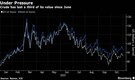
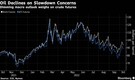
Crude has shed a quarter of its value since June as concerns of a global slowdown and tight monetary policy threatened to curtail demand

Brent futures fell $1.70, or 1.8%, to $95.26 a barrel by 11:18 a.m. EDT (1518 GMT), while U.S. West Texas Intermediate (WTI) crude fell $1.64, or 1.8%, to $87.44.

In the previous trade, the precious metal had closed at Rs 50,994 per 10 grams. Silver, however, gained Rs 21 to Rs 58,336 per kg from Rs 58,315 per kg.

The weaker dollar also helped buoy crude. A Bloomberg gauge of the greenback -- which hit a record last month -- has dropped to a three-week low, making raw materials priced in the US currency cheaper for overseas buyers

While the Fed is still widely expected to deliver a 75-basis-point rate hike in November, it's also likely to debate how much higher it can safely push borrowing costs.

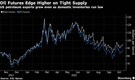
Crude has swung in recent sessions along with broader market trends and shifts in the dollar. The US currency was slightly weaker on Tuesday, making commodities cheaper for overseas buyers

Brent crude futures for December settlement were down $1.17, or 1.3%, at $92.33 a barrel by 1217 GMT, after rising 2% last week. U.S. West Texas Intermediate crude for December delivery was at $83.65 a barrel, down $1.40, or 1.7%.

Spot gold rose 1% to $1,644.38 per ounce by 11:33 p.m. ET (1533 GMT). U.S. gold futures gained 0.7% to $1,648.70.

Brent crude was up $1.00, or 1.1%, at $93.38 a barrel by 1400 GMT. U.S. West Texas Intermediate crude gained $1.14, or 1.4%, to $85.65.

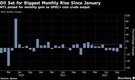
OPEC+ earlier this month decided to cut crude oil production quota by 2 million barrels per day, starting in November, to prop up sagging oil prices.

India holds 3rd largest physical silver investment holdings in the world. Silver demand in 2021 was 9% higher than 2020 and the highest since 2010. Silver institute expects global silver demand in 2022 to rise to record 1.112 bln ounces. The physical silver investment demand is projected up 13% , the highest in 7 yrs . Find out in today's commodities chat with Manisha Gupta.

The rupee, which slipped past the 83 mark for the first time to touch 83.01 during the day, closed at a new low of 82.99

Almost 80 percent of the gold buying will happen through jewellery during Dhanteras, according to Somasundaram

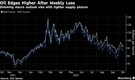
An economic slowdown in China has added to a raft of bearish factors for oil, including aggressive monetary policy by central banks to try and tame inflation and a stronger US dollar

Brent crude futures were down $2.52, or 2.7%, at $92.05 a barrel at 11:12 a.m. EDT, while U.S. West Texas Intermediate (WTI) crude futures fell $2.97, or 3.3%, to $86.14.

Spot gold was down 0.8% at $1,651.89 per ounce by 10:33 a.m. EDT (1433 GMT). Prices have fallen about 2.6% so far this week. U.S. gold futures lost 1.2% to $1,657.60.

"The OPEC+ ... plan ... has derailed the growth trajectory of oil supply through the remainder of this year and next, with the resulting higher price levels exacerbating market volatility and heightening energy security concerns," the IEA said on Thursday.

Crude hit the lowest level since January last month, only to rebound after the Organization of Petroleum Exporting Countries and its allies agreed to cut oil supply

In China, the world’s largest crude importer, authorities are signalling that there’ll be no let up in the nation’s Covid Zero policy, potentially acting as a brake on energy demand

In India, it is silver that is seeing big premiums. The differential has soared recently to $1, more than triple the usual level, according to consultancy Metals Focus

A ban would simply mean that metal from Russia — which accounts for about 9 percent of global nickel production, 5 percent of aluminum and 4 percent of copper — could no longer be delivered into any warehouses around the world in the LME network