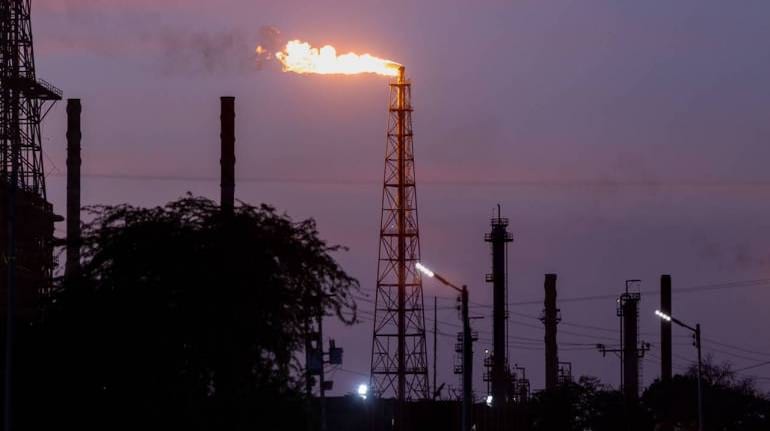
Crude oil prices extended loss to near 3-month low after it fell more than 4 percent on November 7 to their lowest since late July. The fall in prices was due to mixed Chinese economic data and rising OPEC exports, which eased fears about tight markets and as the dollar strengthened.
Brent crude futures closed below $84 a barrel for the first time since Hamas Islamists' Oct. 7 attack on Israel. The global benchmark settled at $81.61 a barrel, down $3.57, or 4.2%, while U.S. West Texas Intermediate crude futures settled at $77.37 a barrel, down $3.45, or 4.3%.
This week, crude oil fallen 4 percent against 6 percent drop the previous week. Oil prices in the month of October were down about 10 percent.
"Traders will remain on high alert for signs of a wider conflict emerging in the region that could disrupt supplies, but it seems those fears are subsiding," OANDA analyst Craig Erlam said to Reuters.
A recovery in oil exports from the Organization of Petroleum Exporting Countries also added to the pressure on oil prices, UBS analyst Giovanni Staunovo said.
"OPEC crude exports are up by about 1 million barrels per day (bpd) since their August low, as a result of seasonally lower domestic demand in the Middle East. It seems it is too much supply to be absorbed by oil consuming nations," Staunovo said.
Crude volatility in 2023
January 1--$82
June -- $70 (Price Decline on weak China demand)
September --$96 ( OPEC & Russia output cuts)
October 5--$82 ( Weak china data , high Non OPec production)
October 16-- $91 a barrel ( Hamas –Israel Conflict)
November 8-- $81 ( War premium fades, Weak Economic data )
The premium on front-month loading Brent contracts over ones loading in six months was at a 2-1/2-month low, indicating less concern about supply deficits.
On the demand side, China's crude oil imports in October showed robust growth but its total exports of goods and services contracted at a quicker pace than expected.
"The data signals the continued decline in the Chinese economic outlook driven by deteriorating demand in the country's largest export destination: the West," City Index analyst Fiona Cincotta said.
U.S. crude oil stocks rose by almost 12 million barrels last week, market sources said citing American Petroleum Institute figures.
The U.S. Energy Information Administration now expects total petroleum consumption in the country to fall by 300,000 bpd this year, reversing its earlier forecast of a 100,000 bpd increase.
Fading investor hopes for a peak in global interest rates also helped lift the U.S. dollar from recent lows, making oil more expensive for holders of other currencies.
The U.S. central bank may have to do more to reduce inflation to its 2% target, Minneapolis Federal Reserve President Neel Kashkari said. Investors are awaiting comments from Fed Chair Jerome Powell, due on Wednesday and Thursday.
"There are concerns in the oil markets about both rising supply and sliding demand," said Mizuho analyst Robert Yawger. "It's certainly not a tight market right now," he added.
(With inputs from Reuters)
Discover the latest Business News, Sensex, and Nifty updates. Obtain Personal Finance insights, tax queries, and expert opinions on Moneycontrol or download the Moneycontrol App to stay updated!
Find the best of Al News in one place, specially curated for you every weekend.
Stay on top of the latest tech trends and biggest startup news.