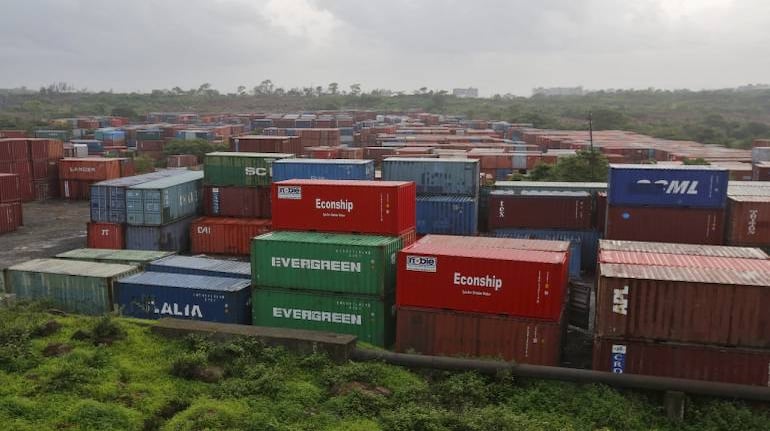
After nearly two years of dealing with supply chain disruptions brought about by COVID-19, Indian importers and exporters are once again facing uncertainty as a surge in COVID-19 cases in China is threatening to disrupt global supply chains once again.
Many international news agencies have reported that China has been battling soaring numbers of COVID-19-infected people. Reports by international news organisations suggest that there are around 5.43 million positive cases in Shanghai, and it is estimated that 12.5 million will be infected by the end of the year.
"Surge in COVID-19 cases in China has led to production and labour slowdown there, and all the cogs in the supply chain wheel have started to wither. While this will create troubles well into the Lunar New Year, it has come at a time when the orders are naturally low," said Christian Roeloffs, Co-founder and Chief Executive Officer (CEO), of Container xChange, a logistics services platform.
The rise in COVID-19 cases in China has also affected the availability of the workforce at major ports in that country. Reports suggest that nearly 90 percent of staff at China’s major ports have been infected by COVID-19 as of 21 December.
"We are currently operating at 40 percent lower capacity from the ports of Shanghai, Guangzhou, Hong Kong, and Qingdao, compared to December 2021," an official working at the Indian arm of shipping company Honour Lane Shipping told Moneycontrol.
Honour Lane Shipping’s HLS TransPacific report, published last week, said that the company expects very soft volumes after the Lunar New Year because a number of factories have slowed down production due to the rising number of infections and had to cancel or delay bookings for the second half of January and also early February.
Ajay Sahai, Director General of The Federation of Indian Export Organisations (FIEO), also said that if the cases in China continue to increase in the coming days, it may have implications on Indian imports.
He added that if Chinese industries start shutting down due to the rise in COVID-19 cases, it would impact the import of key components for sectors, such as pharmaceuticals, electronics, and automobiles.
The shortage of semiconductors has been an issue for the electronics, and automobile industries in India, since the outbreak of the COVID-19 pandemic.
"We don't expect the situation to be as bad as it was in July-September 2021, but if imports from China continue to fall, the auto industry in India will once again have to look at production cuts," a senior official from a major automobile manufacturer in India, said.
Maruti Suzuki, India's largest automobile manufacturer, has also said that it expects that the shortage of electronic components might have an impact on December 2022 production more than in recent months and it was taking all possible measures to minimise the impact.
Sanjay Bhatia, Co-founder and CEO, of shipping aggregator Freightwalla, also said that the steep surge in COVID-19 cases in China has further led to a shockwave in the global EXIM industry, triggering worries of a further fall in trade in the coming months.
He added that while the surge in COVID-19 cases in China may impact global supply chains if the country fails to bring down cases by January, the global demand deceleration over the last few months has already left the Indian exporter-importer community worried about the extent of the impact it will have on their revenues.
"Although the delivery of essential commodities and medical supplies is expected to witness a surge, luxury items and precious metals are likely to witness dampened demand in the upcoming quarter," Bhatia said.
Freightwalla has partnered with 60 shipping lines to enable exporters and importers to track containers across multiple carriers from a single platform.
Similarly, Nisschal Jaain, Co-founder and CEO of logistics platform Shypmax, said that restrictions in China have yet again put immense pressure on its supply chain links.
"For Chinese freight forwarders, this is nothing short of a major crisis, as they are approaching the peak holiday season. The Chinese Lunar New Year holidays begin in the second week of January," Jaain said.
Hand Tools Association President Subhash Chander Ralhan too, said that if COVID-19 cases increase further, it would pose problems for the industry here.
“We import key raw materials for sectors like chemicals and engineering from China,” Ralhan said. He suggested that the government consider stopping flights from China to contain the spread of COVID-19.
Sharing similar views, a leading exporter of Mumbai and Founder Chairman of Technocraft Industries India, Sharad Kumar Saraf, said that the export community is worried about the rising number of infections in China.
“Rising cases are a cause of concern for us. India’s pharma industry is dependent on China. In my factory there, we are witnessing 40 percent absenteeism,” Saraf said.
Since late November, China has moved to abandon most COVID-19 control measures that have been in place for almost three years now under its “Zero-COVID” policy.
Last week, the National Health Commission of China said that it will stop treating COVID-19 as a “Class A” infectious disease starting January 8 and remove restrictions on international travel.
However, the move to scrap restrictions has led to a surge in COVID-19 cases in the country.
Discover the latest Business News, Sensex, and Nifty updates. Obtain Personal Finance insights, tax queries, and expert opinions on Moneycontrol or download the Moneycontrol App to stay updated!
Find the best of Al News in one place, specially curated for you every weekend.
Stay on top of the latest tech trends and biggest startup news.