Relations between China and Japan—two countries long accustomed to diplomatic friction—have entered one of their most serious phases in decades. While both sides have historically managed to prevent disputes from spiralling into outright confrontation, the latest crisis appears more entrenched, more politically charged and far harder to defuse.
How the row began
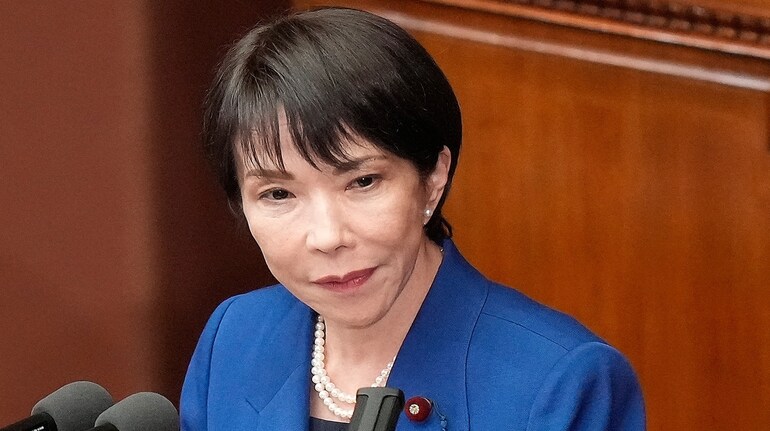
The current escalation stems from remarks made by Japanese Prime Minister Sanae Takaichi in the Diet on November 7. She argued that any attempt by Beijing to use force against Taiwan would represent a “worst-case scenario”, amounting to a “survival-threatening situation” for Japan. Such a development, she said, would justify Tokyo invoking its right to collective self-defence and support its US ally in restoring order across the Taiwan Strait.
Taiwan’s turbulent history adds intensity to this exchange. Once a Japanese colony between 1895 and 1945, it became the refuge of Chiang Kai-shek’s Nationalists in 1949 after their defeat by Mao Zedong. Although Taiwan has never been governed by the Chinese Communist Party, Beijing insists the island is a province of China. Any suggestion otherwise represents, in its view, interference in internal affairs.
China’s retaliation
Beijing demanded an immediate retraction and apology, unleashing a wave of “wolf warrior” rhetoric against Takaichi. When she refused to soften her stance, China escalated politically, economically and militarily.
Chinese citizens were warned against travelling to Japan, and students were urged to reconsider study plans. Imports of Japanese seafood were delayed or curtailed, and cultural events featuring Japanese artists were cancelled. Meanwhile, Chinese Coast Guard and Navy vessels increased their presence near the Senkaku/Diaoyu islands—administered by Japan but claimed by China.
An international blame campaign followed. Beijing lodged an official complaint at the United Nations and pressed world leaders to side with China in meetings with President Xi Jinping. The situation peaked in early December when Chinese military aircraft directed their radars at Japanese fighter jets—an act seen by Tokyo as highly provocative.
Economic implications
The economic stakes are significant. China and Japan are deeply intertwined trading partners; Chinese tourists accounted for around a fifth of Japan’s inbound arrivals this year. Economists estimate Japan’s potential economic losses from the spat could reach ¥2.2 trillion (A$14.2 billion).
These measures, however, remain less severe than previous crises. Episodes in the 2000s saw massive protests in China, an embargo on rare earth minerals in 2010, and a surge in military activity after Japan “nationalised” the Senkaku islands in 2012. Despite these lows, both sides maintained strong commercial ties, supported by Japan’s vital role in China’s industrial development.
Why de-escalation may be harder this time
This time the tensions appear more structural. Takaichi, an “arch-conservative” who inherited Shinzo Abe’s national-security agenda, has positioned herself as a China hawk. She has visited Taiwan several times and earlier this year called for a “quasi-security alliance” with Taipei. Her worldview aligns closely with Washington’s emphasis on stabilising the Taiwan Strait as a core strategic priority.
Her government’s perspective is shaped by Russia’s invasion of Ukraine. Former Prime Minister Kishida Fumio warned in 2022 that “Ukraine may be the East Asia of tomorrow,” highlighting fears that Taiwan could face similar aggression. Takaichi has since pledged to increase defence spending to 2% of GDP by March 2026—two years ahead of schedule—with tax rises under consideration to finance the expansion.
This tough posture has won her support domestically. Backed by Taiwan’s leadership and large sections of its public, she has used the standoff to consolidate her authority and shift attention away from earlier scandals. Her cabinet currently enjoys high approval ratings.
Beijing’s options and Tokyo’s calculations
China now possesses far greater economic and military power than a decade ago, giving Xi a broad toolkit for pressure—from trade restrictions to intensified military exercises. Japan, however, has spent years insulating itself from overdependence on China by diversifying supply chains and “de-risking” investments.
Political dynamics in Tokyo also favour a harder line. Takaichi’s coalition no longer includes the Beijing-friendly Komeito party, and influential Liberal Democratic Party figures who once maintained warm ties with China—such as Toshihiro Nikai—have lost influence. More sceptical voices, such as Taro Aso, now shape the party’s direction.
A crisis without an off-ramp
With domestic politics driving decisions on both sides and diplomatic channels narrowing, there is little prospect of an immediate resolution. Broader geopolitical shifts further complicate matters: China’s explicit support for Russia, its bid to lead the Global South, and the weakening of trust in US alliances under the Trump administration have all contributed to a more polarised international environment.
As a result, deterring China—and managing a combustible trilateral dynamic between Tokyo, Beijing and Washington—will only grow more challenging. For now, the crisis shows no sign of fading, and relations between Asia’s two most influential powers appear set for a prolonged period of tension.
(With inputs from agencies)
Discover the latest Business News, Sensex, and Nifty updates. Obtain Personal Finance insights, tax queries, and expert opinions on Moneycontrol or download the Moneycontrol App to stay updated!
Find the best of Al News in one place, specially curated for you every weekend.
Stay on top of the latest tech trends and biggest startup news.