






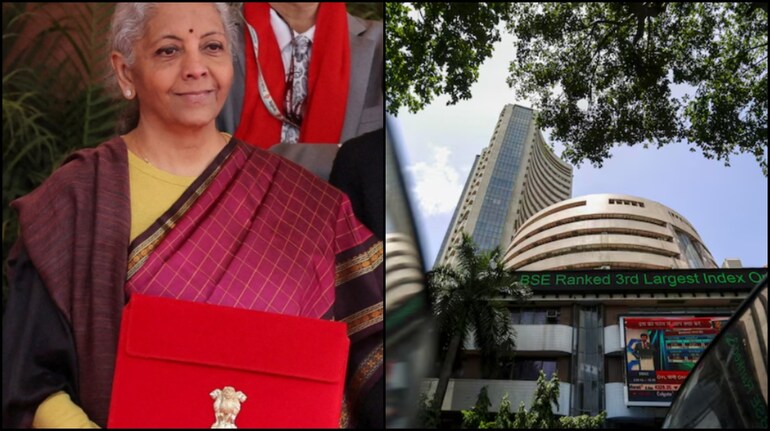

Indian stock markets have seen significant volatility after Union Finance Minister Nirmala Sitharaman presented Union Budget 2026. Analysts have highlighted what to expect from foreign investors in the near-term.
After the Budget yesterday, Sensex crashed around 2 percent and Nifty 50 plunged nearly 3 percent on February 1. However, markets rebounded the next day, with Sensex and Nifty rising more than 1 percent each to end the session at 81,666.46 and 25,088.40, respectively, on February 2.
On February 1, foreign institutional investors (FIIs) sold equities worth Rs 588 crore, while domestic institutional investors (DIIs) also remained net sellers, offloading shares worth Rs 682 crore.
While presenting Budget 2026, Finance Minister Nirmala Sitharaman raised STT on futures to 0.05 percent from 0.02 percent. This was seen as a significant reason for the market crash yesterday, as investors on the contrary had expected significant relief on this front.
For every Rs 1 lakh worth of futures sold, traders will now pay Rs 20 in STT instead of the previous Rs 12.50, explained Ashish Singhal, Co-founder of Lemonn. For a Rs 10,000 option contract sale, STT increased to Rs 10 from Rs 6.25, he added.
"The steep increase in STT on futures and options, coming on top of last year’s hike, is likely to raise impact costs for traders, hedgers, and arbitrageurs. This could cool derivative activity and lead to a reduction in volumes. The intent appears to be volume moderation rather than revenue maximisation, as any potential revenue gain could be offset by lower derivative volumes," said Shripal Shah, MD & CEO, Kotak Securities.
Today’s sharp rise in markets comes amid value-buying, decline in crude oil prices and some positive aspects about the Budget which focused on long-term growth. “The expectations regarding budget was flat, and it came flat as well, so market is recovering from yesterday level. After the sharp selloff seen post the Union Budget 2026, Indian equity markets witnessed a meaningful rebound as investors reassessed the announcements with a calmer lens,” said Abhinav Tiwari, Research Analyst at Bonanza.
The STT raise on derivatives in Budget 2026-27 presents a near-term disadvantage for FII flows, particularly for derivative-focused funds, said Nitant Darekar Research Analyst at Bonanza. "With Rs 41,000 crore in FPI outflows already recorded in January 2026 due to rising US yields and currency pressures, increasing transaction costs diminish post-tax profits, lowering India's competitiveness in comparison to other Asian markets," he said.
While fundamentally-driven long-only FPIs remain insulated, tactical and high-frequency participants face margin compression, the analyst further said, adding that near-term selloff intensification is probable as reduced trading efficiency compounds existing global risk-off sentiment. "Sustained FPI revival hinges on macro stability and rupee trajectory rather than transaction tax adjustments alone," he added.
The initial effect of the Budget on FIIs was negative, mainly because of the increase in transaction taxes and the absence of direct incentives for foreign investments, said Siddharth Maurya, Founder & Managing Director, Vibhavangal Anukulakara.
"The increase in STT on derivatives will increase the cost of trading, which could be a deterrent for FIIs in the short term. However, policies that increase access to foreign investors and a fiscal agenda could help to stabilize foreign flows in the medium term," the analyst said.
'Budget was more about missed opportunities than negative surprises':
According to Maurya, the selling trend could be slowed down or reversed if the government brings about FII-friendly reforms, or else it will remain cautious.
From an FII standpoint, the Union Budget was more about "missed opportunities than negative surprises", said Naren Agarwal, CEO, Wealth1. "While the commitment to fiscal consolidation, with the fiscal deficit targeted at around 4.3% of GDP, and continued policy support for GIFT City were positives, the sharp increase in Securities Transaction Tax on futures and options significantly raised transaction costs and hurt sentiment, especially for global trading-oriented investors," he said.
'Long-term allocators still view India favourably':
The Budget did little to counter these global headwinds through capital-market-specific incentives such as rationalisation of capital gains or tax clarity for foreign investors, the analyst added. He explained that any continuation of FII selling is likely to be flow-driven and tactical rather than a structural reassessment of India.
"Long-term allocators still view India favourably within emerging markets, but near-term foreign flows are expected to remain volatile until global interest rate conditions ease," he added.
Follow all LIVE updates from the stock markets here.
Disclaimer: The views and investment tips expressed by experts on Moneycontrol are their own and not those of the website or its management. Moneycontrol advises users to check with certified experts before taking any investment decisions.Discover the latest Business News, Sensex, and Nifty updates. Obtain Personal Finance insights, tax queries, and expert opinions on Moneycontrol or download the Moneycontrol App to stay updated!
Find the best of Al News in one place, specially curated for you every weekend.
Stay on top of the latest tech trends and biggest startup news.





