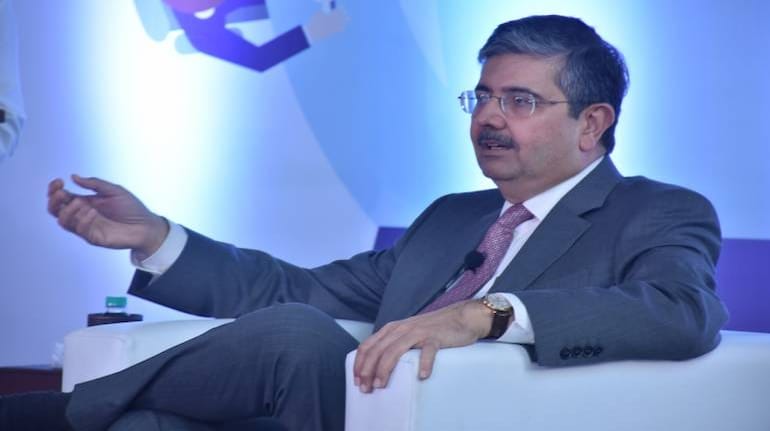
Uday Kotak, the founder and promoter of Kotak Mahindra Bank, has bowled a googly. Under the licence the Reserve Bank of India (RBI) gave him, he was bound to reduce his stake in the bank to 20 percent by 2019 and 15 percent by 2020. The 15 percent rule has support from other RBI press notes.
Guidelines on ownership and shareholding issued by RBI February 2013 and tweaked in May 2016, mandate that voting rights of promoters shall be capped at 15 percent.
In adherence to his licence conditions Kotak, last week expanded his paid-up capital by issuing 52 percent more perpetual non-convertible preference shares. Effectively this brought down his share in the paid-up capital from 30 percent to a shade under 20 percent. Legal eagles say Kotak is legally right. His licence conditions require him to cut his share in the paid-up capital not in the number of voting shares and so Kotak is kosher.
Here are the arguments in favour of Kotak’s plan:Whether explicitly mentioned or not the intent of RBI’s rules were always to ensure that a promoter’s stake is brought down as a percentage of “voting shares”. The February 2013 and the May 2016 guidelines repeatedly refer to voting equity capital (February 2013) or to shareholding/voting rights (May 2016).
This leads one to believe that RBI’s intent all along has been that no single promoter should be allowed to have voting shares beyond 15 percent. Promoters of new banks are given time but ultimately they should reduce equity, shareholding and control to 15 percent. This appears to have been the RBI’s intent all along.
First, let us be clear, neither RBI nor Uday Kotak is violating any law. The Banking Regulation Act merely states that no one shall own more than 5 percent in a bank, except with RBI permission. And it is in the exercise of this power that RBI has been granting licences to several promoters and allowing them to hold even 51 percent stake for starters.
What is apparently violated is an RBI assumption that banks ought to be widely held so that no promoter or single entity can use deposits collected from savers to serve their relatives, friends or cronies. The underlying assumption is that a bank that is widely held will be professionally run.
The point is recent events have shown that this assumption may not often be correct. A widely held ICICI bank has been found to grant allegedly “conflicted” loans while the closely held Kotak Bank appears to be a squeaky clean bank. This reality has brought forth several responses. One set, like HR Khan, believe the assumption that wide distribution of ownership and control will prevent conflicted loans needs to be reviewed.
Promoters with higher stakes have more skin in the game and will hence run banks well. So the May 2016 and the Feb 2013 guidelines need to be reworked. (In fact both in 1995 and in 2003 when licences were granted to private parties RBI insisted that the promoters’ stake is locked in at 40 percent for 12 years precisely because it believed promoters with skin in the game will run their banks better).
The second set of experts believe an old rule must not be set aside summarily. RBI put in those shareholding caps with a reason. Will one want a Ramesh Gelli kind of promoter to have 40 percent ownership or for that matter a Tayal of Bank of Rajasthan fame? Bank licences today are available on tap and we must make rules for all time, not just for outstanding bankers like Uday Kotak.
A third set believes no rule needs to be changed. RBI must allow those promoters to bring down their share in the paid-up capital but allow them a larger control of voting shares provided they pass RBI’s “fit and proper” test and everyone will agree that Uday Kotak is one banker who passes this test with distinction.
There is another reason why Kotak should be permitted to maintain control. Most Indian private banks are increasingly held by foreigners and this isn’t a healthy development from a national perspective. Assuming there comes a time when FIIs want to flee Ems for some external reasons, these foreign funds can quit in a hurry and remain away for years. From a financial stability perspective, it may make sense to allow the likes of Kotak a larger stake in banks.
All these arguments have a point and that is why Uday Kotak’s googly leaves the regulator in a dharamsankat. RBI cannot ignore Kotak’s outstanding credentials but it can’t make rules assuming all bank promoters will be outstanding. There is no denying Uday Kotak’s preference issue amounts to circumventing RBI rules. Should the regulator allow itself to be dodged by a regulatee, however outstanding?
May be one way out for the RBI is to disallow the current issue to be treated as kosher, but give Kotak more time to bring down his stake. The market may not be able to absorb the 25,000 odd crore rupees of shares that Kotak will have to sell. In the meanwhile , RBI may amend the May 2016 circular to allow promoters who meet its “fit and proper” test to hold more voting shares.
There is no doubt it will be a right decision to allow Kotak more control over his bank, but one must not do the right thing in the wrong way.
Discover the latest Business News, Sensex, and Nifty updates. Obtain Personal Finance insights, tax queries, and expert opinions on Moneycontrol or download the Moneycontrol App to stay updated!
Find the best of Al News in one place, specially curated for you every weekend.
Stay on top of the latest tech trends and biggest startup news.