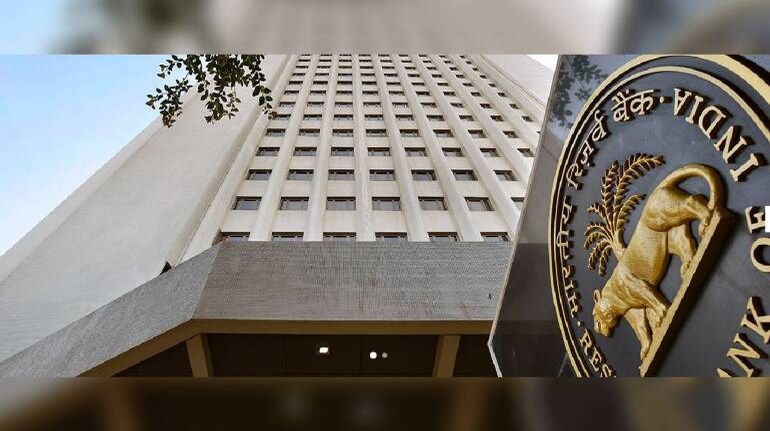
India’s lower-than-estimated gross domestic product (GDP) growth for April-June is unlikely to deter the Reserve Bank of India-led (RBI) Monetary Policy Committee (MPC) from raising policy rates and shift its focus from taming inflation, economists said.
Data released on August 31 by the Ministry of Statistics and Programme Implementation showed India's GDP grew 13.5 percent in the first quarter of FY23, up from 4.1 percent in January-March. While this was the fastest pace in four quarters, it was well below market expectations of 15 percent and the RBI’s own forecast of 16.2 percent.
“In our view, the April-June GDP data should not be a game-changer for monetary policy. While it is below RBI’s forecast and may prompt a slight downward revision to its FY23 GDP growth forecast at the next meeting in end-September, the numbers are still solid,” Nomura economist Sonal Varma said. “Moreover, inflation remains sticky above 6 percent and policy rates are still below neutral settings.”
Nomura expects a 35 basis points (bps) repo rate hike in September and a final 25 bps hike in December, before shifting to an extended pause. One bps equals one-hundredth of a percentage point.
Also read: Moody's cuts India CY22 GDP growth forecast to 7.7% from 8.8%
Rate hikes to continue
The main objective of monetary policy is to maintain price stability while keeping in mind economic growth. The MPC is currently striving to quell rising price pressures in the economy. Retail inflation, as measured by the Consumer Price Index (CPI) fell to a five-month low of 6.71 percent in July. Inflation has ruled above the RBI’s medium-term target of 4 percent for 34 consecutive months and seven straight months outside the central bank’s 2-6 percent tolerance range. The MPC has raised the repo rate by 140 bps since May.
As such, the central bank is only two months away from failing to meet its inflation mandate, which is deemed to occur when the average inflation is outside the 2-6 percent tolerance range for three straight quarters.
If the MPC fails to meet its inflation mandate, it will have to soon draft its response to the government. The letter will cite reasons for the failure to meet the target and spell out ways to bring inflation back within the target level.
In the current scenario, Barclays said that the “resilient” growth backdrop will result in the RBI retaining its focus on containing inflation, which makes its policy choices relatively clear in the short term. The RBI remains on a path of front-loaded hikes, Barclays’ chief India economist Rahul Bajoria said, adding that he expects the MPC to deliver another 50 bps of rate hikes over two meetings in September and December, taking the repo rate to 5.90 percent from 5.40 currently.
Bank of Baroda’s economist Dipanwita Mazumdar agreed with Bajoria’s view. She said that the MPC will continue to focus on its price stability mandate for now.
“Quite a bit of frontloading (of rate hikes) has already happened. We expect rate hikes to continue though the pace might slow down till inflationary expectations are well anchored, and that can be known from the next few months' headline CPI print,” added Mazumdar. “Any (inflation) print above 6 percent will be looked at with caution by the RBI.”
She expects the MPC to hike rates by another 50 bps in the current cycle.
According to independent economist Karan Mehrishi, private household consumption has regained its share in the GDP, along with an uptick in capital expenditure. What this combination means is that inflationary pressures will continue and the RBI will evidently continue with its aggressive stance on rates, he said.
Also read: RBI’s assessment of inflation falling to 4% over next 2 years seems accurate, say economists
Growth forecast to be revised downwards
Even as the MPC’s rate hikes continue, most economists expect the RBI to lower its growth forecasts for FY23. Downside risks to the forecasts could emanate from a slowdown in global growth, rising global recessionary risks, a slowdown in global trade, high domestic inflation, and an uneven distribution of the monsoon, they said.
Additionally, base effects will also reverse from July-September, which could moderate growth for the entire fiscal year.
IDFC FIRST Bank has already revised its growth forecast downwards post the weaker than expected April-June GDP print. It now estimates India’s GDP to grow at 7 percent in FY23, down from 7.3 percent previously. Recovery is expected to be led by the services sector, which tends to be linked more with domestic factors, India economist Gaura Sen Gupta said, adding that manufacturing sector growth could face downside risk from weaker external demand conditions.
According to Swati Arora, senior economist at HDFC Bank, there is a “high possibility” that the RBI revises down its FY23 growth forecast by 20-30 bps in its upcoming policy in September. HDFC Bank expects India’s GDP to grow at 7 percent in FY23 with some downside risks to its estimates.
Some economists also expect growth to drop below 7 percent in FY23. Kotak Mahindra Bank, for instance, has reduced its FY23 growth forecast for India by 50 bps to 6.8 percent. Yes Bank, too, has lowered its GDP estimate for FY23 to 6.9 percent from 7 percent amid geopolitical uncertainty, volatility in global commodity prices, monetary policy tightening, and global growth.
Rate hikes unlikely to affect the bond market
The RBI’s rate hikes and revisions to growth forecasts are unlikely to affect the bond market, said money market participants.
“The bond market has priced in the terminal rate to be at 6 percent by March and if inflation continues to trend downwards, we do not expect the 10-year bond yield to rise above 7.50 percent, at least in the medium term, from around 7.18 percent now,” said a treasury official at a state-run bank. “Debt supply and prospects of a global bond index inclusion will be key variables to track.”
Bank of Baroda’s Mazumdar said that better fiscal health of the government from windfall taxes will lend support to the 10-year government bond yield. However, some volatility in short-term rates cannot be ruled out emanating from volatility in global yields, she added.

Discover the latest Business News, Sensex, and Nifty updates. Obtain Personal Finance insights, tax queries, and expert opinions on Moneycontrol or download the Moneycontrol App to stay updated!
Find the best of Al News in one place, specially curated for you every weekend.
Stay on top of the latest tech trends and biggest startup news.