
Child prodigies and immensely talented people get a lot of attention. And rightly so. But is innate talent the only determinant of success? In his latest book, Hidden Potential: The Science of Achieving Greater Things, organizational psychologist Adam Grant argues it’s not. It aims to drive home the point that “potential is not a matter of where you start, but of how far you travel.” Given the instant gratification-led world we live in, the definitions of success have become narrower. Grant tries to expand the scope of what constitutes success and how there are ways to unlock hidden potential in everyone, given the right surroundings and motivations.
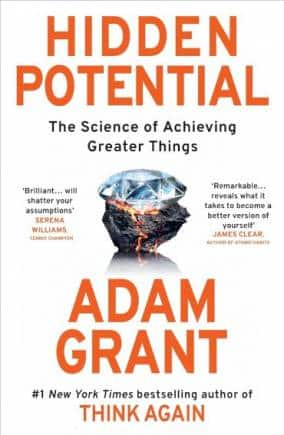 WH Allen; 304 pages.
Grant has divided Hidden Potential into three overarching sections. The first deals with exploring the "character skills" that propel one to greater heights. The second section focuses on structures that sustain the motivation to build character skills. The third section deals with bringing systematic changes to prevent people with hidden talent from being prematurely written off.
Three skillsAccording to Grant, there are three significant character skills to unlock the hidden potential in each of us. These are being an imperfectionist (people who know when to aim for the best and when to be content with ‘good enough’), seeking discomfort (people who refuse to let feelings such as insecurity, embarrassment bog them down in their quest for greatness) and being a sponge (people who absorb useful information and discard what’s irrelevant).
Stories + theoriesThe book is filled with many inspirational stories highlighting individual triumphs and how potential can be realized in a group setting or how systems can be engineered. Each story also acts as an anchor to the more significant point Grant is trying to make. It’s a good way to remember the various mindset changes needed. Along the way, one also learns a lot of psychological theories. Grant builds on the ‘stories+theories’ formula used successfully in his earlier book Think Again.
For instance, with the story of the Golden Thirteen - how a group of 13 African-American men cracked all the difficult exams (against all systemic odds) to become the first group of Black servicemen to complete officer training for the US Navy in 1944 - Grant highlights how capitalizing on individual strengths in a group and teaching others could lead to a better outcome for all team members. Through the story of polyglots who mastered learning new languages, Grant points out how embracing discomfort was a common thread among them. Using Albert Einstein’s difficulty in getting through to his students, Grant elaborates on how experts can sometimes be the worst guides if you want to learn something new, as experts suffer from the curse of knowledge - knowing so much of a subject that it’s difficult for them to think from the perspective of a beginner.
The book tries to make a case for building a character rather than focusing purely on tangible skills. Each chapter's stories and findings nudge you towards working on your character skills. The empirical studies discussed throughout the book further add gravitas to some of the conclusions reached. Grant also dips into his personal experience of mastering competitive diving to highlight the character skill of being an imperfectionist.
Just one thingThere is one case study where the lens feels too narrow and difficult to replicate outside certain societies, though. In the third section, Grant notes how Finland improved its education systems using looping teachers - a teacher continuing with a class for more than 3-4 years. This ensures teachers spend more time with kids over an extended period and the needs of every child are addressed. That can work fine for a developed country where education budgets are respectable and the population is homogenous. But translating that model in countries such as India or many in South-East Asia or Africa is a considerable challenge given their educational systems. This story, though inspiring, felt like it was meant purely for first-world countries, and thereby didn’t feel as inclusive of the larger world as the rest of the book.
TakeawaysWhile the book is about finding one’s hidden potential, Grant also does a great job of dismantling preconceived notions around perfectionism, procrastination, team-building exercises, hard work for hard work’s sake, coaching and more. At no point in the book does it feel like you’re reading an academic journal. Toward the end of the book, Grant summarizes 40 key takeaways, which is an excellent way to revise the critical insights from the book.
Here's one to end this review: “Many people dream of achieving goals. They measure their progress by the status they acquire and the accolades they collect. But the gains that count the most are the hardest to count. The most meaningful growth is not building our careers—it’s building our character.”
Discover the latest Business News, Sensex, and Nifty updates. Obtain Personal Finance insights, tax queries, and expert opinions on Moneycontrol or download the Moneycontrol App to stay updated!
Find the best of Al News in one place, specially curated for you every weekend.
Stay on top of the latest tech trends and biggest startup news.