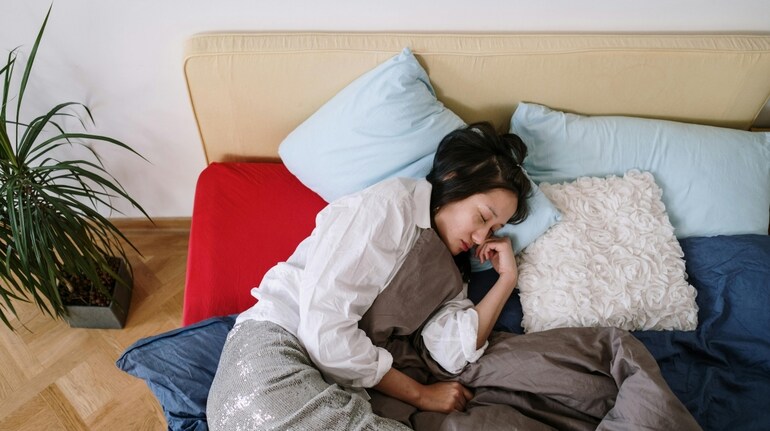

Do you obsess over mattresses, room temperature, sound machines and blackout curtains to achieve a good night’s sleep? Vastu shastra shows how to orient the body at rest. And one rule it reveals is; not to sleep with your head towards the north direction.
According to traditional Indian architecture and lifestyle sciences, the Earth itself acts like a huge magnet with an invisible field flowing from the magnetic north pole towards the south. Vastu shastra regards the human body as having its own magnetic polarity too; the head is considered the north pole and the feet the south. When these polarities clash, that is, when the head points north during sleep, it is believed to create an energetic repulsion that interferes with the body’s natural restorative processes. This idea persists from generations of observation about disrupted sleep, restlessness and a sense of unease upon waking.
Also Read: These 5 behaviours bring heavy karma in your life and you may not even know it
Additionally, sleep science organisations like the Sleep Foundation note that directional orientation has been a subject of interest for centuries, and some small studies suggest north–south sleep alignment could correlate with improved sleep quality, but larger, rigorous studies are still lacking. On the other hand, Western sleep research focuses more on mattress support, light exposure and sound than on compass headings.
Traditional systems argue that sleeping with your head north places the brain in a position of magnetic tension, potentially affecting subtle circulatory or neurological patterns. Contemporary research has explored electromagnetic influences on brain wave activity, but definitive proof about directional sleep effects remains elusive.
Vastu shastra recommends sleeping with the head towards south or east, aligning your energy with Earth’s current to foster calm, better circulation, deeper sleep and harmony within the body. South is often associated with grounding and stability while east is believed to sharpen focus and renewal.
Many people find comfort in following familiar cultural practices. The psychological reassurance of aligning sleep direction with tradition can reduce anxiety and promote a sense of rhythm and rest. This mental ease itself can improve sleep quality.
Also Read: 6 lucky colours according to Vastu that bring peace, optimism and romance into your life
In Ayurveda, how you sleep is as important as diet, activity and rest. Sleeping in directions that encourage a balanced flow of prana (life force) is believed to soothe the nervous system and support emotional recovery from daily stresses.
As per the sleep foundation, some sleepers report vivid differences when they change orientation, more vivid dreams one way, deeper rest the other, suggesting that personal and environmental factors may matter more than any universal rule.
Discover the latest Business News, Sensex, and Nifty updates. Obtain Personal Finance insights, tax queries, and expert opinions on Moneycontrol or download the Moneycontrol App to stay updated!
Find the best of Al News in one place, specially curated for you every weekend.
Stay on top of the latest tech trends and biggest startup news.