






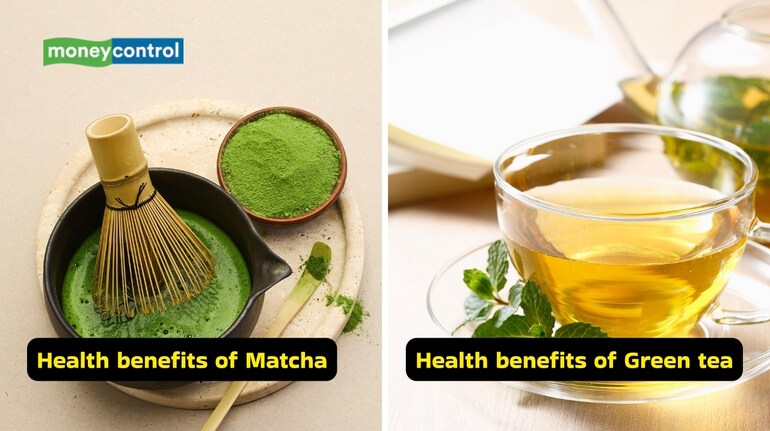

Green tea is a widely enjoyed beverage around the world, offering several health benefits, while matcha tea has gained popularity in recent years for similar reasons. Such has been the growing craze for matcha that it is now served in uptown cafes in the form of lattes, shots, and desserts. However, if that’s making you wonder which is better for your health, here’s what you should know.
Harvard-trained gastroenterologist Dr Saurabh Sethi shared that both green tea and matcha tea are from the same plant, Camellia sinensis. However, there is a difference in the way they are grown, processed, and prepared.
Matcha is a concentrated green tea powder derived from shade-grown leaves, responsible for increasing its antioxidants. Green tea, on the other hand, comes from plants grown in full sunlight and is not shaded before harvesting. This makes it different from matcha.
Also read | 10 amazing health benefits of having green tea daily
A post shared by Saurabh Sethi MD MPH | Gastroenterologist (@doctor.sethi)View this post on Instagram
Not just this, the way you consume the leaf also makes a difference, according to Dr Sethi. For green tea, leaves are steeped in the water and removed. This gives an infused water with flavour and some compounds that leach out. But the tea leaves in matcha are finely ground and whisked into water. This way, nothing is left out, and it’s similar to drinking a leaf smoothie.
Antioxidants: Both are excellent sources of L-theanine and antioxidants, but matcha contains higher amounts than green tea. Research suggests that matcha provides between 9.30- 28.51 mg of L-theanine per gram, whereas green tea offers around 6.56 mg per gram.
Additionally, matcha may have up to 137 times more antioxidants than low-grade green teas and nearly 3 times more antioxidants than premium green teas.
Caffeine: Because matcha is consumed as powdered whole leaves, it contains more caffeine than green tea. Green tea contains less caffeine compared to other caffeinated beverages.
Also read | 9 health benefits of matcha, best weight loss organic drink
Taste: Matcha has a distinct taste that most people find grassy and earthy. That’s why it’s enjoyed in lattes and other drinks. Green tea is slightly bitter due to higher levels of catechins.
According to Dr Sethi, both promote a sense of calm alertness because they contain L-theanine, which balances the stimulating effect of caffeine.
However, the real difference is not in the antioxidants, caffeine, and flavour profiles, but rather in your health goal. Dr Sethi said, “If your goal is gentle calm, regular green tea is good. If you want stronger focus and sustained energy, matcha is better.”
The gastroenterologist, however, cautioned, “Don’t drink tea with meals if you’re iron-deficient. Tea compounds can block iron absorption. Drink it between meals instead.”
Disclaimer: This article, including health and fitness advice, only provides generic information. Don’t treat it as a substitute for qualified medical opinion. Always consult a specialist for specific health diagnosis.
Discover the latest Business News, Sensex, and Nifty updates. Obtain Personal Finance insights, tax queries, and expert opinions on Moneycontrol or download the Moneycontrol App to stay updated!
Find the best of Al News in one place, specially curated for you every weekend.
Stay on top of the latest tech trends and biggest startup news.





