






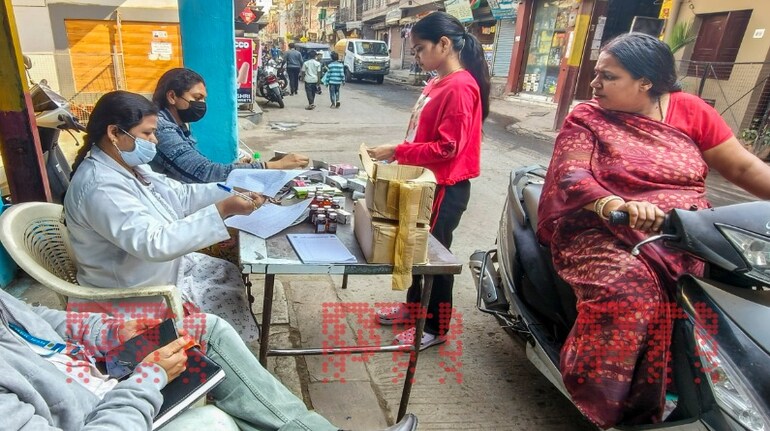

The Madhya Pradesh High Court has delivered a scathing indictment of the state government’s investigation into the deaths of at least 23 people in Indore last month, calling its official death audit “vague” and an “eyewash”.
The court has now appointed a one-member judicial commission to conduct an independent probe into the contamination of the drinking water supply that caused the fatalities.
A division bench of justices Vijay Kumar Shukla and Alok Awasthi, presiding over petitions linked to the public health crisis, expressed grave concern on Tuesday over the continuing uncertainty surrounding the deaths.
The tragedy emerged on December 29 when three residents of the city’s Bhagirathpura area died after suffering acute vomiting and diarrhoea. The deaths were later traced to sewage water mixing with the drinking water supply via a leak in a Narmada water pipeline.
The court’s sharp criticism was directed at a “death audit and analysis” report submitted by the state health department on January 20. The bench took particular exception to the report’s reliance on what it termed “verbal autopsy” for determining causes of death, questioning its medical, scientific and legal credibility.
“Is verbal autopsy a medical term or a term coined by the state government? What is its medical, scientific and legal credibility?” the bench queried, according to court proceedings. “The state government should place more reliable and appropriate documents on record to establish the credibility of the report.” The judges added that the situation was “extremely worrying”.
The report revealed significant confusion and a lack of definitive conclusions. It stated a committee had analysed 23 deaths. However, it listed the cause of one death as “open”, another as “open but admitted to be related to the epidemic” and nine more as only “probably” or “possibly” related to the epidemic.
The cause of three deaths was deemed “inconclusive” and four were declared unrelated to the outbreak. The state government had initially acknowledged only 16 deaths before declaring the situation an epidemic.
“There is a contradiction in the causes of death mentioned in the document and most deaths were recorded as inconclusive,” senior advocate Ajay Bagadia, representing the petitioner, argued before the court.
Lab analyses confirmed the contaminated water contained a dangerous polymicrobial mix of pathogens, including E coli, Salmonella, Vibrio cholera, viruses and fungi.
Finding the official response inadequate, the bench has now constituted a commission headed by former High Court judge Justice Sushil Kumar Gupta to investigate the contamination in Bhagirathpura and its potential impact on other parts of Indore.
The court stated the matter required probe by an “independent, credible authority” and “urgent judicial scrutiny”. The commission is mandated to submit an interim report within four weeks of commencing its proceedings.
The court also directed the Indore Municipal Corporation to seriously consider testing water according to international standards, as suggested by the petitioner, and reserved its final order on the broader petitions. Municipal counsel Sunil Jain submitted that the corporation would file a rejoinder to provide further clarity on its actions.
Additional Advocate General Rahul Sethi declined to comment without the formal court order.
Discover the latest Business News, Sensex, and Nifty updates. Obtain Personal Finance insights, tax queries, and expert opinions on Moneycontrol or download the Moneycontrol App to stay updated!
Find the best of Al News in one place, specially curated for you every weekend.
Stay on top of the latest tech trends and biggest startup news.





