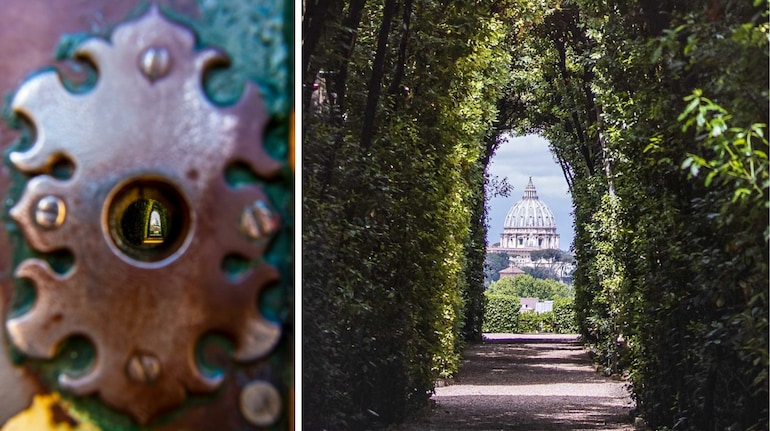

At the end of a cobbled lane on Rome’s Aventine Hill stands an unassuming green door hiding a secret view adored by locals and travellers alike. Fans of Emily in Paris may recognize it from Season 5—this is the famous Aventine Keyhole (Buco della Serratura). Press your eye to the keyhole, and you’re treated to a perfectly framed glimpse of St. Peter’s Basilica’s dome in the Vatican—all while standing on property belonging to the sovereign Order of Malta. In a single glance, you can symbolically see three countries at once: Malta, Italy, and Vatican City.
What makes the Aventine keyhole so special?
Rome is a city of grand monuments, but its most memorable experiences are often the secret ones. The Aventine keyhole is tiny and unassuming, part of the property of the Sovereign Military Order of Malta, the oldest surviving chivalric order in the world. This order, born in Jerusalem in the 11th century, enjoys extraterritorial status under international law, making the estate technically “Malta” within Rome.
The genius lies in the alignment. Beyond the door stretch manicured hedges and tall umbrella pines that create a leafy tunnel effect. Right at the centre of this emerald corridor appears the distant dome of St. Peter’s Basilica, symbol of Vatican City. The view feels like an optical illusion, a living postcard composed of gardens, sky and sacred architecture.
A layered history on Aventine Hill
The villa that guards the keyhole has a past far older than the modern queues outside. The fortified residence once belonged to Alberic II, a powerful nobleman who ruled Rome from 932 to 954. It later transformed into a Benedictine monastery in the 10th century before becoming the seat of the Knights Templars during the Middle Ages, chosen for its strategic vantage over the Tiber River.
When the Templars were defeated in the 14th century, the property passed to the Knights Hospitallers, predecessors of today’s Knights of Malta. In 1765, visionary artist and architect Giovan Battista Piranesi redesigned the piazza Cavalieri di Malta with nautical symbols inspired by a Roman legend that imagined Aventine Hill as a sacred ship bound for the heavens. The ornamental door represented the ship deck, and the gardens its ropes and rigging. Those gardens remain exclusive and can be visited by appointment only, adding to the mystique.
Where exactly to find the Aventine keyhole?
The keyhole is located near one of Rome’s loveliest sunset spots, the Giardino degli Aranci (Orange Garden). Aventine Hill itself is a peaceful escape from the bustle around the Colosseum and Trevi Fountain. The walk up rewards visitors with medieval churches, fragrant citrus trees and sweeping views over the city roofs.
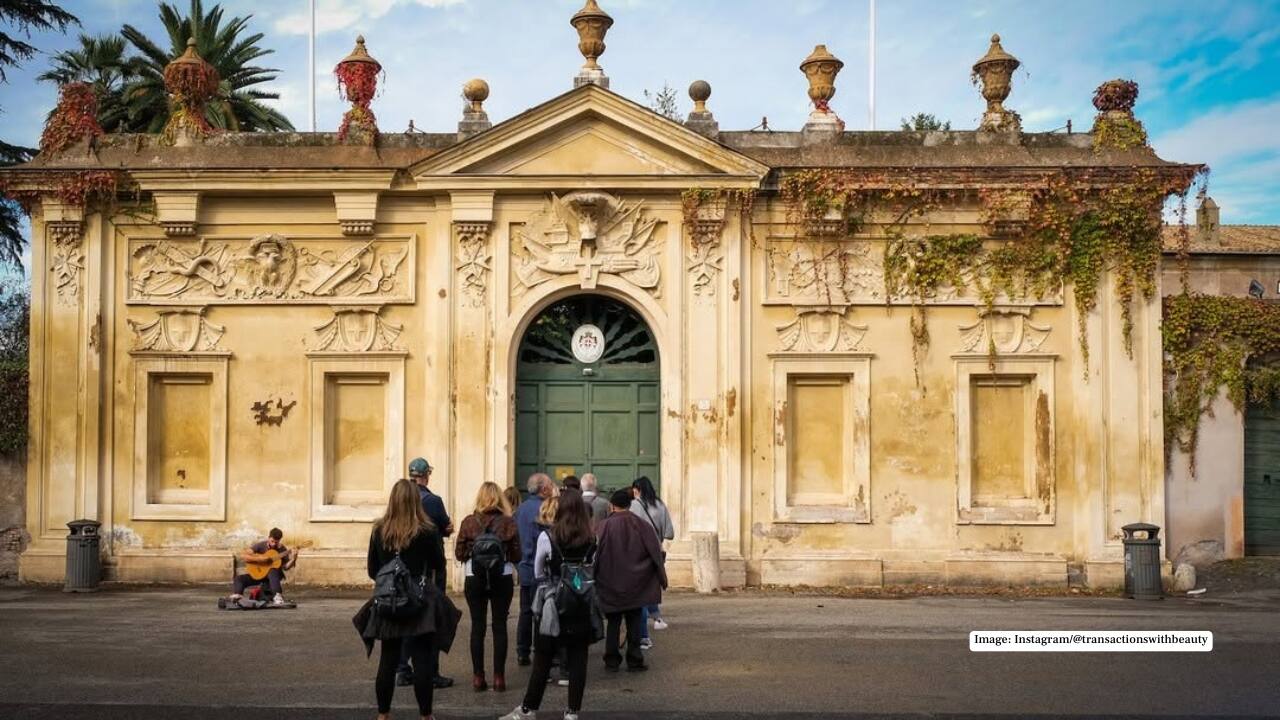 (Image: Instagram/ @transactionswithbeauty)
Why travellers should include it in their Rome itinerary
Queues are common, especially in the afternoon and during weekends, but most visitors say the wait heightens the anticipation. Many attempt to capture the scene with their cameras; however, the narrow aperture rarely does justice to what the human eye perceives—depth, breeze, birdsong and the sudden glow of the basilica at the centre.
Travel tips for visiting the Buco della Serratura
The Aventine Keyhole is a perfect reminder that Rome never ceases to amaze. In a city layered with centuries of history, sometimes the most magical sights are hidden in the tiniest of spaces. One glance through this unassuming green door lets you see three nations in a single frame—a composition so perfectly aligned it feels like something out of a storybook.
Whether you’re a fan of Emily in Paris or a traveller hunting Rome’s secret gems, the Aventine Keyhole delivers a fleeting, unforgettable view that stays with you long after you leave.
Discover the latest Business News, Sensex, and Nifty updates. Obtain Personal Finance insights, tax queries, and expert opinions on Moneycontrol or download the Moneycontrol App to stay updated!
Find the best of Al News in one place, specially curated for you every weekend.
Stay on top of the latest tech trends and biggest startup news.