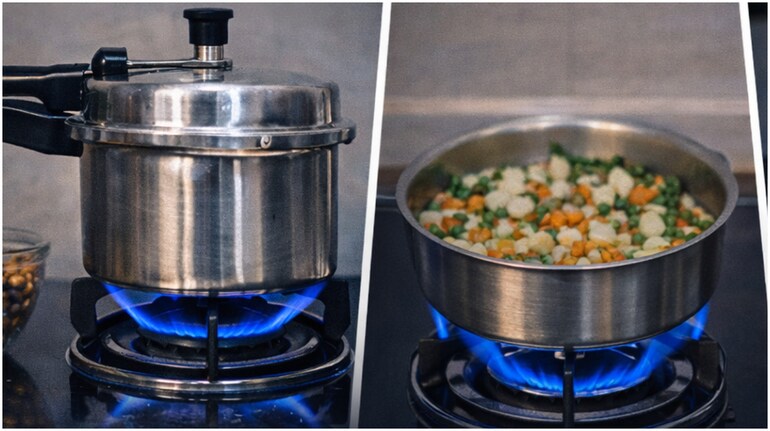
As cooking gas prices and global fuel concerns continue to weigh on household expenses, a set of practical kitchen suggestions shared online has drawn widespread attention from people looking for ways to reduce everyday fuel consumption.
The discussion began after nutritionist Nandita Iyer posted a detailed thread outlining everyday cooking practices that, according to her, could significantly lower LPG usage in Indian kitchens. Iyer runs the social media handle @saffrontrail.
The post circulated across social media, with many users saving the thread and sharing it further, describing the suggestions as practical and easy to implement.
Introducing the advice, Iyer wrote: “10 tips to reduce your LPG consumption by nearly 50%.”
Rather than suggesting major dietary changes, the thread focuses on adjusting common cooking habits to improve efficiency and reduce fuel waste.
Pressure cooking to reduce cooking time
The first recommendation centres on the use of pressure cookers. According to the thread, this method can significantly shorten cooking duration.
“Pressure cooking reduces cooking time by 30–70%, especially for dals, beans, potatoes, and meats,” she wrote.
Because pressure cooking traps steam and heat inside the vessel, ingredients cook faster than they would in open pots.
Soaking ingredients before cooking
Another suggestion involves soaking pulses, beans and rice before cooking them.
“Soaking reduces cooking time significantly.” Iyer wrote, before outlining typical soaking durations:
• “Rajma / chana: 8–10 hours
• Dals: 30–60 minutes
• Rice: 20–30 minutes”
She explained that ingredients prepared this way can cook 30–50% faster, which in turn reduces the amount of LPG required.
Using the appropriate burner
The thread also emphasises choosing the correct burner size for different cooking tasks.
“On most Indian gas stoves:
• Small burner → tea, tadka, reheating
• Large burner → pressure cooking, boiling water”
She cautioned that placing small vessels on large burners wastes gas and added: “Flame should not burn beyond the circumference of the pan.”
Cooking with lids on pots
Another straightforward habit mentioned in the thread involves covering pots while food cooks.
“Cooking with a lid
• Retains heat
• Reduces evaporation
• Speeds up cooking”
According to Iyer, using lids during cooking can reduce fuel consumption by around 20–25%.
Cutting vegetables into smaller pieces
The thread also highlights how chopping vegetables into smaller pieces can reduce cooking time.
“Smaller pieces cook faster because:
• More surface area
• Faster heat penetration & faster cooking”
She illustrated the point with an example: “Diced potatoes cook faster than large chunks.”
Cooking several dishes simultaneously
Another practice suggested is preparing multiple items at the same time using a pressure cooker.
Iyer described a technique commonly known as stacking, writing:
“Use stacking in a pressure cooker:
• Dal below
• Rice above
• Vegetables in a small bowl”
She added that this allows several dishes to cook together over a single flame. Even smaller pressure cookers can accommodate this method, she explained, noting that one vegetable can be placed directly inside the cooker while another can be cooked in a small cup placed above it.
“This one-flame multi-cooking can cut fuel use dramatically,” she wrote.
Checking burners regularly
The thread also encourages maintaining stove burners to ensure efficient combustion.
“Blocked burner holes cause inefficient combustion,” she wrote, advising that burners be cleaned every few weeks.
Properly functioning burners should produce a blue flame, she added, noting that yellow flames indicate incomplete combustion and wasted gas.
Using residual heat
One of the recommendations that Iyer described as her favourite involves turning off the flame slightly before cooking finishes.
“(my fav tip) Switch off early and use residual heat,” she wrote.
She explained that foods often continue cooking using heat already retained inside the pot. Examples she cited include:
• Rice or khichdi
• Pasta
• Boiled vegetables
• Dal after pressure cooking
According to the post, switching off the flame two to three minutes earlier can help conserve fuel.
Choosing heavy, flat-bottomed cookware
The thread also recommends cookware with thick bases, which distribute heat more evenly than thin utensils.
“Best materials:
• Stainless steel with thick base
• Triply steel
• Cast iron (for slow cooking)”
Thin vessels, she noted, tend to lose heat quickly and can lead to uneven cooking.
Adopting smarter cooking practices
Finally, the thread encourages broader changes in kitchen routines.
“Use an electric kettle for boiling water for tea, pasta, or blanching vegetables or to add to pressure cooker,” Iyer wrote, explaining that electric kettles can be more efficient than gas stoves when heating water.
She also suggested batch cooking.
“Batch cook rice, dal, beans, potatoes for 2–3 meals. Refrigerate the extra portions. For the same fuel consumption you get double the meals cooked.”
Iyer added that even adopting a few of these habits can make a noticeable difference in fuel use.
“In most Indian kitchens, combining just 3 habits (pressure cooker + soaking ingredients + closed lid cooking) can save nearly 30% fuel.”
She concluded by emphasising that such measures are useful beyond periods of rising fuel costs.
“These tips are not just useful for the current times, but also to be more careful with LPG usage in our kitchen, reducing wastage and costs both.”
10 tips to reduce your LPG consumption by nearly 50% 1. Use the pressure cooker - Pressure cooking reduces cooking time by 30–70%, especially for dals, beans, potatoes, and meats.2. Soak pulses, beans and rice - Soaking reduces cooking time significantly. Typical soaking times:… — Dr Nandita Iyer (@saffrontrail) March 12, 2026
The thread generated a wide range of responses from other users online, many of whom shared their own experiences with fuel-saving cooking methods.
One person wrote: “Very thoughtful of you to share all this information for people to be a little more clued on instead of getting frazzled.”
The same commenter added that careful meal planning can also help reduce waste, particularly during warmer months.
“All the electric appliances will help but yes, all this works best in reducing LPG consumption. Also, since it is becoming hot now, food will spoil faster, so everyone needs to be a little more conscientious of portion size so as to not waste food.”
Another user described switching to electric cooking appliances for everyday meals.
“I have been using induction stove and induction based pressure cooker for cooking rice and dal my two meals. I even make teas on induction stove.”
A third commenter shared their own routine for efficient cooking.
“Excellent tips .. thank you Doc.. I batch cook in the P.cooker, refrigerate a portion, steam the veggies/spinach first on high then in medium flame(very fast, with min.water)..cook most of the food in medium & then sim..saves LPG.”
Another participant questioned why certain electric cooking appliances have not gained wider popularity in India.
“Why electric cooker is not a hit in India? It hardly takes few minutes to cook without LPG. Indian brand which isn't famous in India, strange.”
Discover the latest Business News, Sensex, and Nifty updates. Obtain Personal Finance insights, tax queries, and expert opinions on Moneycontrol or download the Moneycontrol App to stay updated!
Find the best of Al News in one place, specially curated for you every weekend.
Stay on top of the latest tech trends and biggest startup news.