

Portugal has long been admired for its charming old towns, dramatic coastal views, delicious cuisine and colourful azulejo tiles. But according to a new study, the country has yet another reason to win travellers’ hearts — its language.
A recent report by language-learning platform Preply has found that Portuguese is perceived as the friendliest language in the world. The study explored how people emotionally respond to the sound and feel of different languages, looking at how elements like rhythm, tone and familiarity shape our perceptions.
Portuguese tops the list for warmth
In the survey, Portuguese emerged as the language most strongly associated with warmth and friendliness, receiving 34% of the responses. It was followed closely by Spanish at 33% and Italian at 26%.
These three languages clearly stood out when respondents were asked which languages sounded the most welcoming.
Why these languages sound so welcoming
Experts say the friendly impression may come down to the way these languages sound. Portuguese, Spanish and Italian share a musical quality that makes them easy on the ears. Their pronunciation often includes short syllables, steady rhythm and fewer harsh consonant sounds, giving them a softer, more melodic tone.
This flowing sound pattern can make conversations feel warm and inviting to listeners.
Culture also shapes how languages feel
Beyond sound, cultural associations play a big role in how people interpret languages. Portuguese and Spanish are often linked with lively conversation, expressive communication and warm social interactions. Italian carries similar imagery, frequently associated with family gatherings, food and animated storytelling.
These cultural impressions, often reinforced through films, travel experiences and popular culture, help shape the idea that these languages feel friendly and open.
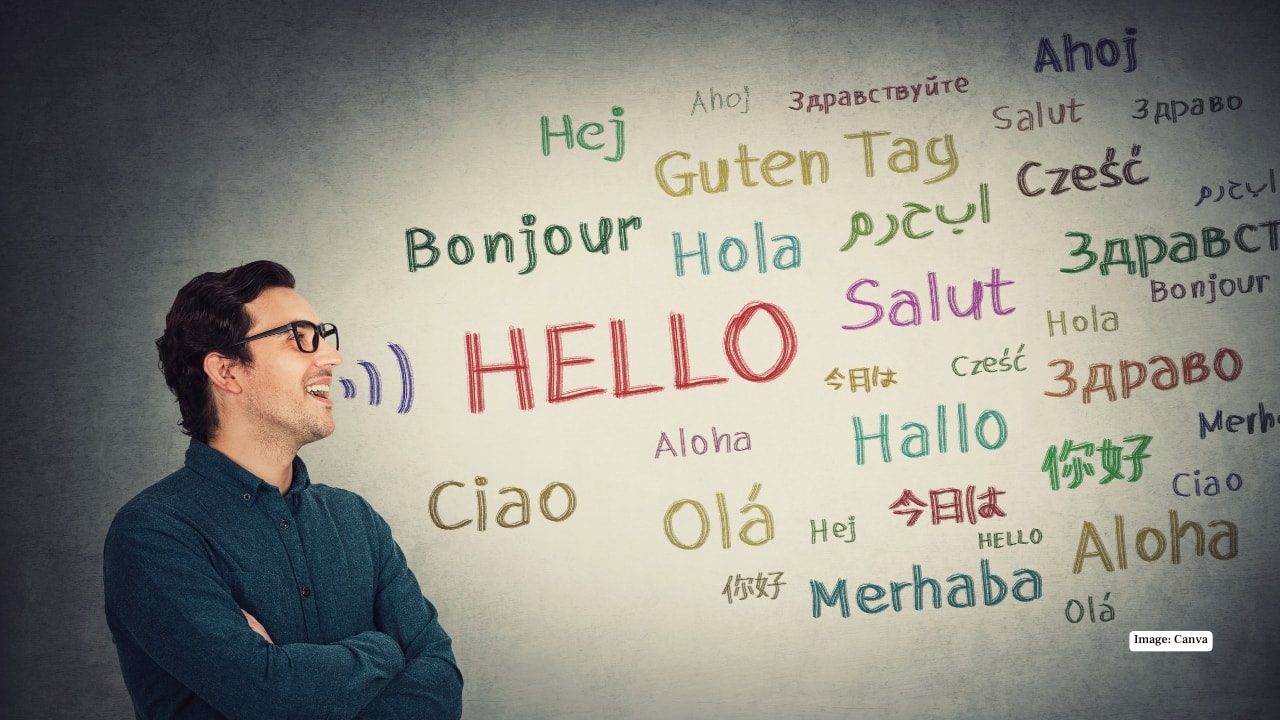 Image: Canva
Languages influence how people express themselves
The report also highlights how deeply language connects with personal identity. According to the survey, 59% of people say they express different sides of their personality depending on the language they are speaking.
Whether it’s the romantic charm of French phrases or the lively rhythm of Spanish conversations, languages can trigger emotional responses that go far beyond simple communication.
French seen as the most romantic language
While Portuguese ranked highest for friendliness, the study found that French is widely viewed as the most romantic and elegant language, receiving 54% of global votes. Italian followed with 43%.
Meanwhile, English was chosen by 41% of respondents as the most practical language, reflecting its widespread global use.
At the other end of the scale, German received only 7% of responses for friendliness, making it the least associated with warmth among the languages studied.
How the study was conducted
To understand how people emotionally perceive languages, Preply surveyed 3,608 people across six countries — the United States, the United Kingdom, France, Germany, Spain and Japan.
Participants were asked to describe ten widely spoken languages based on traits such as romantic, friendly, powerful or practical. The research also explored how stereotypes and cultural exposure influence these perceptions.
Interestingly, the study found that nearly one in four people say they are less likely to learn a language they perceive as complex, showing how emotional impressions can shape language learning choices.
In the end, the research highlights a simple truth — languages are not just tools for communication. They also carry feelings, cultural stories and personal identity, shaping how people connect with one another around the world.

Discover the latest Business News, Sensex, and Nifty updates. Obtain Personal Finance insights, tax queries, and expert opinions on Moneycontrol or download the Moneycontrol App to stay updated!
Find the best of Al News in one place, specially curated for you every weekend.
Stay on top of the latest tech trends and biggest startup news.